

EXIF Data
Model
Leica D-Lux8
Shutter Speed
1/30
Aperture
f10
ISO
200
Excerpt
The Critique: Framing the Infinite
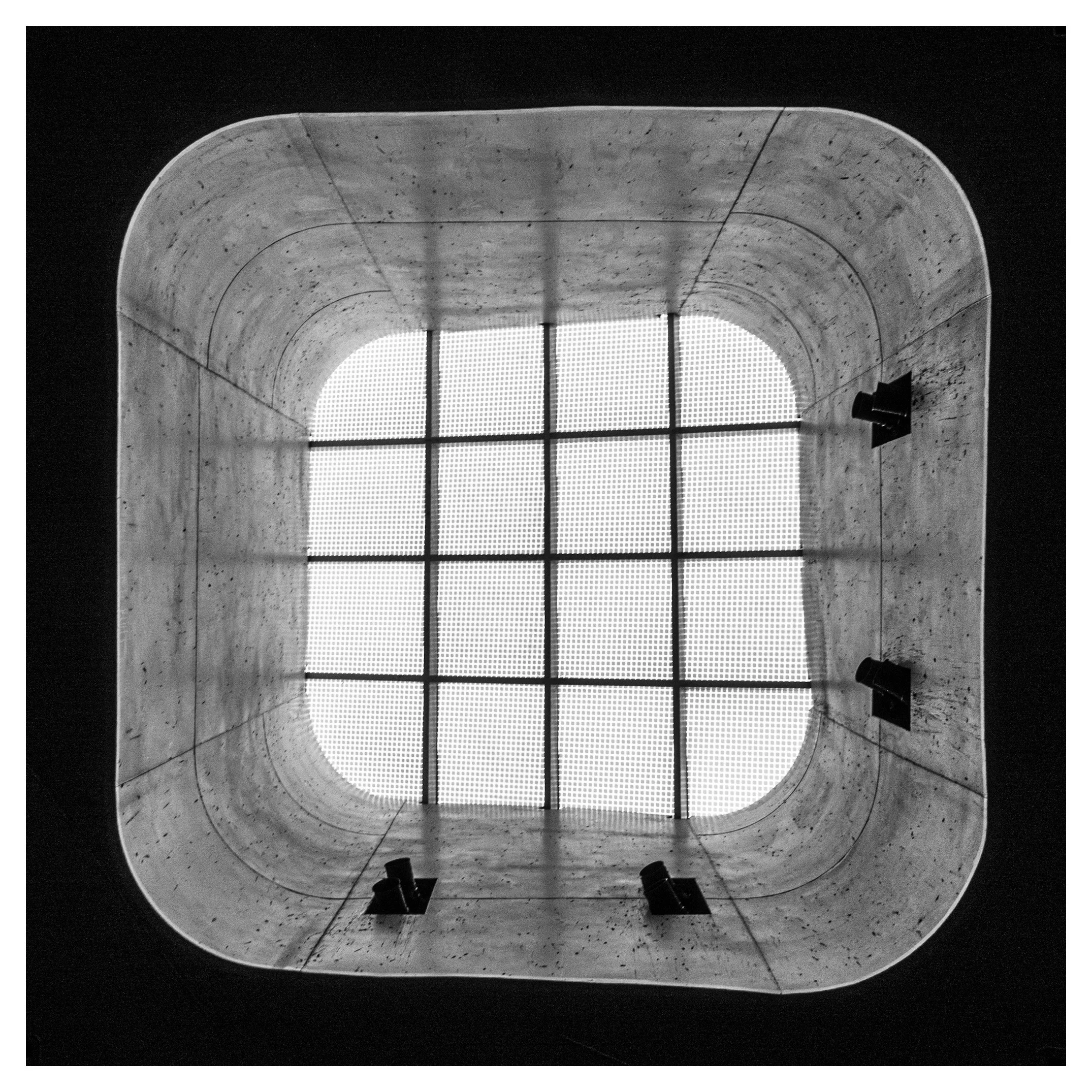
This image is a compelling exercise in centralized composition and tonal contrast. By positioning the camera directly beneath the structure, you have effectively turned a three-dimensional architectural element into a two-dimensional graphic pattern. The choice of black and white is essential here; it strips away the distraction of color, forcing the viewer to engage with the rhythm of the grid and the rough, tactile quality of the concrete walls.
The slight organic curve of the outer frame provides a necessary tension against the rigid, mathematical precision of the central grid. There is a sense of "the monumental" in this frame, reminiscent of mid-century industrial photography where scale is felt through the weight of the shadows.
Refinement and Technical Evolution
To elevate this specific image, I would focus on symmetry and edge management. While the central grid is strong, the slight tilt in the framing—visible in the uneven thickness of the dark corners—distracts from the intended minimalism.
• Refining the Frame: When shooting architectural "worm's-eye" views, even a one-degree deviation from the center can break the illusion. Use a digital level or grid overlay to ensure the sensor is perfectly parallel to the subject.
• Shadow Detail: At f10, you have excellent depth of field, but the corners are slipping into total "crushed" blacks. While dramatic, a slight lift in the shadows during post-processing would reveal more texture in the concrete, providing a more immersive sense of the environment.
Long-term Growth: The Data-Driven Photographer
To become a master, you must move beyond the "single shot" and begin looking at your work as a body of evidence. I recommend creating a metadata journal.
By compiling data from your shoots, you can identify patterns in your behavior. Do you consistently shoot at 1/30 even when a tripod is available? Are you defaulting to f10 out of habit or necessity? Over time, this data will show you your "comfort zones." True growth happens when you consciously decide to break those patterns—for instance, shooting this same scene at f1.7 to see how the blurring of the grid changes the emotional resonance of the void.
Curated Inspiration for Your Journey
To further develop your eye for geometry, light, and the "human-made" landscape, I recommend studying the following masters and resources:
Photographers to Study
• Fan Ho: For his unparalleled ability to use shadows as structural elements in a composition.
• Michael Wolf: Specifically his Tokyo Compression series, to understand how to find art within the claustrophobia of urban structures.
• Bernd and Hilla Becher: For their "typology" approach—treating architectural forms as objective sculptures.
Recommended Reading
• "The Decisive Moment" by Henri Cartier-Bresson: The definitive guide on the intersection of geometry and time.
• "Uncommon Places" by Stephen Shore: To learn how to find the extraordinary within the mundane urban environment.
Watch and Learn
• The Art of Photography: Composition: A deep dive into how lines lead the eye. Watch here
• Fan Ho - Visualizing the World: A look at the master of light and shadow. Watch here