

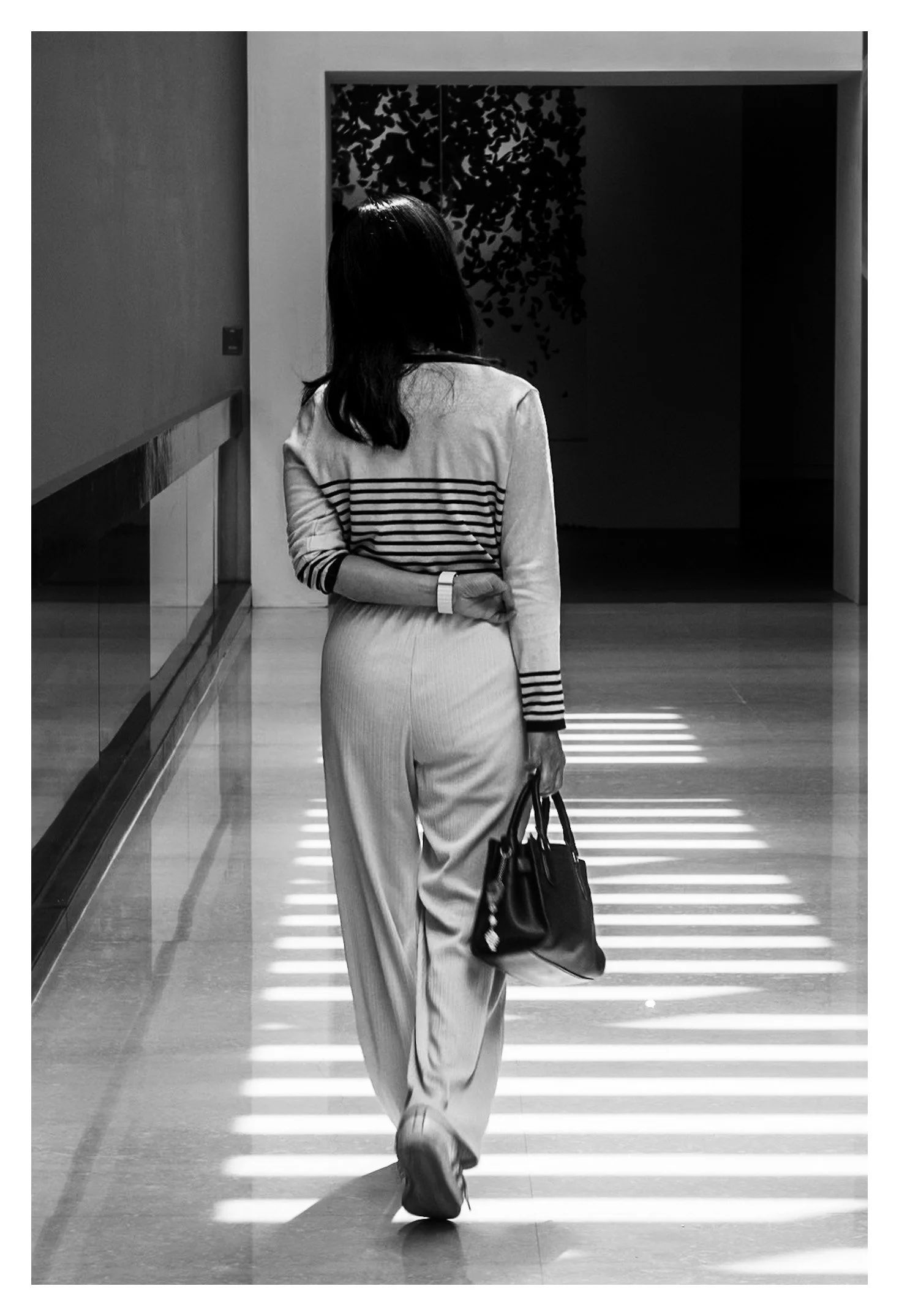
The interplay of shadow and structure can transform a simple walk through a museum into a profound study of form. You will discover how the alignment of light and human presence creates a temporal bridge, and why minor technical shifts could elevate this fleeting moment into a timeless photographic statement.
Camera Metadata
Camera Model: Leica D-Lux8
Shutter Speed: 1/60
Aperture: f6.3
ISO: 200
The image captured at the Kaohsiung Museum of Fine Arts is a compelling exercise in rhythm and repetition. The strength of this frame lies in the serendipitous alignment between the subject’s striped attire and the rhythmic shadows cast across the floor. This creates a visual echo that binds the human element to the architectural environment.
The use of monochrome is a wise choice here. By stripping away color, you have forced the viewer to focus on the tonal contrast and the graphic nature of the composition. The subject’s posture—one hand behind her back—adds a touch of mystery and "punctum," suggesting a moment of quiet contemplation or a patient wait.
Refining the Frame
To improve this specific image, consider the following technical and compositional adjustments:
• Vertical Alignment: The vertical line of the door frame in the background is slightly tilted. In architectural photography, ensuring perfectly vertical lines is crucial for maintaining a sense of structural integrity.
• Depth of Field: At f6.3, the background remains relatively legible. Closing the aperture further to f11 or f16 would have sharpened the distant textures, or conversely, shooting wider might have isolated the subject more effectively.
• The Decisive Timing: A split second later, when the subject's lead foot was fully planted or more clearly articulated within a single light stripe, might have provided a more grounded silhouette.
Growth Through Data
Becoming a master requires more than just a good eye; it requires an analytical mind. To improve over time, I recommend maintaining a Photographic Audit:
• Keyword Tagging: Start categorizing your images by themes such as "Architectural Shadows," "Candid Portraiture," or "Taiwanese Urbanism."
• Success Rate Analysis: Compare your metadata across your most successful shots. If your best "street" work consistently happens at a specific focal length or aperture, lean into that "sweet spot" to develop a signature style.
• Contextual Mapping: Note the location and time of day for every shot. This allows you to return to locations like the Kaohsiung Museum of Fine Arts when the light is at a different angle, allowing you to "work" the scene across seasons.
Curated Inspiration
To further your education, I suggest immersing yourself in the following works:
Photographers to Study
• Fan Ho: The undisputed master of using light and shadow in Asian urban environments. His work in Hong Kong during the 1950s mirrors your interest in shadows and monochrome geometry.
• Ray K. Metzker: Explore his work for a more "abstract" approach to architectural shadows and high-contrast street photography.
• Chien-Chi Chang: A member of Magnum Photos, his work—particularly in "The Chain"—demonstrates a powerful use of framing and environmental context in Taiwan.
Essential Reading
• The Decisive Moment by Henri Cartier-Bresson: This is the fundamental text for understanding the intersection of geometry, timing, and intuition.
• Thoughts on Solo Photography by Kuo Ying-Tang: A brilliant resource for philosophical approaches to the medium within a local context.
• Magnum Contact Sheets edited by Kristen Lubben: This book is invaluable for seeing the "mistakes" and near-misses that lead to a masterpiece.
Video Resources
• The Art of Street Photography (Magnum Photos): A deep dive into the methodology of the world’s best observers. https://www.youtube.com/watch?v=68_9_97A0m4
• Fan Ho: A Tribute to the Master: A visual exploration of how he utilized "The Great Light" to create drama. https://www.youtube.com/watch?v=L5_8y7A_Sls