

Day 185/365 The Kinetic Soul of Kaohsiung
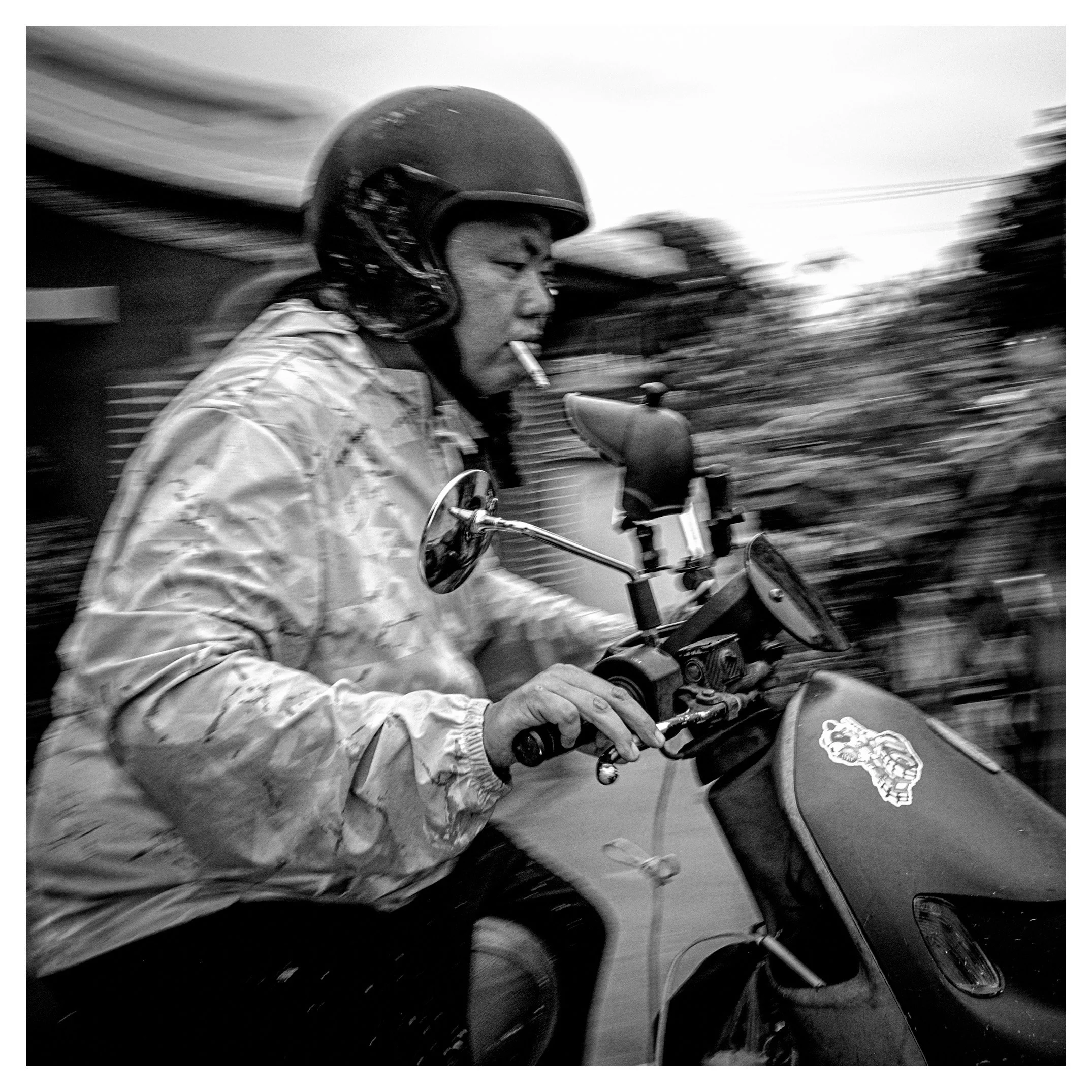
Capture the raw energy of Taiwan’s streets with this analysis of motion and grit. You’ll learn why a "technically imperfect" shutter speed might be your greatest creative asset and how to turn a daily commute into a masterpiece of cinematic street photography.
Camera Model: Ricoh GRIII
Shutter Speed: 1/50
Aperture: f9
ISO: 200
The Critique: Embracing the Blur
Your capture of this rider in Kaohsiung is a masterclass in kinetic energy. By selecting a shutter speed of 1/50, you have successfully straddled the line between documentary and impressionism. The subject’s face remains remarkably legible, grounded by the steady grip on the handlebars, while the background dissolves into a streaking rush of urban textures.
The choice of Black and White is essential here. It strips away the visual noise of Taiwan’s colorful signage, forcing the viewer to focus on the contrast and the shape of the movement. The grit in the frame feels intentional—a nod to the "Provoke" era of photography that prioritized atmosphere over clinical sharpness.
Advice for Improvement
• Panning Technique: To further isolate the subject, practice "panning"—moving your camera at the exact speed of the rider. This would sharpen the subject’s torso while making the background blur even more dramatic.
• Layering: The composition is quite tight on the rider. Experiment with a slightly wider perspective to include more of the cultural landscape of Kaohsiung. Adding a secondary element in the foreground or background could provide more depth and story.
• Highlight Management: In high-contrast monochrome, watch your highlights. The rider's jacket is pushing toward a "blown-out" white; dialing back the exposure slightly would retain the texture of the fabric.
Building Your Photographic Legacy
To evolve, you must treat your photography as a data-driven practice.
1. Analyze Your Metadata: Periodically review your "keepers." Do your best shots share a specific Shutter Speed or Aperture? Identifying your "sweet spot" helps you master your tools.
2. Keep a Shooting Journal: Record the "why" behind the photo. Were you chasing the light, the motion, or the person?
3. The "One Theme" Challenge: Dedicate a month to a single concept—like "Velocity" or "Shadows"—to force creative problem-solving.
Recommendations for Study
Photographers to Research
• Daido Moriyama: A master of the "grainy, blurry, out-of-focus" (are-bure-boke) aesthetic. His work A Farewell to Roses is a vital reference for your style.
• Fan Ho: For his legendary use of light, shadow, and geometry in urban environments.
• Shen Chao-Liang: To see how a local master captures the cultural landscape of Taiwan through long-term projects like STAGE.
Books to Read
• "The Americans" by Robert Frank: Study his "outsider" perspective on the road.
• "Bystander: A History of Street Photography" by Joel Meyerowitz: An academic yet accessible reference on the evolution of the genre.
• "Think Like a Street Photographer" by Matt Stuart: Excellent for learning how to use humor and observation in candid moments.
Videos to Watch
• Sean Tucker: Focus on his videos about creative mindset and finding your "voice" in photography. Watch on YouTube.
• Tatiana Hopper: Her deep dives into the work of master photographers will help expand your visual library. Watch on YouTube.
• Samuel Streetlife: Great for seeing the Ricoh GRIII in action and learning street-panning techniques. Watch on YouTube.