

Day 220/365 Echoes in the Rain: Capturing the Fleeting Soul of Taiwan’s Nights
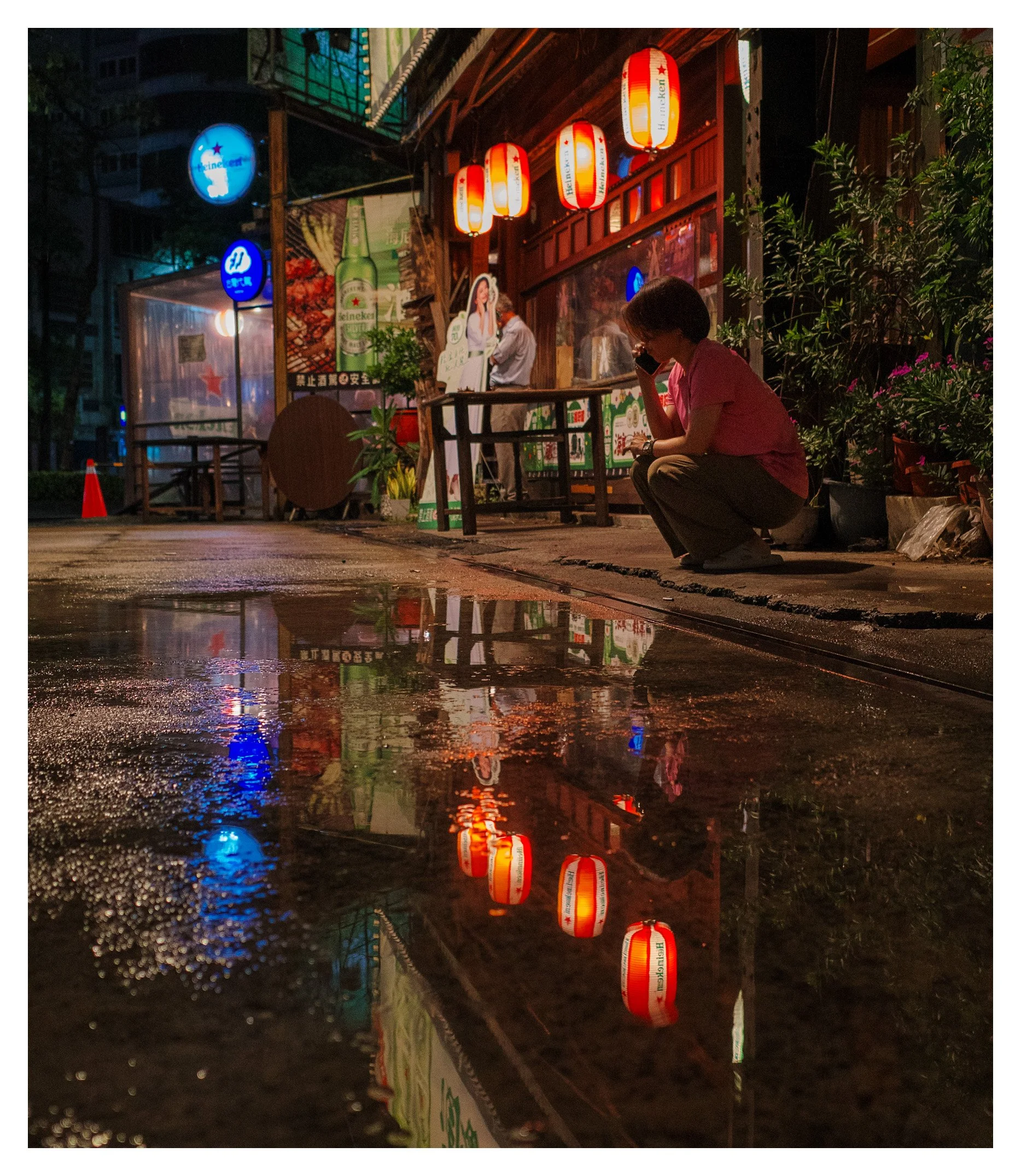
Ever wonder how a simple rain puddle can completely transform a chaotic city street into a cinematic canvas? Discover how this nighttime shot manages to trap light, loneliness, and geometry in a single frame, and the subtle adjustments that separate a good snapshot from an evocative masterpiece.
Camera Metadata
Camera Model: Ricoh GRIII
Shutter Speed: 1/125s
Aperture: f2.8
ISO: 2500
The Critique: A Masterclass in Reflection and Urban Solitude
As an art critic, I am constantly searching for images that move beyond mere documentation and step into the realm of poetic observation. This photograph does exactly that. The choice of the Ricoh GRIII is perfect for this style—it is the quintessential tool for the modern flâneur, allowing you to react instantly to the theater of the streets.
What makes this image compelling is its structural duality. By placing the puddle in the lower half of the frame, you have effectively doubled the narrative space. The warm, vibrant red of the traditional hanging lanterns contrasted with the piercing cool blue of the background neon signs creates a classic, emotionally resonant color palette.
The human element is beautifully handled. The subject, crouched on the right while using a phone, provides a strong anchor of modern urban alienation. They are physically present but mentally elsewhere, a theme amplified by the quiet presence of the man and the cutout figure in the background. The vertical ripple of the lanterns in the water reflection anchors the viewer's eye, drawing a straight line from the real world into the liquid abstraction below.
Room for Growth: Refining the Frame
While the atmosphere is superb, a few technical and compositional adjustments could elevate this from an excellent street photograph to an exhibition-worthy print:
Mind the Highlights: The white paper lanterns at the top are slightly blown out, losing the delicate text or texture they might possess. In high-contrast night settings, consider underexposing by a half-stop to preserve those rich highlight details; you can always pull the shadows back up in post-processing.
Tame the Distractions: The bright orange traffic cone on the far left acts as a visual puncture point. It pulls the eye away from the beautiful blue neon light and the crouched subject. A slight shift in your physical positioning to block the cone, or a subtle crop in post-production, would tighten the visual narrative significantly.
Leveling the Horizon: The slight tilt to the left gives the image a hurried feel. Aligning the horizontal planes of the pavement would make the reflection feel more intentional and grounded, enhancing the painterly quality of the water mirror.
The Long Game: Becoming a Better Photographer Through Data
To truly evolve your photographic voice, you must look at your work in aggregates rather than as isolated frames. Here is how you can use a structured spreadsheet data system—much like tracking a curated library—to spot patterns and grow:
Track Your Successful Focal Lengths and Settings: Log your favorite images along with their metadata. Over time, analyzing whether your strongest work happens at a specific ISO or shutter speed will tell you exactly where your comfort zone lies—and where you need to push past it.
Categorize Your Keywords: Create a column for themes or concepts (e.g., "solitude," "night photography," "reflections," "cultural landscapes"). If you find 70% of your top images contain "reflections," you know you have a natural inclination toward that visual metaphor and can seek to deepen it.
Monitor the Failure Rates: Don't just analyze your wins. Keep a log of the shots that almost worked and note why they failed (e.g., "motion blur," "distracting background," "missed focus"). This builds an intellectual muscle that automatically corrects these mistakes before you even press the shutter.
Masters to Study: Curated Recommendations
To expand your visual vocabulary, I highly recommend diving into the following masters of light, color, and urban psychology:
Books to Read
"Moments in Time 1959-2013" by Chang Chao-Tang: To truly master the atmosphere of Taiwan, study Chang Chao-Tang. His retrospective work is an absolute masterclass in capturing the surreal, quiet, and deeply emotional undertones of Taiwanese life.
"The Decisive Moment" by Henri Cartier-Bresson: The absolute bible of street photography. It will teach you everything you need to know about geometry, timing, and how to compose a frame so that every element relates perfectly to the next.
"Tokyo Compression" by Michael Wolf: Since your image deals heavily with the feeling of urban claustrophobia and isolation, Wolf's study of human expressions inside crowded subway windows will show you how to push the emotional boundaries of portraiture in public spaces.
Videos to Watch
"Magnum Photos Masterclass with Alex Webb": Webb is the undisputed king of complex frames, vibrant colors, and utilizing reflections and layers. Watching his process will change how you view street corners forever. You can watch an insightful profile on his philosophy via The Canvas YouTube Channel.
"How to Shoot Street Photography at Night": To help you balance those tricky exposure values between bright neon signs and deep shadows without blowing out your highlights, check out this guide by Faizal Westcott on YouTube.