

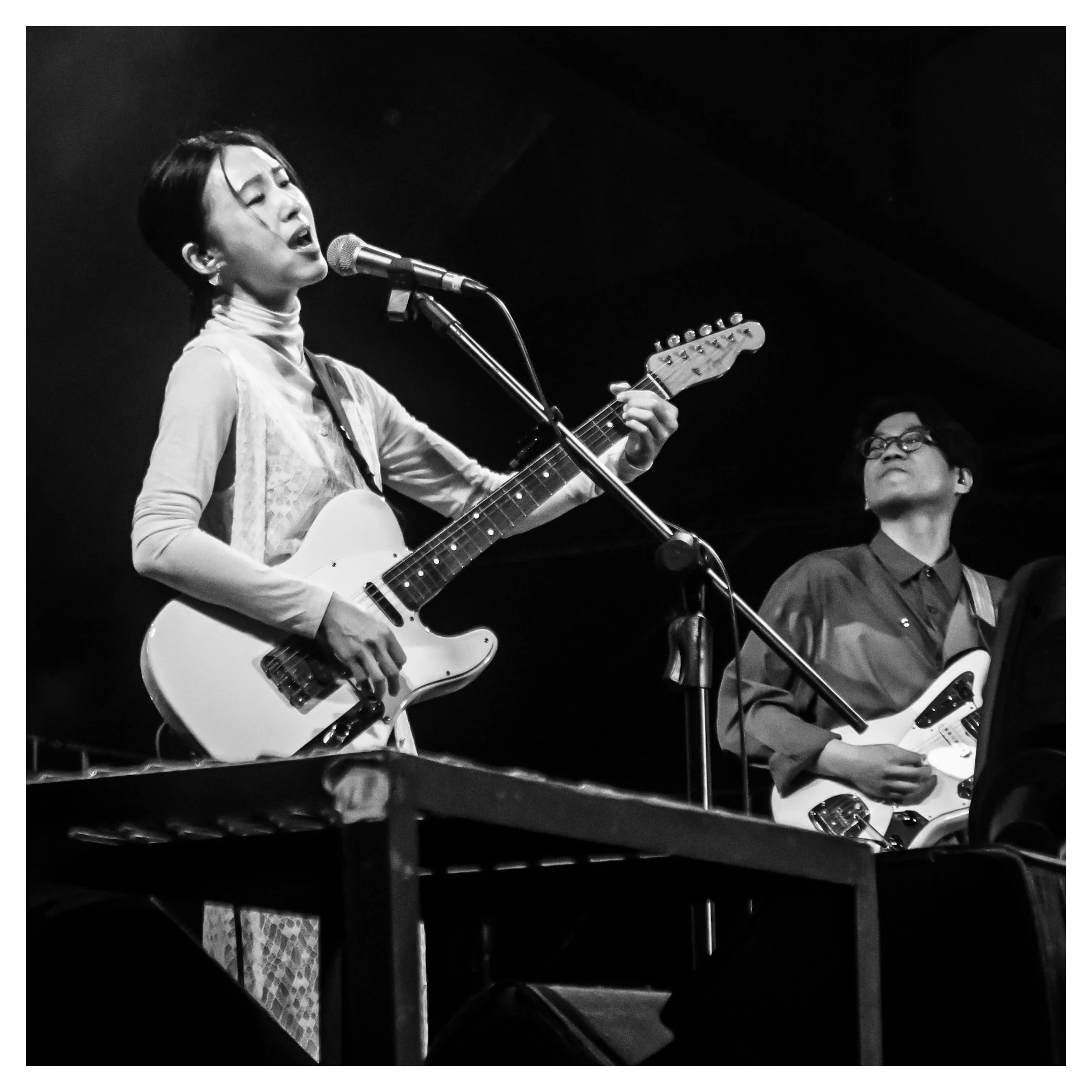
The image you have captured is a poignant study in monochrome performance photography. You’ve managed to freeze a moment of genuine emotional intensity, particularly in the lead singer's expression, while maintaining a clear relationship between the two performers on stage.
Analyzing the Frame
Your use of a square crop focuses the viewer’s eye on the subjects immediately. The high-contrast black and white processing serves the "rock-and-roll" aesthetic well, stripping away the distraction of stage lights to focus on form and emotion.
However, to elevate this image, I recommend looking at subject separation. The dark background, while atmospheric, risks swallowing the dark hair and clothing of your subjects. In future shoots, wait for a moment of "rim lighting"—where a backlight catches the edge of the subject—to pop them out from the shadows. Additionally, the foreground railing is quite dominant; while it adds a sense of "being there," it physically blocks the performers. Shifting your physical position to shoot through or above the stage gear can lead to a cleaner composition.
How to Become a Better Photographer
Growth in photography is often a result of systematic reflection. To improve over time, I recommend compiling a "Shoot Log" alongside your images. Every month, analyze your metadata (EXIF data) to see if you are relying too heavily on a specific focal length or if your shutter speeds are causing unintentional motion blur.
Look at your work in "batches" rather than individual shots. By organizing your images into themes—such as "Stage Portraits" or "Taipei Street Life"—you will begin to notice patterns in your successes and failures. This data-driven critique helps you move from "getting lucky" with a shot to being "intentional" with your craft.
Recommendations for Study
Photographers to Research
• Fan Ho: For a masterclass in how to use light and shadow to create geometric, monochromatic masterpieces in an Asian urban context.
• Chien-Chi Chang: A Magnum photographer whose work, such as "The Chain," demonstrates how to use environmental portraiture to tell deep, often harrowing, human stories.
• Anton Corbijn: Research his legendary work with musicians like Joy Division and U2 to see how grainy, high-contrast B&W can define a band's visual identity.
Books to Read
• "The Decisive Moment" by Henri Cartier-Bresson: The definitive text on timing and composition.
• "Black and White Photography: A Basic Manual" by Henry Horenstein: An excellent resource for mastering the technical nuances of monochrome.
• "Thoughts on Design" by Paul Rand: While about design, it teaches the visual economy and "less is more" philosophy essential for striking photography.
Videos to Watch
• The #1 Composition Mistake Beginners Make: This video explores how camera height and placement change the power dynamic of a photo.
https://www.youtube.com/watch?v=iD4fVFdR_ks
• 20 Photo Composition Techniques in 20 Minutes: A rapid-fire guide to the rules (and how to break them) to add impact to your frames.