

Day 9/365 Zhongzi Reflections
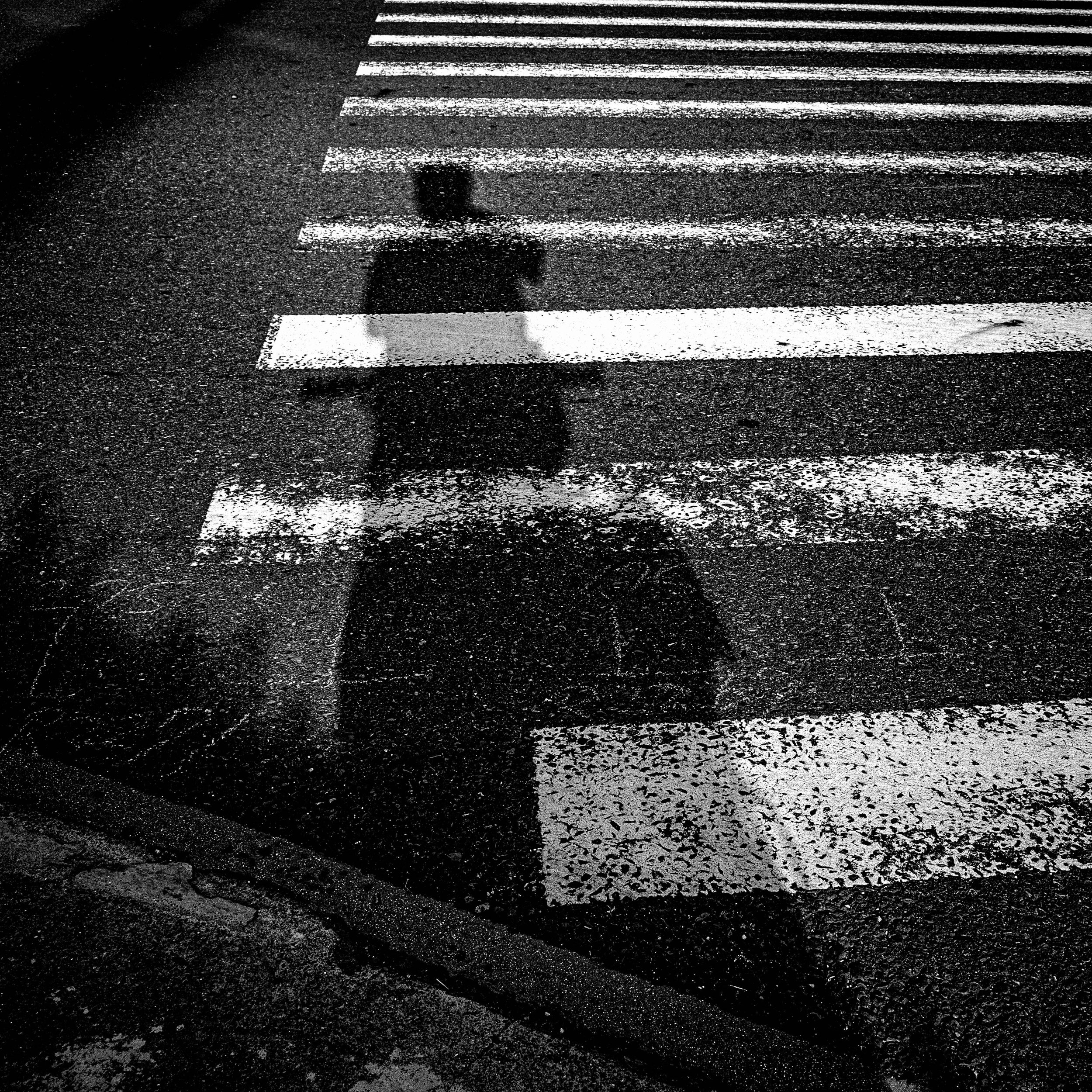
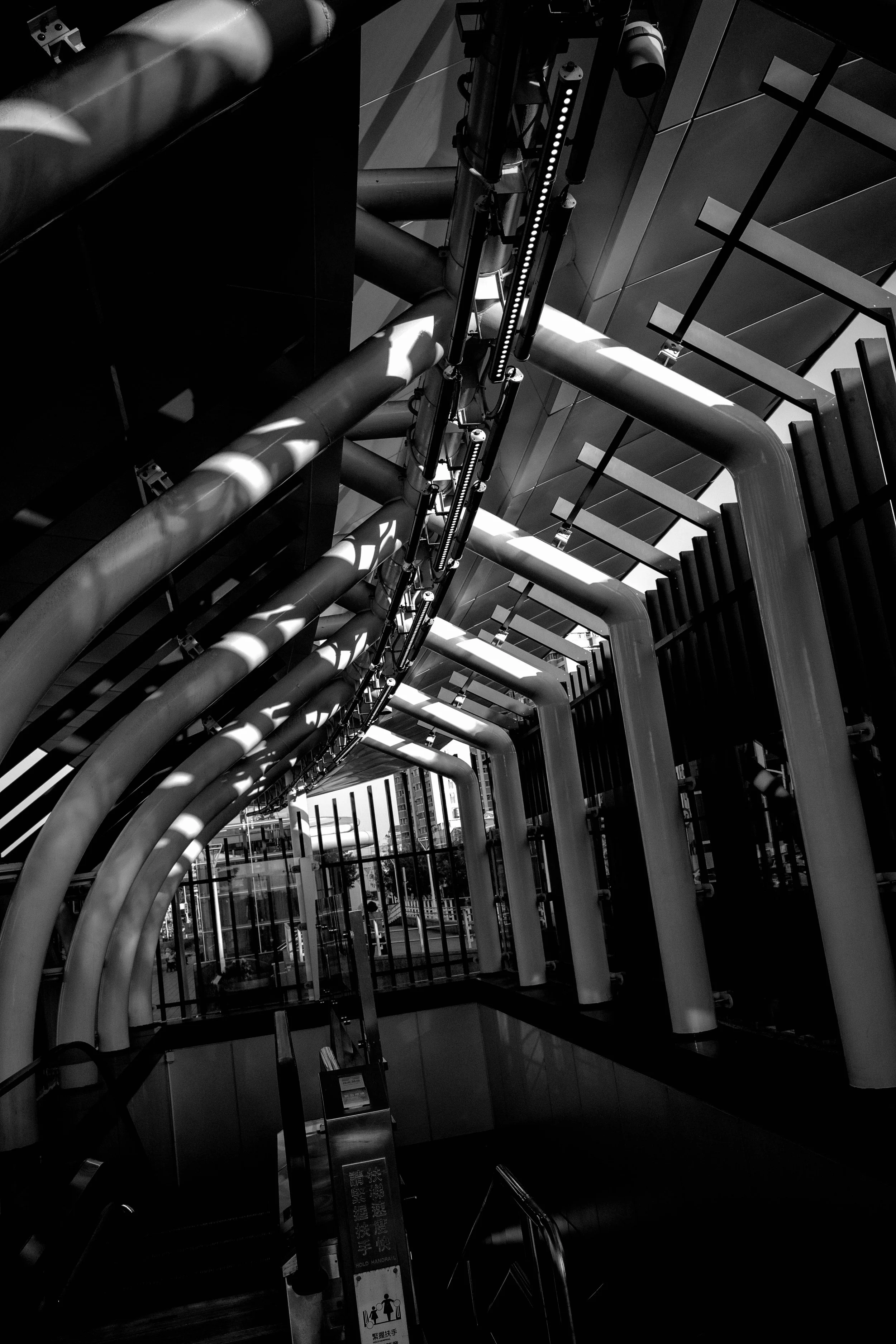
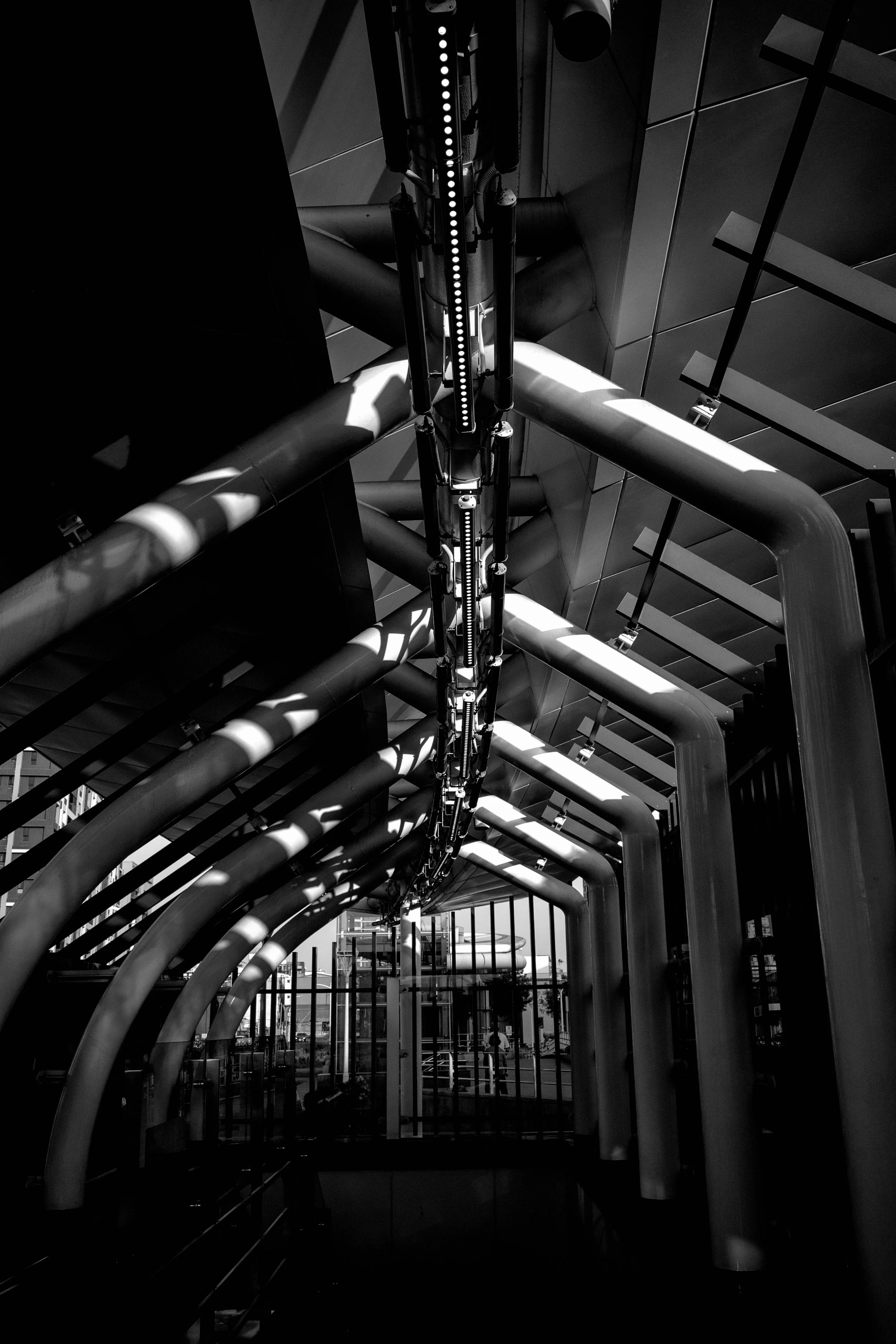
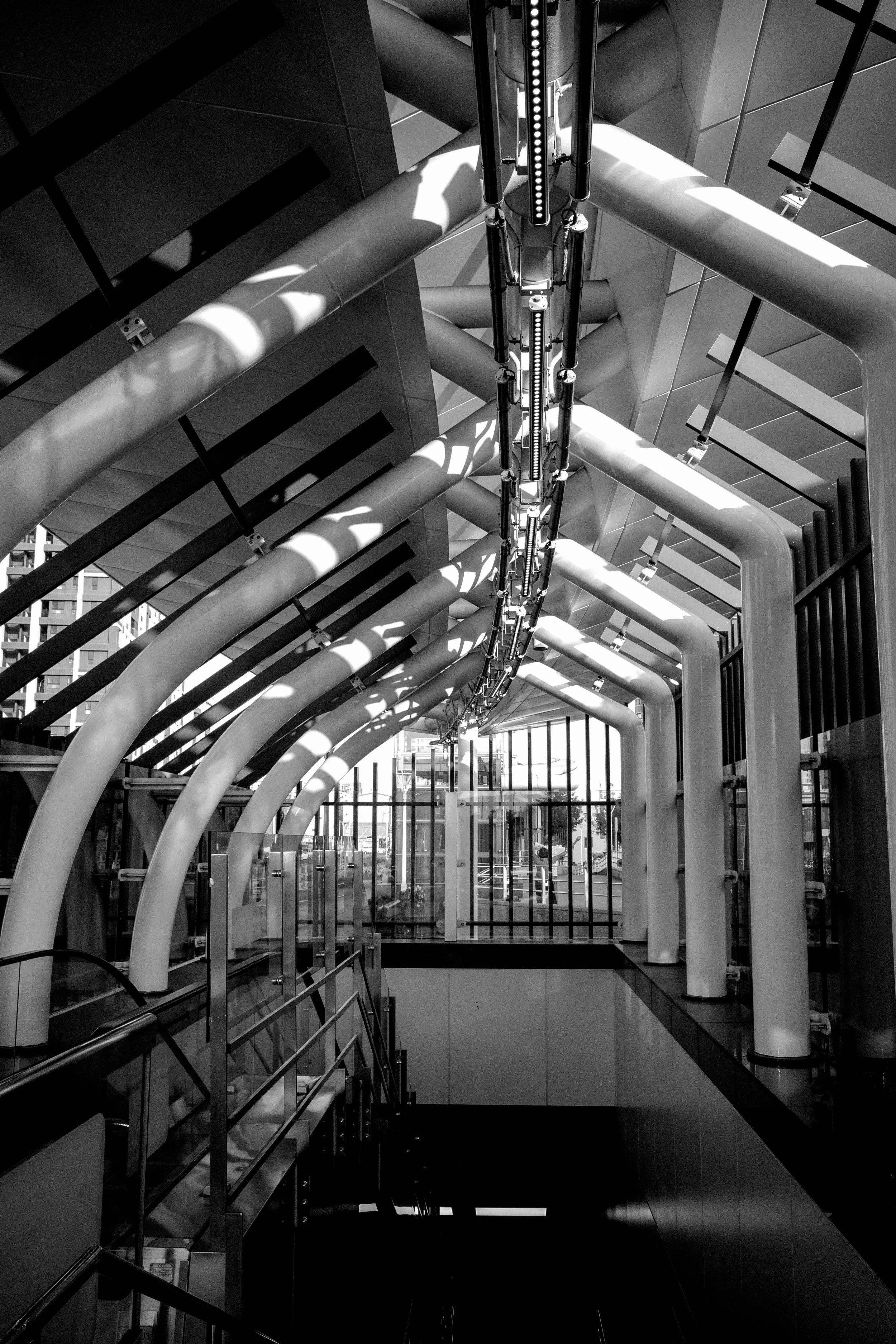
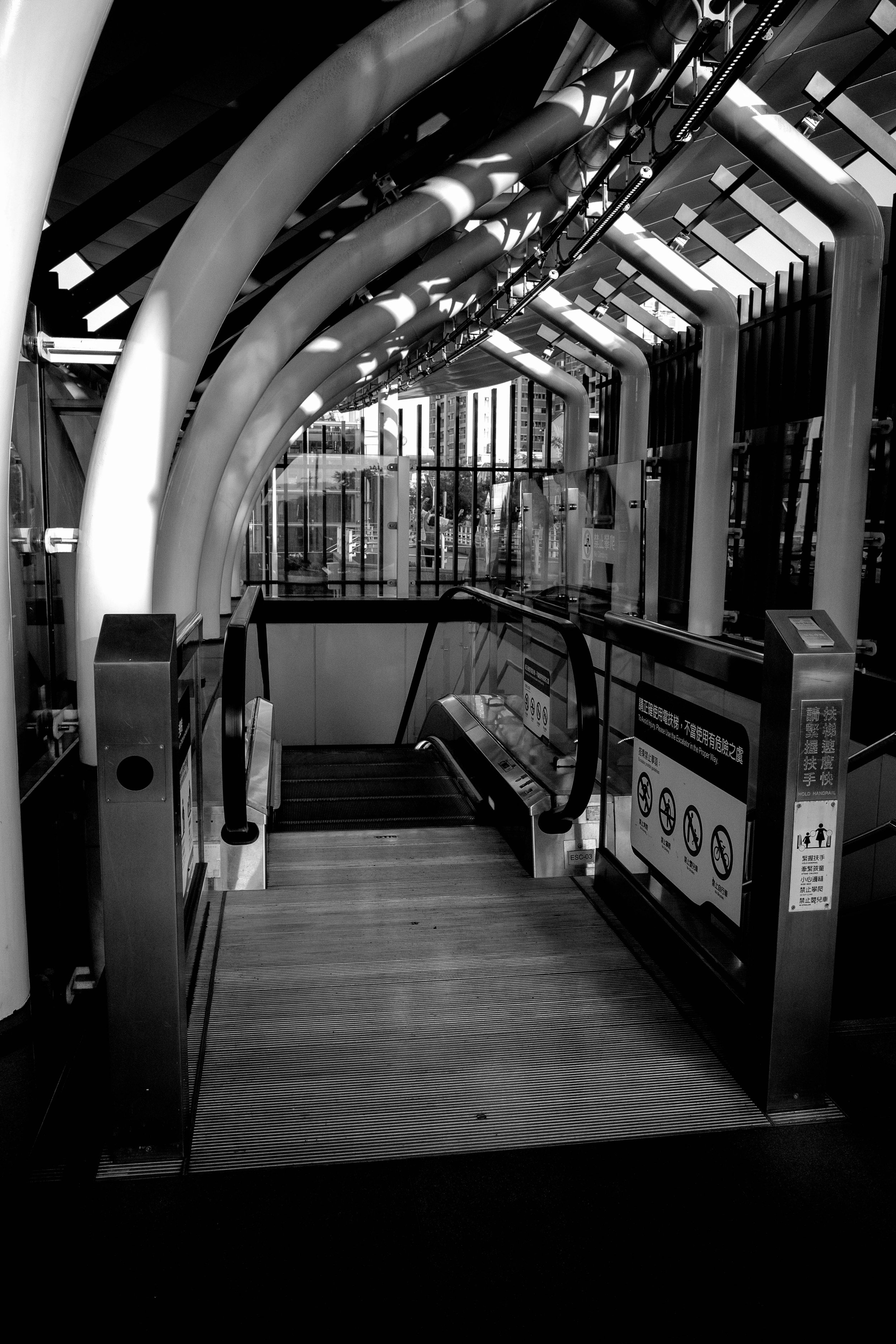
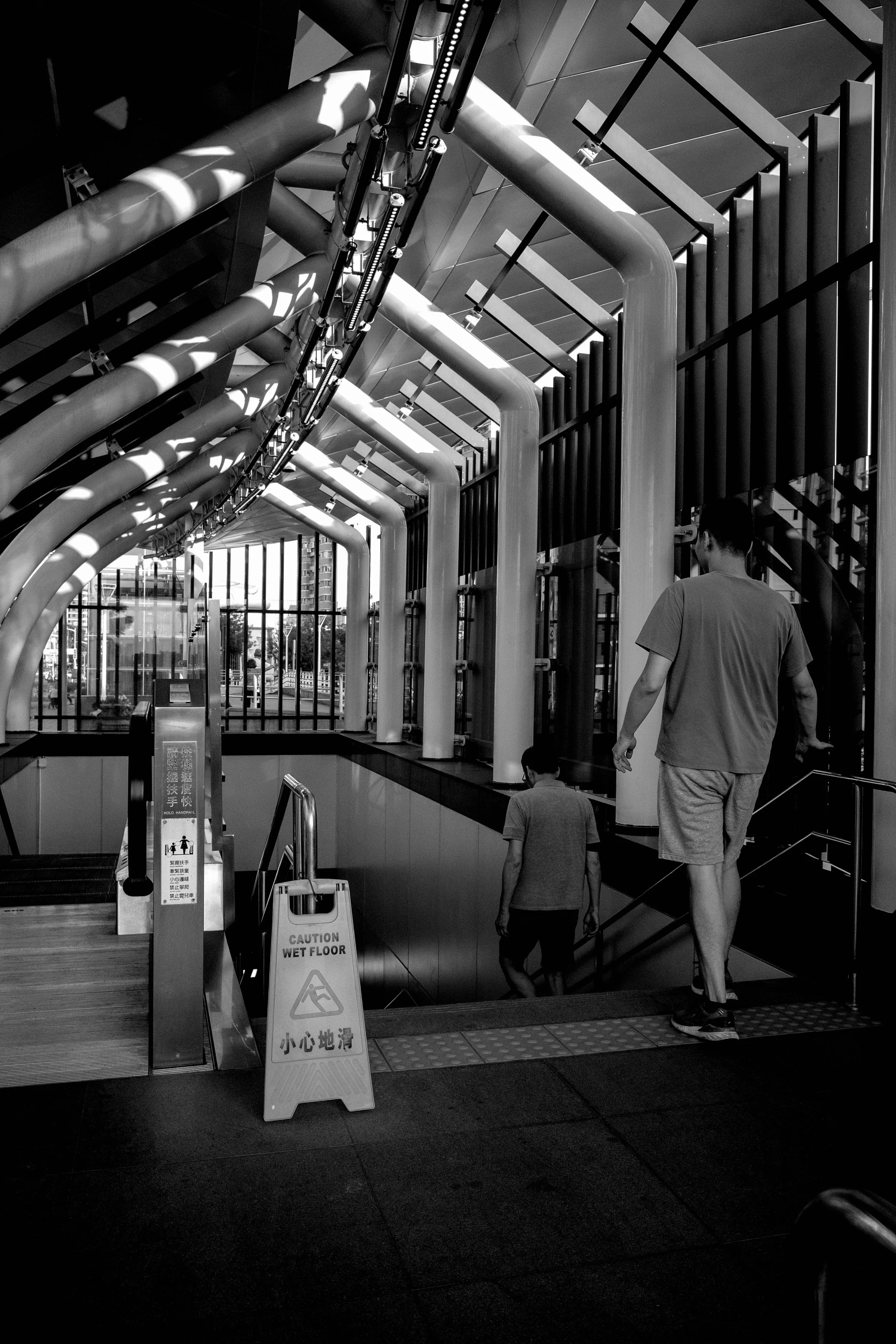
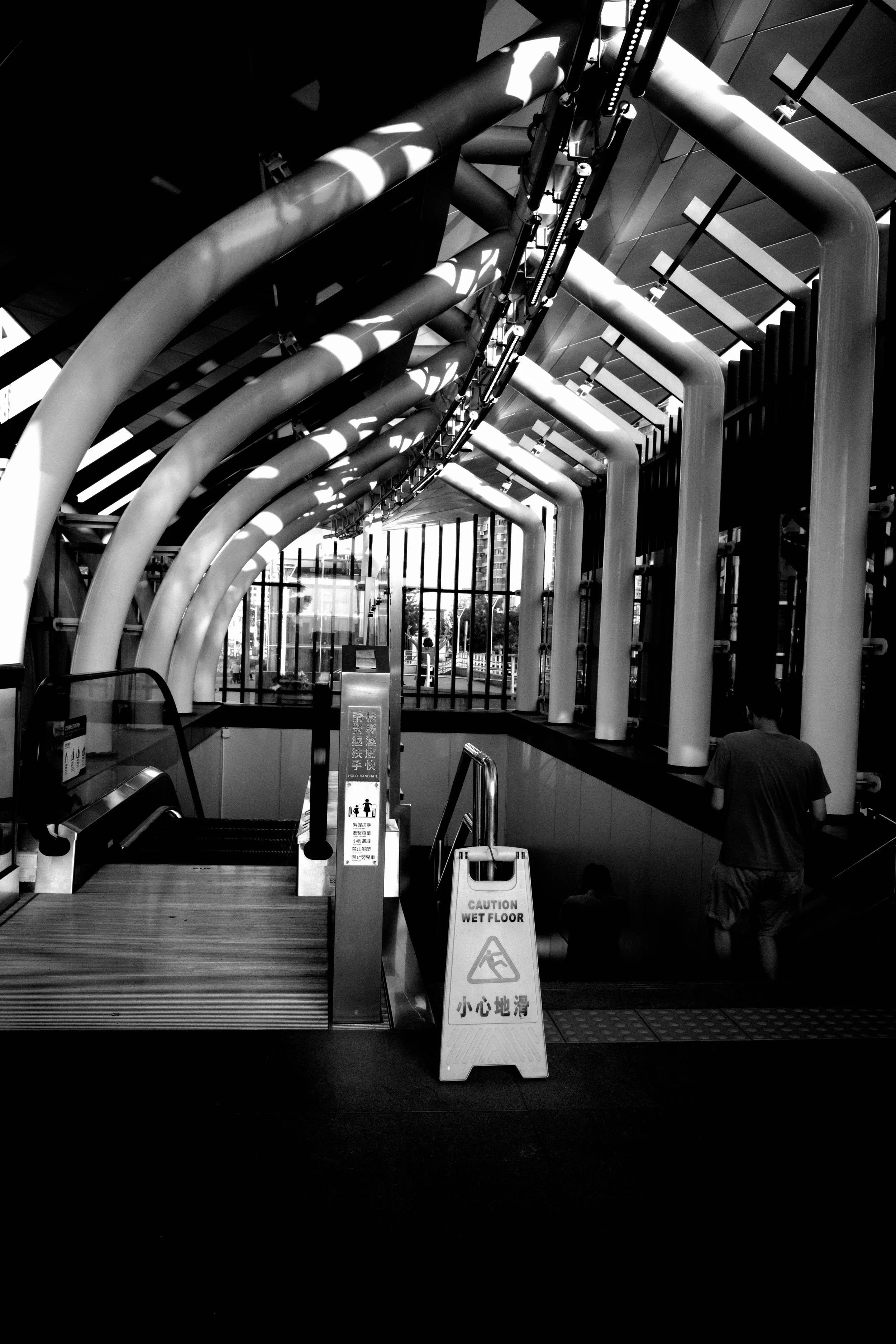
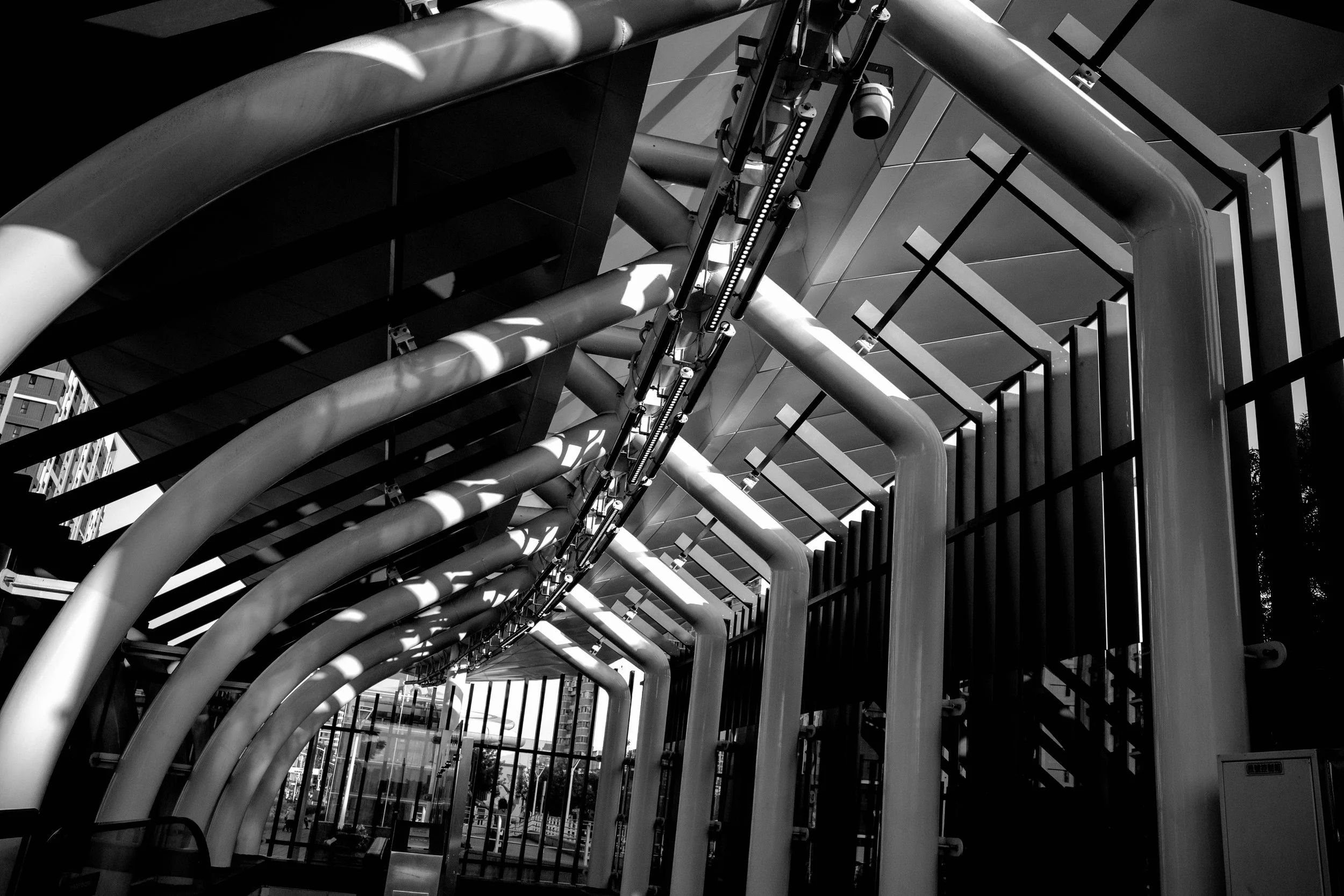
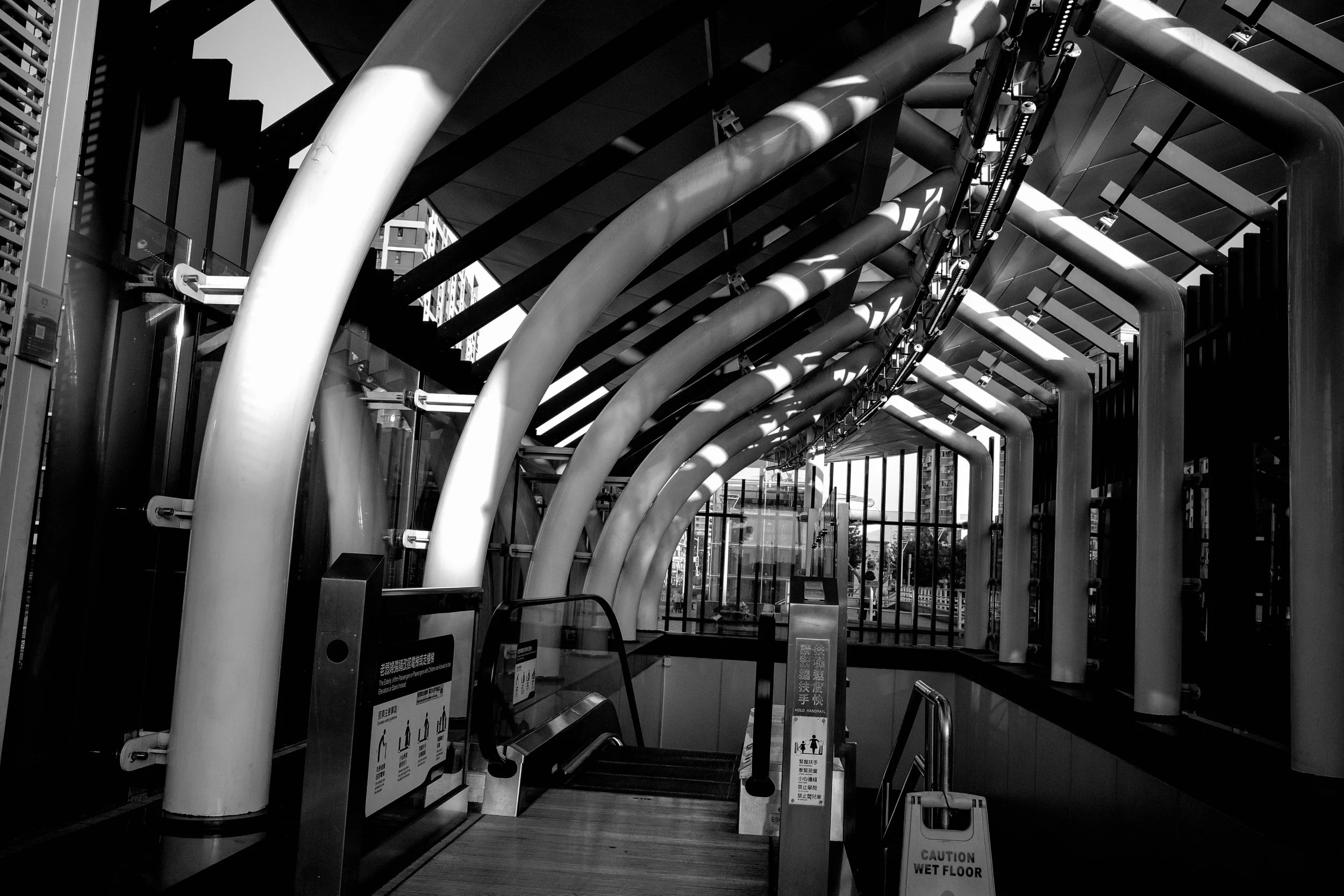
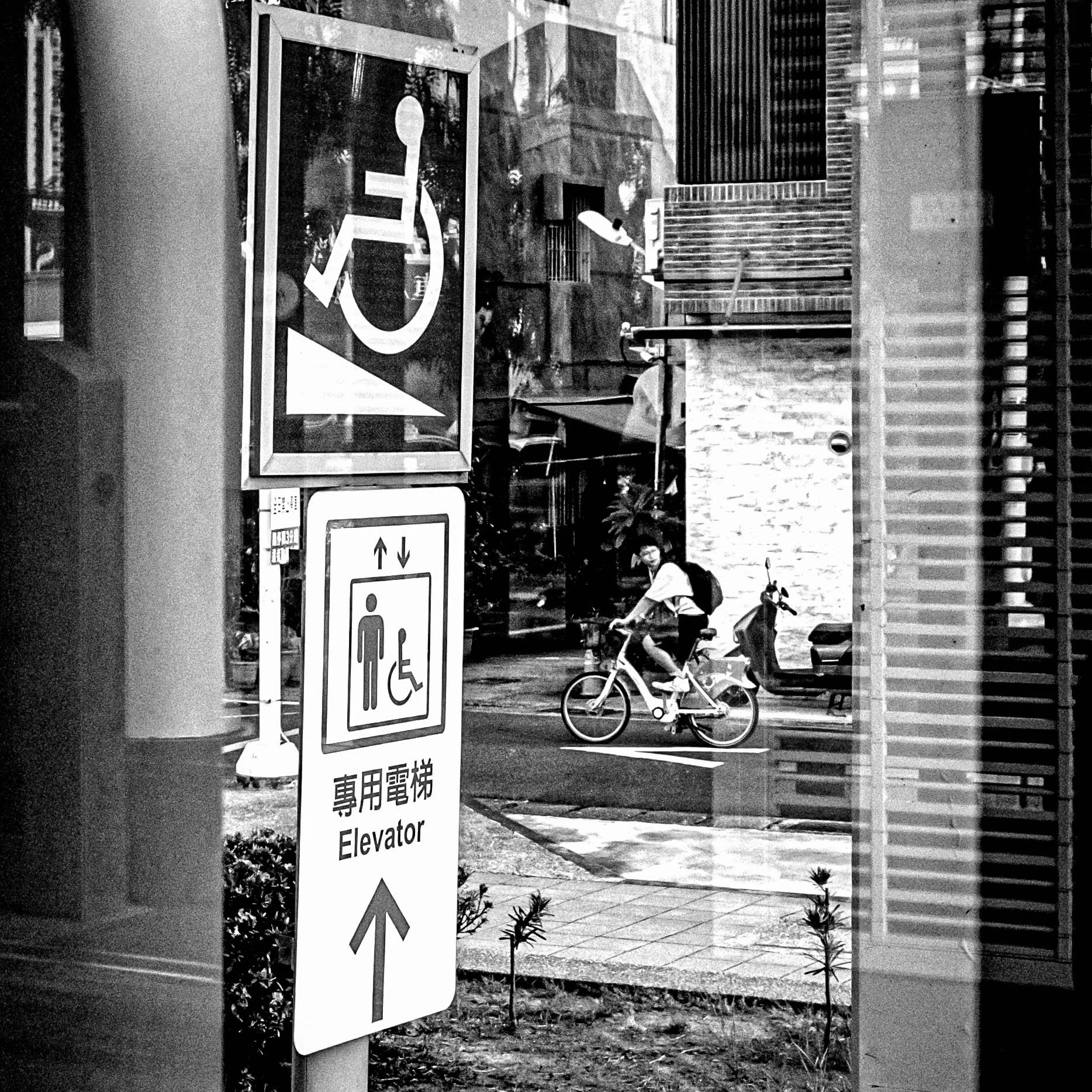
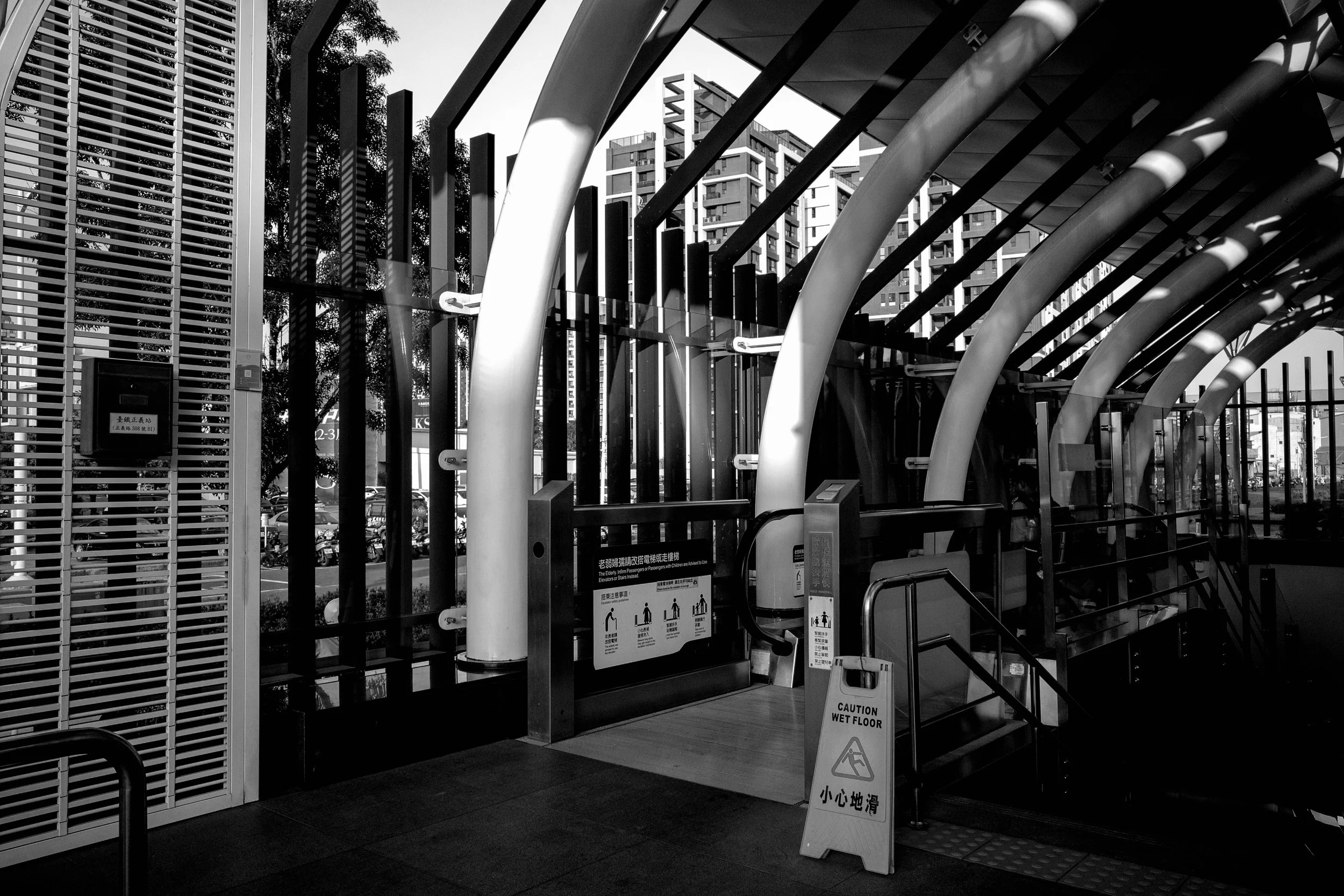
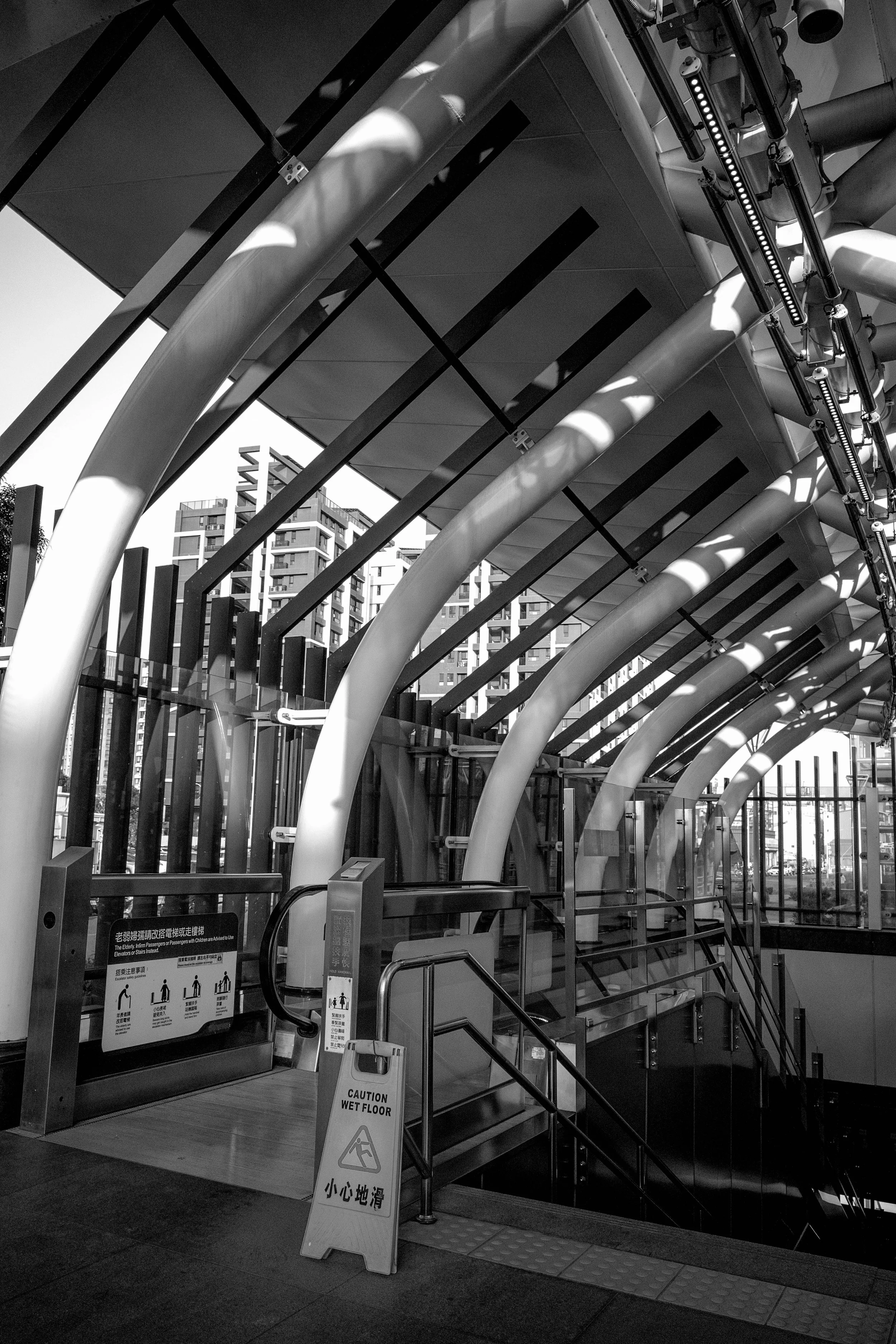
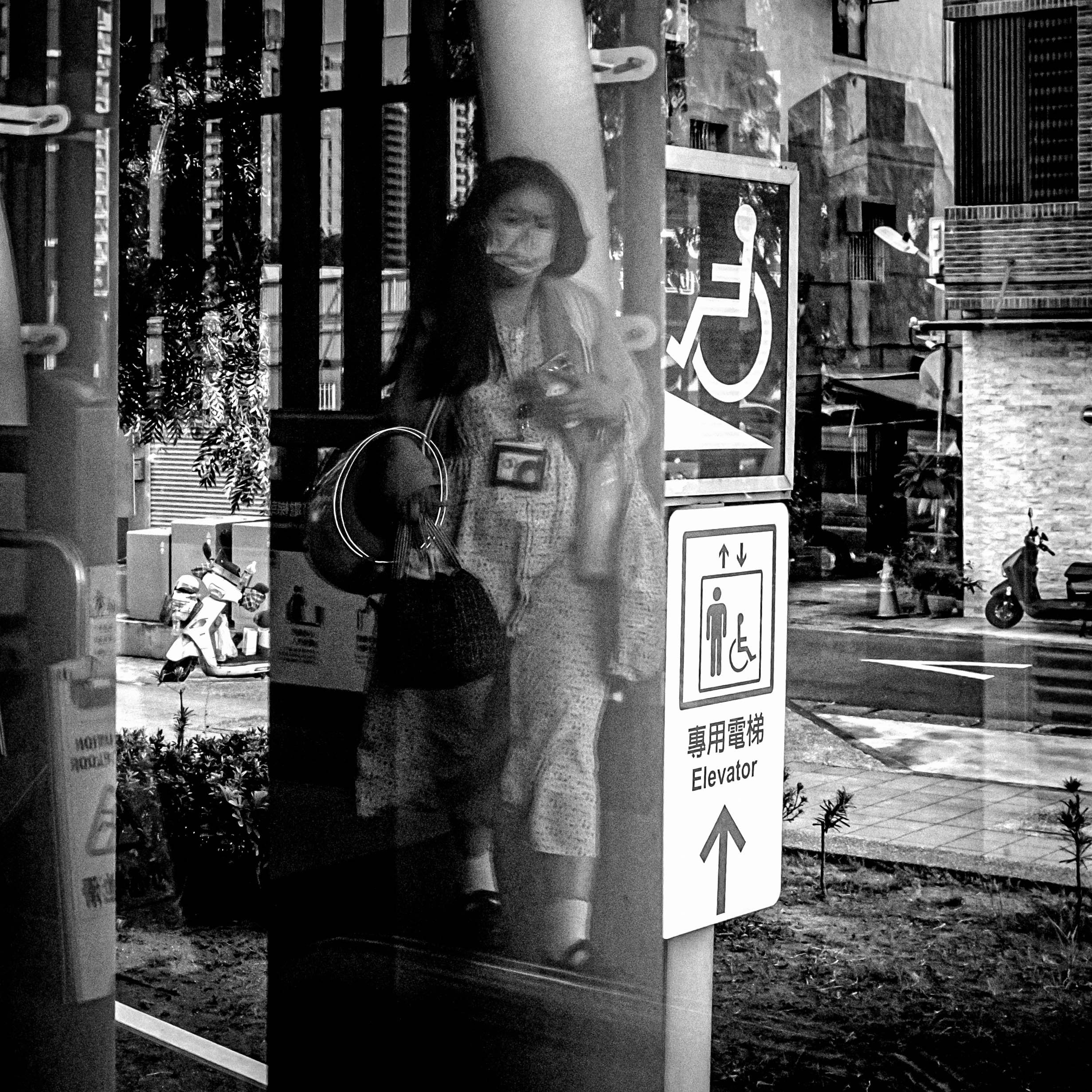
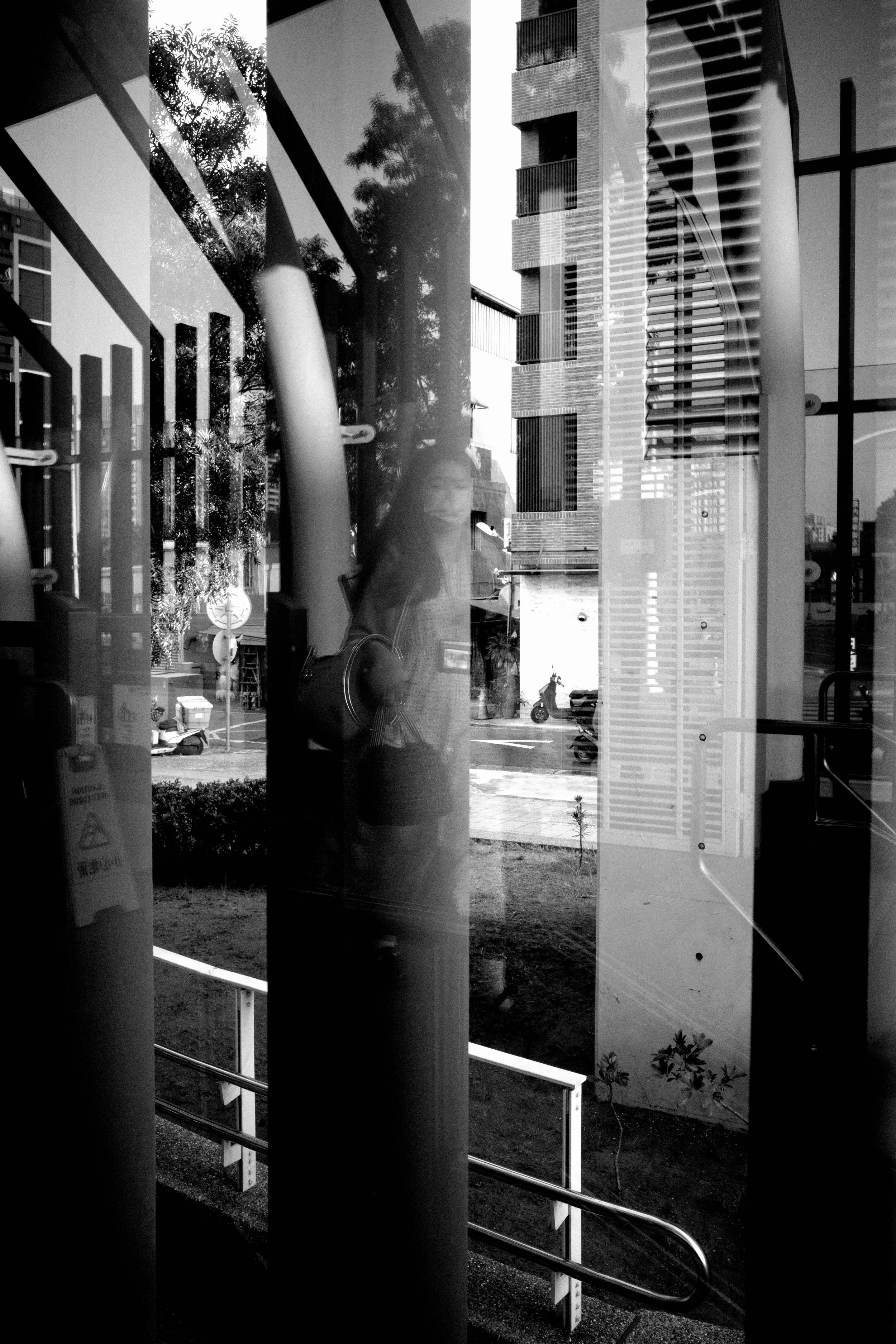
Zhengyi Station, Kaohsiung | Ricoh GRIII
View on Apple Maps | Watch on YouTube
Street photography thrives on layers—the interplay of foreground and background, the collision of different planes of reality within a single frame. At Zhengyi Station in Kaohsiung, I found myself drawn to the glass surfaces that create these natural composites, where reflections merge the urban landscape into something more complex and visually intriguing.
The Shot
This image captures a woman waiting near the elevator entrance, her figure softly reflected in the glass alongside the street scene behind me. The reflection creates a double exposure effect—the woman exists in two planes simultaneously, while the elevator signage, scooters, and urban infrastructure of Kaohsiung blend into a single layered composition.
What makes this work is the balance: the woman is the clear subject, anchored by the elevator sign, but the reflected street life adds context and depth. The black and white treatment emphasizes the tonal relationships and graphic elements—the lines of the building, the shapes of the signage, the contrast between the figure and her surroundings.
Playing with Reflections
Reflections are one of street photography's most versatile tools. They allow you to:
- Compress space: Bring distant elements into the same visual plane as your subject
- Add context: Show what's behind you without turning around
- Create mystery: Blur the line between what's real and what's reflected
- Build complexity: Layer multiple stories into a single frame
The Ricoh GRIII excels at this kind of work. Its 28mm equivalent lens captures enough width to include both the direct scene and the reflection, while its sharp optics ensure that both planes remain readable. The camera's compact size also helps—you can shoot quickly and discreetly, capturing these fleeting moments before they dissolve.
Technical Approach
Camera: Ricoh GRIII
Film Simulation: High Contrast B&W
Focus: Zone focusing, pre-set to capture both the glass surface and the reflection
Exposure: Balanced to retain detail in both the highlights (signage) and shadows (figure)
The key technical challenge with reflection photography is focus. You're dealing with two different focal planes—the glass surface itself and the reflected scene. I used zone focusing to ensure both remained sharp, setting the aperture to maximize depth of field while keeping the shutter speed fast enough to freeze any movement.
Why Zhengyi Station?
Zhengyi Station sits in a busy commercial area of Kaohsiung, surrounded by glass-fronted buildings, bus stops, and pedestrian traffic. It's the kind of location that offers endless opportunities for reflection work—every glass surface becomes a potential canvas for layered storytelling.
This is what I love about the 365 Project: it forces you to see familiar locations with fresh eyes. I've passed this spot countless times, but today I stopped, noticed the light, the glass, the woman waiting, and saw the frame.
Gear: Ricoh GRIII
Location: Zhengyi Station, Kaohsiung
Project: 009/365