

Day 111/365 The Gaze of Duality: Deconstructing a Monochrome Portrait
Metadata
• Camera Model: Leica D-Lux 8
• Shutter Speed: 1/125s
• Aperture: f/3.5
• ISO: 200
Critique
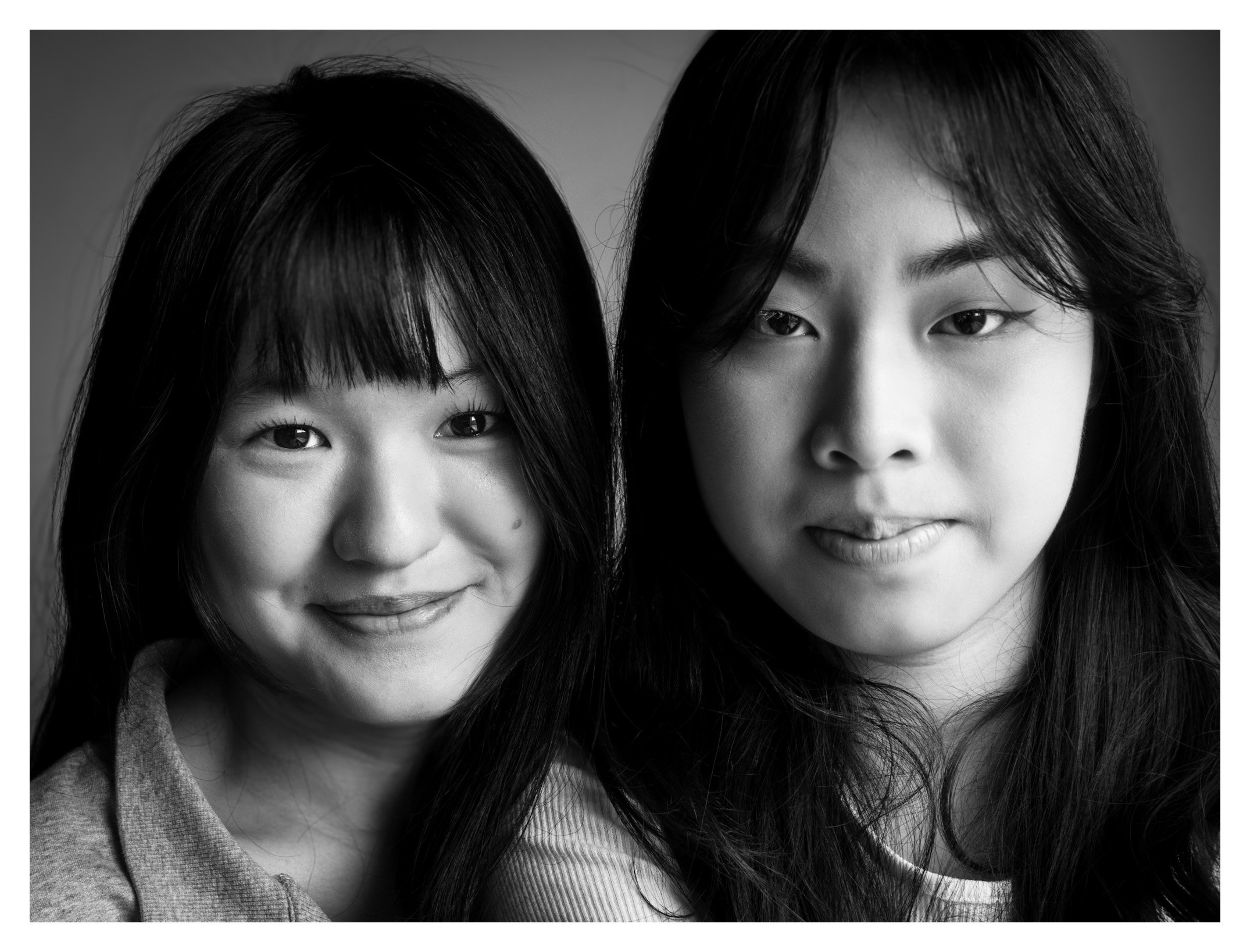
This image is a striking study in contrasts, not just of light and shadow, but of human emotion. You have captured two subjects who, despite being physically close, inhabit different psychological spaces. The subject on the left offers an open, inviting smile, creating a sense of warmth and accessibility. In stark opposition, the subject on the right presents a guarded, almost piercing gaze. This duality is the photograph's strongest asset; it forces the viewer to oscillate between comfort and interrogation.
The choice of black and white is excellent here. It strips away the distraction of color, forcing us to focus on the textures of the hair, the smooth gradation of skin tones, and the catchlights in the eyes. Your tight framing—cutting off the tops of the heads and focusing intensely on the faces—creates a sense of immediacy. It feels claustrophobic in a purposeful way, as if we have stepped into their personal bubble. The lighting is soft and directional, likely from a window or a large softbox, providing good modeling on the faces without harsh shadows.
However, the image feels slightly flat in terms of separation. Because both subjects have dark hair and are set against a relatively dark background, the edges of the frame lose definition. The visual weight is heavy at the bottom, and while the faces are sharp, the lack of separation from the background reduces the three-dimensional "pop" that a Leica lens is capable of rendering.
Improving This Image
To elevate this specific image, I would have introduced a "rim light" or a "hair light" behind the subjects . A subtle light kicking the back of their heads would separate their dark hair from the background, adding depth and dimensionality.
Additionally, while f/3.5 is a safe aperture to keep both faces in focus, experimenting with a slightly wider aperture (if the lens allows, or moving the subjects further from the background) could have softened the background even more, isolating the subjects further.
The "Intent Log" Method
To become a better photographer over time, you must move beyond technical data and record your psychological intent.
Start a simple logbook (physical or digital). For every "keeper" image, record:
1. The Technical: (which you already have: 1/125, f/3.5, etc.)
2. The Intent: Before you pressed the shutter, what word or feeling were you trying to capture? Was it "joy," "tension," or "symmetry"?
3. The Result: Looking at the image weeks later, did you achieve that intent?
Over time, this data will reveal if your technical choices (like deep depth of field or slow shutter speeds) are supporting or hindering your artistic voice.
Recommendations for Study
You should look at photographers who master the psychological intensity of the close-up.
• Photographer to Research: Richard Avedon. His series In the American West or his simple white-background portraits are the gold standard for confronting the subject. He often used flat lighting to ensure every wrinkle and expression was visible, removing all places to hide.
• Book to Read: "Diane Arbus: An Aperture Monograph". Arbus was a master of the "freak" and the "marginal," but her true genius was in photographing "normal" people in a way that made them seem strange and psychologically complex. This book will teach you about the power of the "square" format and direct flash, but mostly about how to capture the "awkward" moment that reveals the truth.
• Alternative Book: "The Chain" by Chien-Chi Chang. Since you are based in Taiwan, Chang's work is essential. His environmental portraiture, particularly his series on the mental asylum, shows how to photograph pairs of people bound together (literally and metaphorically) with deep empathy and stark realism.
You can see Avedon's mastery of the "confrontational portrait" in this analysis.
The extraordinary photography of RICHARD AVEDON
This video is relevant because it breaks down how Avedon used minimalist backgrounds and specific lighting to strip away context, forcing the viewer to focus entirely on the subject's expression and psyche, much like you have attempted here.