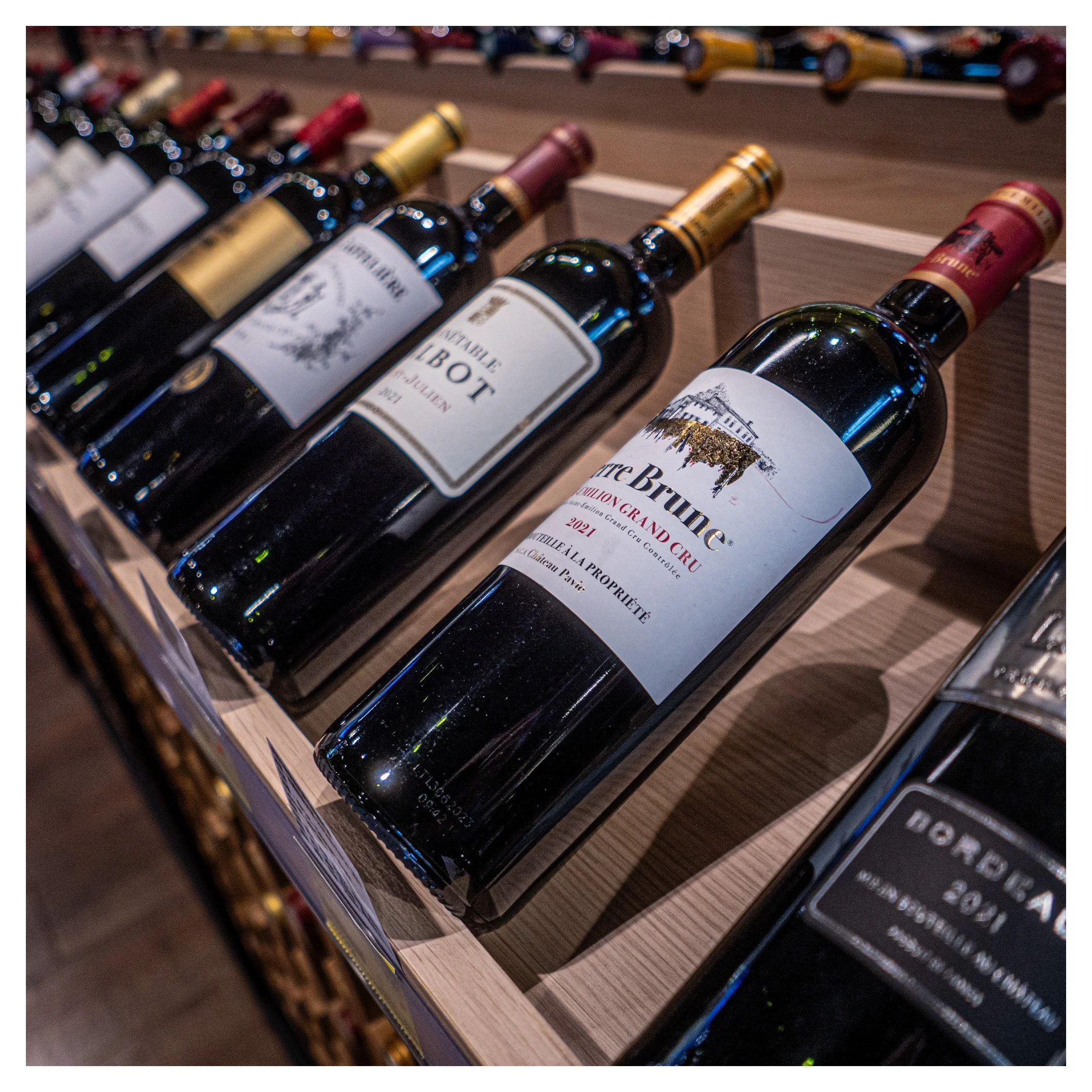
Day 116/365 The Rhythms of Glass: Finding Order in Talees
EXIF Data
Camera Model
Leica D-Lux 8
Shutter Speed
1/200
Aperture
f1.7
ISO
200
The Critique: Rhythm in the Shadows
There is a quiet dignity in the way you’ve captured this subterranean wine cellar. Even while battling the flu, your instinct for repetitive patterns remained sharp. The diagonal line created by the bottles provides a strong sense of "rhythm," a core compositional technique that gives an image immediate visual impact.
The choice of a wide f1.7 aperture was a double-edged sword here. While it allowed you to keep a clean ISO 200 in a dimly lit basement, it created a very shallow depth of field. This makes the "Pierre Brune" label the undisputed hero, but the rapid fall-off in focus means the secondary bottles lose their texture quickly. In a maintenance shot, this works to isolate the subject, but it sacrifices the "bursting out" effect that patterns often provide when more of the frame remains sharp.
Advice for Improvement
• Tame the Reflections: Glass is a notorious "nemesis" in photography. You have some harsh overhead glares on the bottle shoulders. Moving just a few inches to your left or right can often "flag" these reflections using the surrounding shadows, creating a cleaner silhouette.
• Embrace the "Equal Plane": For repetitive subjects like these, try photographing them from a flat, front-on perspective rather than an oblique angle. This helps keep the entire pattern in focus even at wider apertures.
• Color Narrative: The warmth of the wooden shelving creates a lovely contrast with the dark glass. In post-processing, consider slightly desaturating the wood to let the white labels pop even further, drawing the viewer's eye directly to the typography.
Your Path to Mastery
To grow as a photographer, I recommend a "Data-Driven" approach. Start a simple log of your shots—note the lighting conditions (e.g., "B1 Department Store Fluorescents") and how your Leica handled the color. Over time, you’ll spot patterns in how your gear reacts to specific environments.
Research and Study
• Photographer: Irving Penn. Study his still-life work; he transformed everyday objects into icons through masterful light management.
• Book: The Photographer’s Eye by Michael Freeman. This is an essential guide to understanding how to organize graphic elements within a frame.
• Video: "The Art of Photography" by Ted Forbes. His channel provides deep insights into the meaning behind the technical side of the craft.
• Watch here: The Art of Photography - YouTube
• Video: Leica D-Lux 8 Tips & Settings. Since you are using a new model, mastering its specific capture assistants and stabilization will help during those low-energy maintenance days.
• Watch here: D-Lux 8 Essential Know-How