

Day 132/365 The Luminescent Gaze: Humanizing the Shadows
EXIF Data
Camera Model: Leica D-Lux8
Shutter Speed: 1/250
Aperture: f2.8
ISO: 200
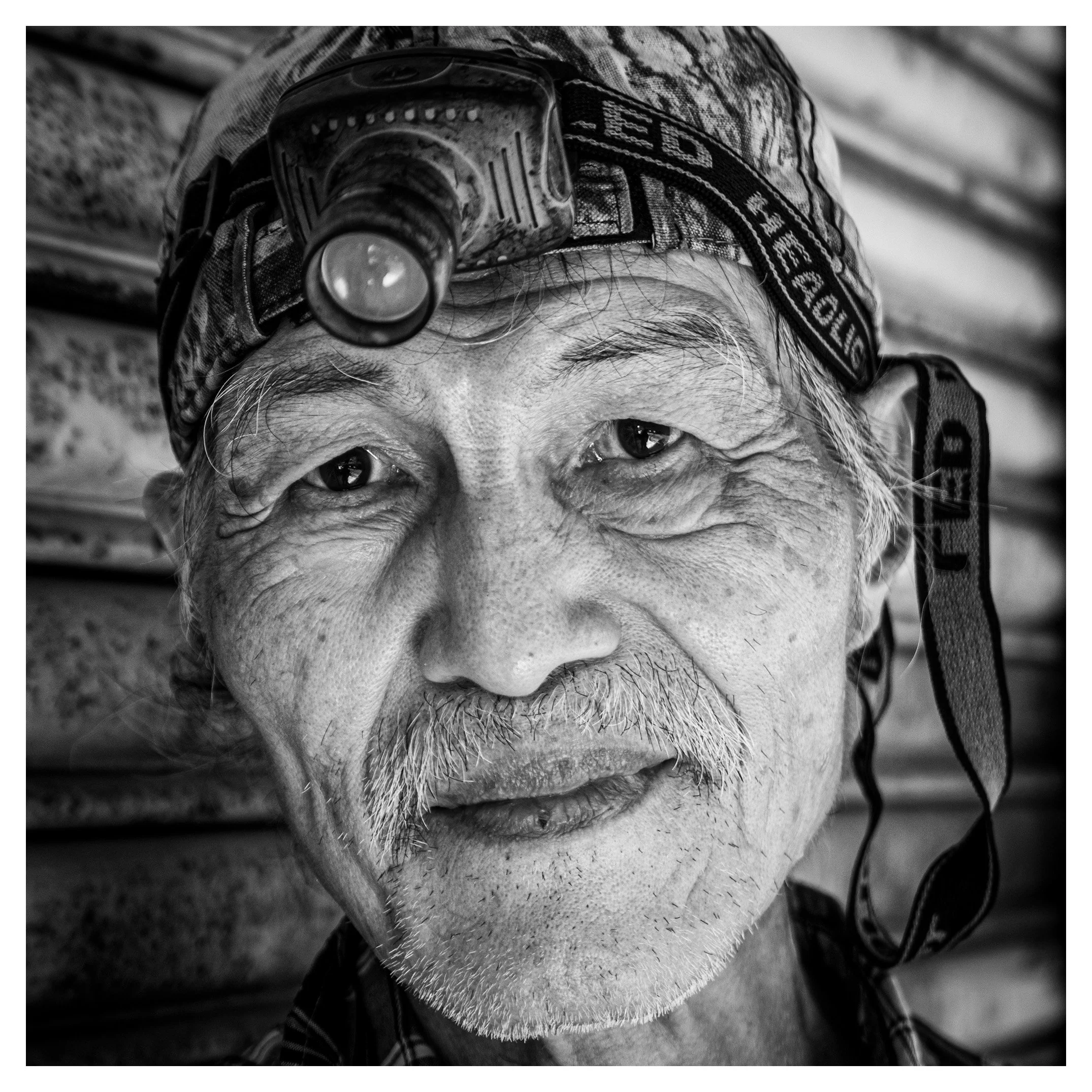
The portrait you’ve captured is a striking example of "grit" photography, where the textures of life—wrinkles, whiskers, and the wear on a headlamp—become the primary landscape. By choosing a tight crop, you’ve forced an intimate, almost confrontational encounter between the viewer and this individual. The Leica’s rendering of the highlights on the skin is particularly commendable, maintaining detail in the forehead while allowing the eyes to retain a spark of life.
Refinement and Improvement
While the intensity of the image is its greatest strength, there are technical and compositional shifts that could refine the narrative:
• The Peripheral Distraction: The strap hanging on the right side of the frame creates a heavy vertical line that leads the eye out of the photo. In post-processing, or by adjusting the subject’s gear, removing this would keep the viewer’s focus locked onto the facial features.
• Background Rhythm: The corrugated metal behind the subject provides excellent horizontal contrast to the verticality of the face. However, at f2.8, it remains quite sharp. Softening this slightly further through a shallower depth of field or by moving the subject a few feet away from the wall would create a "3D pop" effect.
• The Headlamp "Hot Spot": The glass of the headlamp has a very bright reflection. While it adds authenticity, it occasionally competes with the subject's eyes for attention. Subtle dodging and burning to slightly lower the lamp’s exposure would ensure the eyes remain the undisputed focal point.
Growth Through Data Analysis
To become a master of your craft, you must treat your metadata as a diary. Start a spreadsheet or use a dedicated plugin to track your "hit rate" based on specific settings.
1. Aperture Trends: Analyze whether your most emotionally resonant portraits are shot wide open or stopped down. You may find that your style favors the environmental context of f5.6 over the bokeh of f2.8.
2. Focal Length Consistency: Even with a fixed zoom, track where you land on the barrel. Do you prefer the intimacy of 75mm (equivalent) or the distortion-led energy of 24mm?
3. Light Conditions: Categorize your images by light type (Overcast, Golden Hour, Artificial). This will reveal your technical "blind spots" and help you seek out challenging lighting scenarios to broaden your range.
Curated Resources for the Developing Eye
Photographers to Study
• Chien-Chi Chang: As you are documenting Taiwan, studying his "The Chain" series is essential for understanding how to capture psychological depth within a specific cultural context.
• Bruce Davidson: Look at his "Subway" series. He uses flash and harsh environments to create portraits that feel both cinematic and brutally honest.
Literature for the Library
• The Decisive Moment by Henri Cartier-Bresson: This is the "Bible" of timing and geometry. It will teach you how to wait for the exact millisecond when the subject's expression aligns with the light.
• Magnum Contact Sheets edited by Kristen Lubben: This book is vital because it shows the "failures" leading up to the iconic shot. It will demystify the process of great photography.
Essential Viewing
• The Salt of the Earth (Documentary): A profound look at the life and work of Sebastião Salgado. It demonstrates how photography can give a voice to the marginalized. Watch on YouTube
• The Genius of Photography (BBC Series): This series provides a comprehensive history of the medium, helping you understand the "why" behind the "how." Watch on YouTube