

Technical Metadata
Camera Model: Ricoh GRIII
Shutter Speed: 1/640
Aperture: f8
ISO: 250
Formal Analysis and Critique
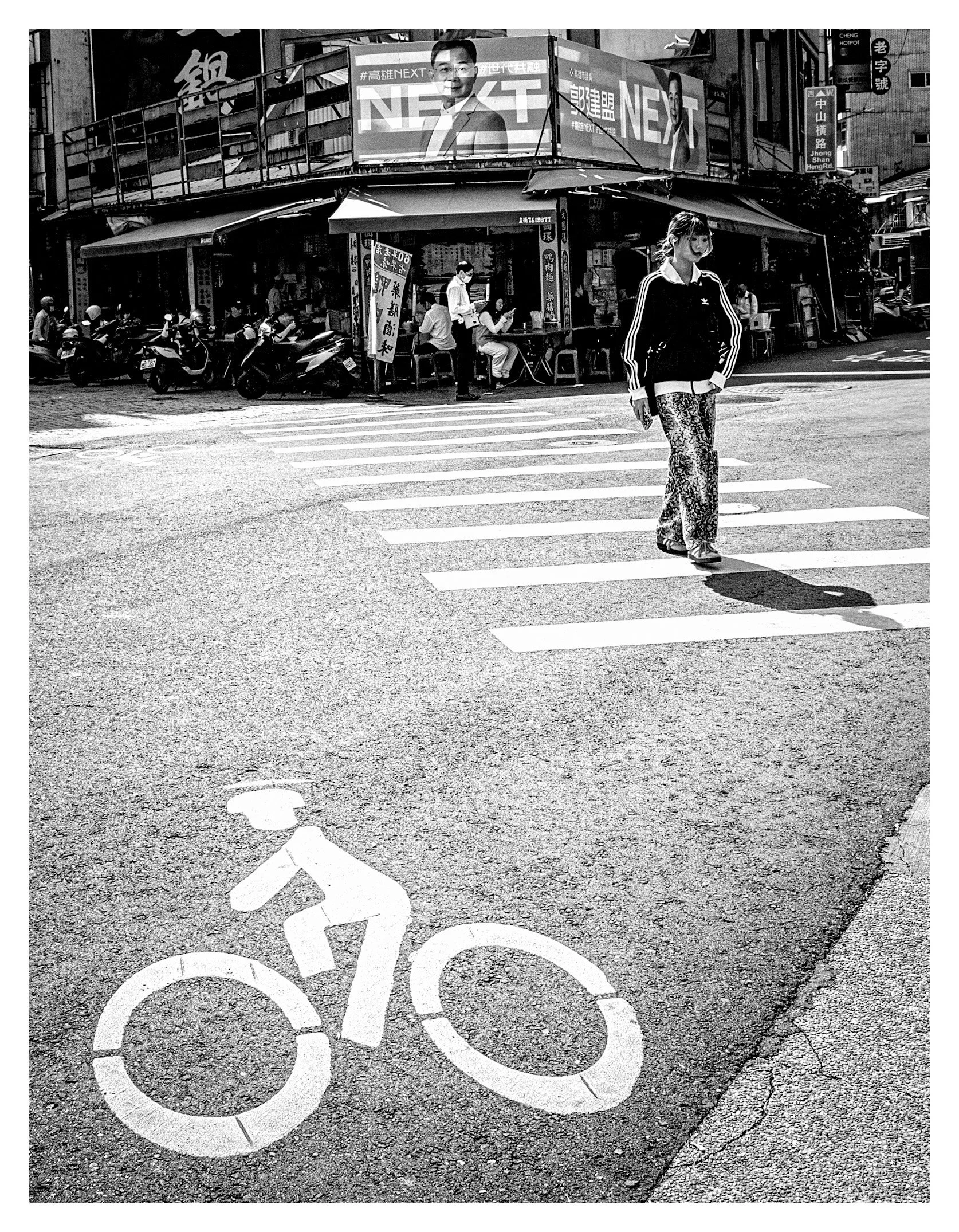
The strength of this image lies in its graphic weight. By opting for a high-contrast black and white treatment, you have stripped away the distraction of neon signage and plastic stools, forcing the eye to reckon with the geometry of the street. The bicycle stencil acts as a powerful anchor, its oversized proportions creating a sense of forced perspective that pulls us toward the pedestrian.
However, the composition suffers slightly from a competing hierarchy. The political banners in the background, while culturally relevant, contain high-frequency detail (faces and text) that pulls focus away from the woman on the crosswalk. Her position is excellent—caught in a moment of transition—but she is physically small in the frame compared to the asphalt.
How to Improve This Image
• Compression and Depth: Consider a lower camera angle. Getting the lens closer to the "bicycle" on the ground would exaggerate its size further, creating a more surreal, "daido-esque" relationship between the symbol and the human.
• The Crop: I would recommend a slight crop from the top to remove the topmost portion of the building. This would tighten the "arena" of the street and keep the viewer’s eye trapped within the action of the crossing.
• Shadow Management: While the high contrast works, ensuring there is a sliver of detail in the pedestrian’s jacket would help separate her more effectively from the busy background.
Compiling Data for Growth
To become a master of the craft, you must move beyond the "lucky shot" and into the "calculated vision." I suggest keeping a shoot log where you categorize your images by:
1. Light Quality: (High sun, overcast, golden hour).
2. Subject Proximity: (How close were you really?).
3. Emotional Resonance: (Did you feel a connection, or were you just a "bystander"?).
By reviewing these patterns every 500 frames, you will identify your "crutch"—the habits you fall back on—and can consciously break them to find a new visual language.
Research and Study Recommendations
To further refine your eye for the "Cultural Landscape" and urban tension, I recommend diving into the following resources:
Photographers to Study
• Fan Ho: For his unparalleled ability to use shadows and geometric light to turn ordinary streets into cinematic stages.
• Chien-Chi Chang: Specifically his work in The Chain and Jet Lag, to see how a Taiwanese master handles themes of alienation and public space.
• William Eggleston: Though he worked in color, his Guide is the bible for making the "mundane" street object look monumental.
Books to Read
• "The Decisive Moment" by Henri Cartier-Bresson: The foundational text for timing and geometry in photography.
• "Bystander: A History of Street Photography" by Colin Westerbeck: An essential academic reference to understand where you fit in the lineage of street shooters.
Videos to Watch