

EXIF Data
Camera Model: iPhone 17
Shutter Speed: 1/60
Aperture: f1.6
ISO: 80
The Critique
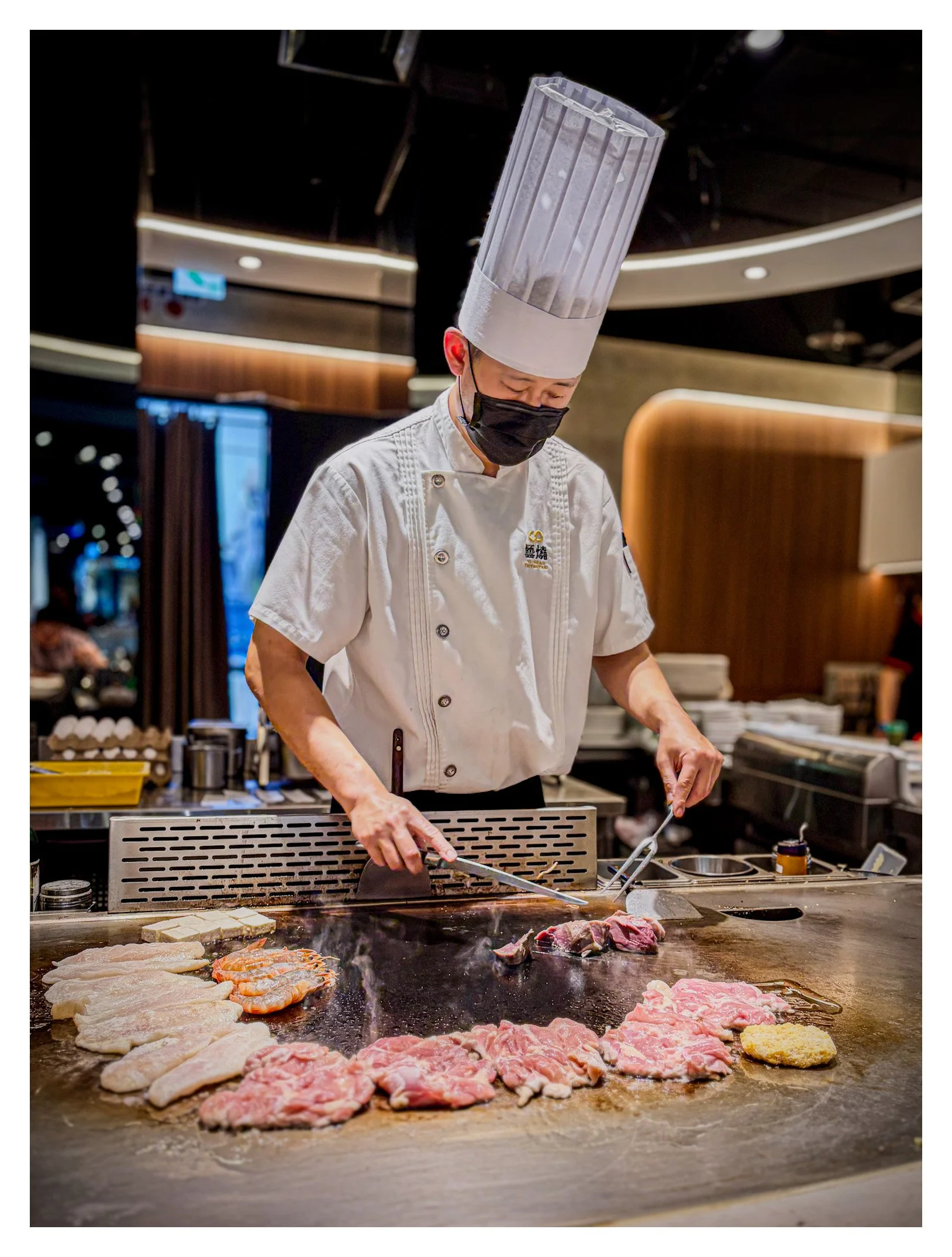
Your image captures a quintessential moment of Taiwanese culinary life: the focused intensity of a Teppanyaki chef. Technically, the iPhone 17 has handled the high-contrast lighting of a kitchen environment impressively well. At ISO 80, the image is remarkably clean, and the f1.6 aperture provides a natural, shallow depth of field that helps separate the subject from the busy restaurant background.
However, from a critical perspective, the composition is a bit "safe." The chef is centered, and while the steam rising from the grill adds movement, the frame feels slightly cramped at the top. The white of the chef’s toque nearly blends into the ceiling lights, losing some of the vertical power that a tall hat provides to the subject's silhouette.
Refining Your Eye: Paths to Improvement
To elevate this specific type of environmental portrait, consider the following:
• Vary Your Angle: Instead of a chest-high perspective, try shooting from the level of the grill. This makes the chef appear more heroic and puts the viewer directly into the heat of the action.
• Manage the Highlights: In a kitchen, stainless steel and overhead lights create "hot spots." Use your exposure compensation to underexpose slightly; this preserves the texture in the white chef’s coat and the steam.
• The Decisive Moment: Wait for the specific second of peak action—a flick of the wrist, a splash of oil, or a glance toward the customer. This adds a narrative layer beyond just "a person cooking."
Growth Through Data
Becoming a master photographer requires moving from intuition to intentionality. I recommend you start a Shooting Journal. Every time you upload to your Squarespace site, log more than just the technical metadata. Note the "Soft Data":
1. The Emotional Goal: What did you want the viewer to feel?
2. The Constraint: What was the biggest obstacle (e.g., "poor lighting," "crowded space")?
3. The Success Rate: Out of 50 shots of this chef, why was this one the "keeper"?
By reviewing these logs monthly, you will identify patterns in your behavior—perhaps you always shoot from the same height or avoid shadows—allowing you to consciously break those habits.
Research and Study
To broaden your photographic vocabulary, I suggest looking into these resources:
Photographers to Study
• Fan Ho: For his mastery of light and shadow in Asian urban environments. His work shows how to turn mundane daily life into epic poetry.
• Mary Ellen Mark: A legend of environmental portraiture. Study how she builds a relationship between the subject and their specific surroundings.
Books to Read
• "The Decisive Moment" by Henri Cartier-Bresson: The foundational text for street and documentary photography.
• "Uncommon Places" by Stephen Shore: To understand how to find beauty in the "ordinary" and the importance of precise framing.
Videos to Watch
• The Art of Street Photography (Magnum Photos): A deep dive into the philosophy of capturing life as it happens. [https://www.youtube.com/watch?v=33L9VvL2Z_s]
• Composition and Storytelling in Environmental Portraits: This video breaks down how to balance a person with their background. [https://www.youtube.com/watch?v=VArS99S_X3k]