

Day 138/365 The Streets at Corgi-Level: A Lesson in Perspective
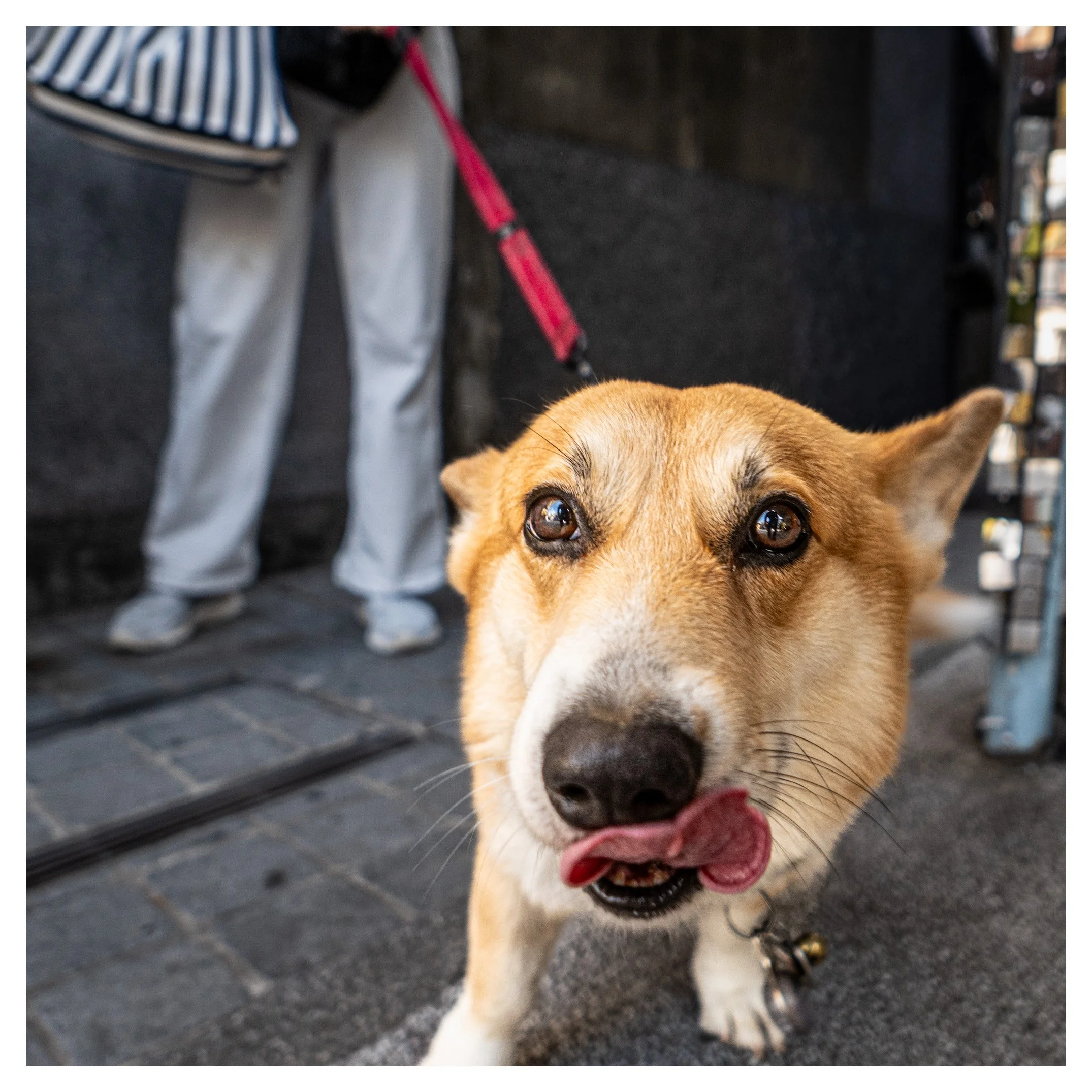
In the chaotic ballet of urban life, we often forget to look down. This frame serves as a startling reminder that some of the most compelling narratives are happening just inches above the pavement. It is a moment of raw, unpolished spontaneity that captures the very essence of "the street."
Technical Metadata
Camera Model: Leica D-Lux 8
Shutter Speed: 1/250
Aperture: f/2
ISO: 200
The Critique: Theo Marr's Perspective
The use of a wide-angle lens in such close proximity to the subject creates a wonderful "fisheye" distortion that emphasizes the dog’s snout and tongue, lending the image a sense of playful urgency. The shallow depth of field at f/2 is handled beautifully here; while the background figures are blurred into anonymity, their presence provides necessary context—the tether of the leash and the striped bag suggest a human world that the subject is momentarily subverting.
The timing is impeccable. Capturing the tongue mid-lick adds a layer of "the decisive moment" that transforms a simple animal portrait into a lively character study. However, the exposure feels a bit heavy in the mid-tones. The cobblestones and the shadows in the background are competing for attention with the highlights on the dog's fur.
Advice for Improvement
• Refine the Framing: While the low angle is excellent, the vertical element on the right edge of the frame is slightly distracting. A tighter crop or a slight shift to the left during the shoot would have isolated the subject further, making the corgi’s expression the undisputed protagonist of the frame.
• Post-Processing Contrast: I recommend lifting the shadows slightly on the dog’s face. The eyes have a lovely catchlight, but they are tucked under a heavy brow. Bringing a bit more exposure into those "windows" would deepen the emotional connection with the viewer.
• Leading Lines: Use the pavement lines more intentionally. Currently, they lead the eye toward the person's feet. If you can align those lines to point toward the subject's face, the composition becomes much more dynamic.
Developing Your Craft: The Long Game
To evolve from a hobbyist to a master, you must treat your portfolio as a living dataset. Start a "shooting diary" where you tag your images by focal length and time of day. Over time, you may find that your most successful images—like this one—happen at wide angles in natural light. This data allows you to lean into your strengths while identifying technical ruts you may need to break.
Recommended Research and Study
Photographers to Explore
• Elliott Erwitt: The undisputed master of canine photography. His ability to find humor and irony in animals at eye-level is something you should analyze deeply.
• Garry Winogrand: Study his "Real World" series for his mastery of the wide-angle lens and how he fills the frame with chaotic energy.
• William Eggleston: For his "Guide" and use of low-angle perspectives on seemingly mundane subjects.
Essential Reading
• The Americans by Robert Frank: A masterclass in being an "outsider" looking in on a culture.
• The Decisive Moment by Henri Cartier-Bresson: To understand the geometry of time and frame.
• Think Like a Street Photographer by Matt Stuart: For practical advice on candid observation and humor.
Video Lectures and Masterclasses
• The Art of Street Photography (Magnum Photos): A deep dive into the philosophy of the craft. View on YouTube
• Joel Meyerowitz - What you see is what you get: Insight into the speed and intuition required for the street. View on YouTube
• The Genius of Annie Leibovitz: While a portraitist, her use of environmental context is vital for your growth. View on YouTube