

Day 150/365 The Silent Sentinel of the Night: A Study in Street Geometry
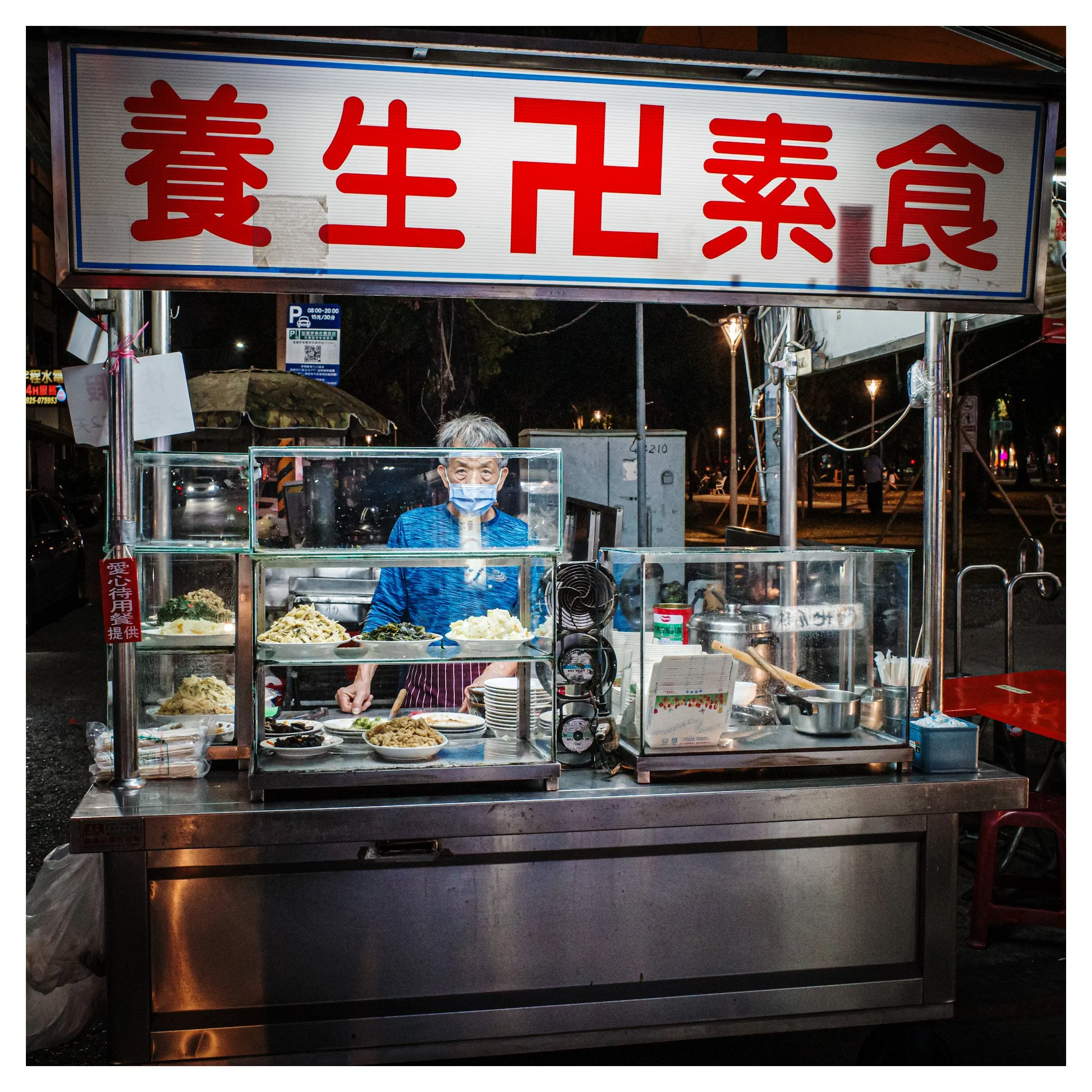
Street photography in Taiwan offers a unique blend of modern urgency and timeless tradition. Discover why this particular frame captures more than just a meal, and how the careful alignment of light and structure can transform a routine roadside encounter into a profound environmental portrait.
EXIF Data
Camera Model: Ricoh GRIII
Shutter Speed: 1/80
Aperture: f5.6
ISO: 4000
There is a quiet, cinematic tension in this frame that immediately caught my eye. As a critic, I look for moments where the mundane is elevated through composition, and this study of a vegetarian food stall in Taiwan does exactly that. The "sentinel" behind the glass—masked, watchful, and framed by his own trade—serves as a poignant anchor for the viewer.
Formal Analysis
The Ricoh GRIII is a street photographer’s scalpel, and you have used it here with precision. The high ISO of 4000 introduces a grain that feels organic rather than digital, reminiscent of high-speed film stocks like Tri-X pushed to its limits. This texture adds a layer of grit that suits the urban night.
The composition relies heavily on the frame-within-a-frame technique. The stainless steel stall and the glass display cases create a series of internal rectangles that house the subject. However, the true strength lies in the contrast between the vibrant, large-scale typography of the overhead sign and the delicate, cluttered reality of the food preparation area below.
Areas for Improvement
While the central framing is strong, the image feels slightly "tight" at the bottom. The base of the stainless steel stall is nearly touching the edge of the frame, which creates a bit of visual tension. In future captures, I would recommend:
• Stepping Back or Tilting: Giving the stall a few more centimeters of "breathing room" at the bottom would ground the subject more firmly.
• Managing the Background: The bright light source in the upper right and the distant park lights are a bit distracting. A slight shift in your physical position to the left might have tucked those highlights behind the stall's structure, focusing all the attention on the vendor.
• Aperture Choice: At f5.6, you have great sharpness, but the Ricoh’s lens is superb wide open. Dropping to f2.8 would have allowed for a lower ISO, reducing noise while slightly softening that busy background.
The Path to Mastery
To evolve as a photographer, you must move beyond the "snapshot" and into the "narrative." I suggest you begin maintaining a Digital Contact Sheet. For every image you post, keep the five frames taken before and after it. Analyzing your "near misses" will teach you more about your instinctive timing than your successes ever will. Record the time of day and the specific street lighting conditions to understand how Taiwan’s unique sodium-vapor and LED mix affects your color palette.
Curated Research for the Soul
Photographers to Study
• Fan Ho: Master his use of "living" geometry and how he used light to isolate subjects in busy Hong Kong markets.
• Chien-Chi Chang: Specifically his work in The Chain. His ability to capture the psychological weight of his subjects within the Taiwanese context is unparalleled.
• Saul Leiter: Look at how he photographed through glass and used reflections to create painterly, layered compositions.
Required Reading
• The Decisive Moment by Henri Cartier-Bresson: The "bible" of timing and geometry.
• Uncommon Places by Stephen Shore: For a masterclass in how to treat "boring" structures with the dignity of high art.
Educational Viewing
• The Art of Street Photography - Magnum Photos: A deep dive into the philosophy of the craft.
• The Geometry of a Scene - Fan Ho’s Composition: Essential for learning how to use lines and frames like you did in this shot.
Keep hunting the light. The streets of Taiwan have many more stories to tell through your lens.