

Day 152/365 The Geometry of Anonymity: A Structural Critique
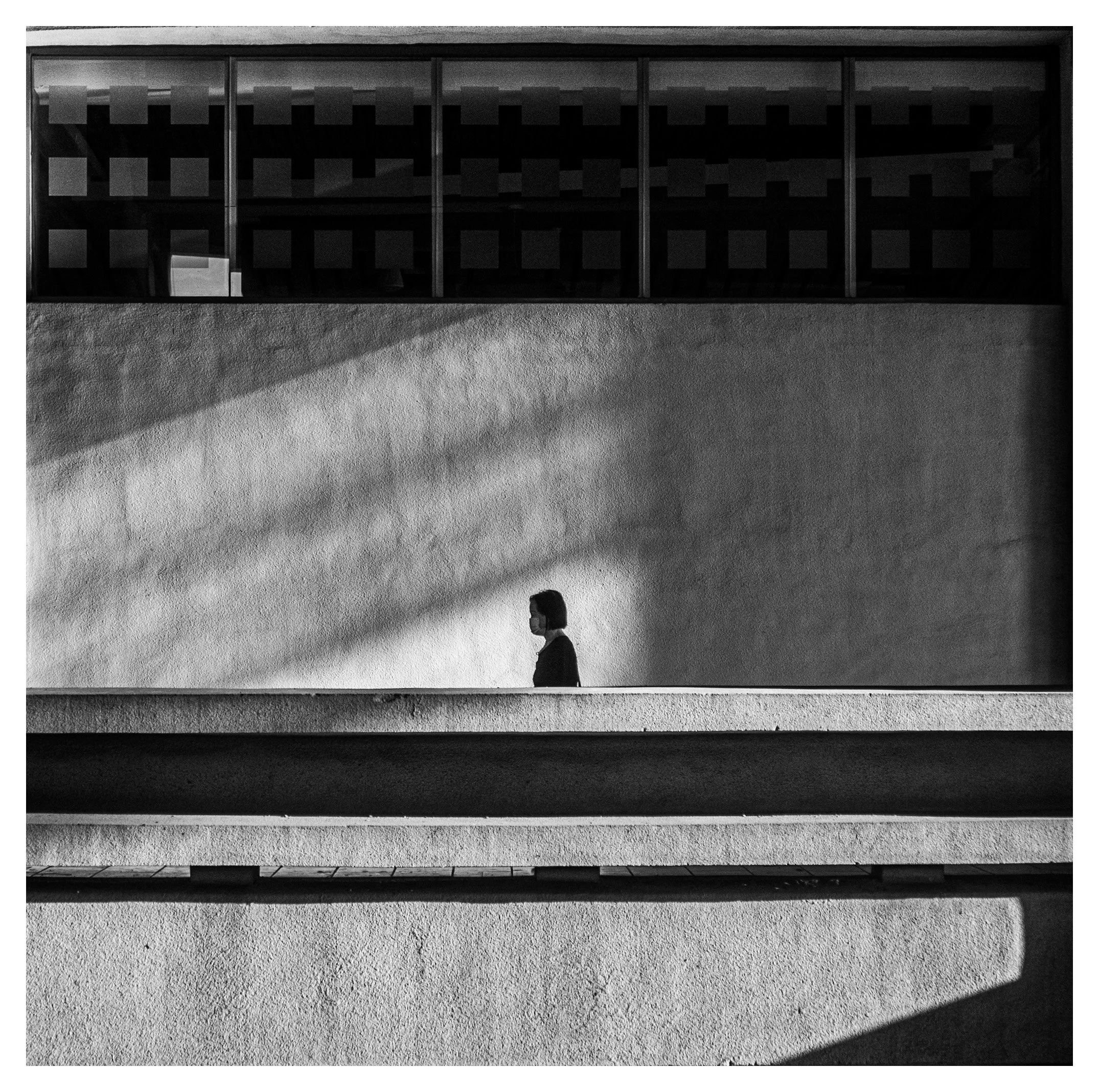
Discover how mastering light, shadow, and architectural scale can transform ordinary urban spaces into compelling visual narratives. In this critique of a striking geometric street photograph from Kaohsiung, you will learn why precise timing and spatial awareness are essential for elevating your black and white compositions.
Image Metadata
Camera Model: Leica D-Lux8
Shutter Speed: 1/500
Aperture: f/2.4
ISO: 250
Location: Cultural Center Kaohsiung
The Critique
As an art critic, I am immediately drawn to the structural rigor of this photograph. You have successfully utilized the brutalist textures of the Cultural Center in Kaohsiung to create a canvas of intersecting lines and stark contrasts. The heavy, horizontal bands of the concrete steps anchor the lower third of the frame, providing a visual weight that grounds the composition. Above, the rhythmic, geometric sequence of the dark windows offers a rigid counterpoint to the sweeping, ethereal diagonal beams of light slicing across the central wall.
The lone, masked figure serves as the vital punctum of the image. By isolating this subject against the illuminated portion of the textured wall, you emphasize the scale of the architecture and the anonymity of modern urban existence. Your choice to present this in black and white is astute; stripping away color allows the viewer to focus entirely on the interplay of chiaroscuro and spatial geometry. Your technical settings—particularly the fast 1/500 shutter speed—were perfectly chosen to freeze the subject's motion crisply, maintaining the sharp, rigid aesthetic of the surrounding architecture.
Opportunities for Improvement
While the image is undeniably strong, it could benefit from a slight shift in spatial tension. Currently, the figure is positioned nearly in the horizontal center of the frame. In street photography, utilizing negative space dictates the narrative trajectory. Had you waited a fraction of a second longer, or framed the shot slightly to the right, placing the subject on the right-hand third walking into the vast emptiness of the left, you would have created a stronger sense of journey, isolation, and anticipation. Additionally, ensuring that the camera is perfectly leveled is critical when dealing with such dominant architectural lines; even a minor rotational skew can distract the viewer's eye from the intended geometry.
Evolving Through Data
To elevate your practice over time, you must treat your photography not just as art, but as an empirical study of light and environment. I advise keeping a meticulous field journal or a dedicated spreadsheet for your shoots. Record the camera metadata of your strongest images, but go much further: note the time of day, the specific weather conditions, the direction of the sun, and your subjective feelings about the location during the session.
By cross-referencing this data over months or years, distinct patterns will emerge. You might discover that your best high-contrast architectural shots consistently occur at a specific hour in certain seasons, or that a particular aperture yields your most compelling spatial depth. This data-driven approach removes the reliance on pure luck, allowing you to consistently and deliberately place yourself in the right environment well before the decisive moment occurs.
Recommended Study
To expand your visual vocabulary, I strongly recommend researching the following photographers and their seminal monographs. Studying their approaches to framing and exposure will profoundly influence your structural eye:
• Fan Ho: Study his masterful approach to classic composition and dramatic shadows; his book Portrait of Hong Kong is essential reading for this style.
• Henri Cartier-Bresson: The undisputed master of geometric framing and timing, whose text The Decisive Moment remains a bible for spatial awareness.
• Trent Parke: For a more contemporary, high-contrast, and dreamlike documentary style, examine his brilliant work in Minutes to Midnight.
• Robert Frank: To understand the narrative power of the outsider perspective on the road, read his highly influential photobook The Americans.
Fan Ho - Master of Light and Shadow
This documentary explores how the artist utilized dramatic lighting and architectural geometry to transform urban street scenes into timeless, cinematic compositions, offering invaluable insights for refining your own black and white architectural photography.