

Day 257/365 Capturing the Quiet Pulse of Donggang: An Environmental Critique
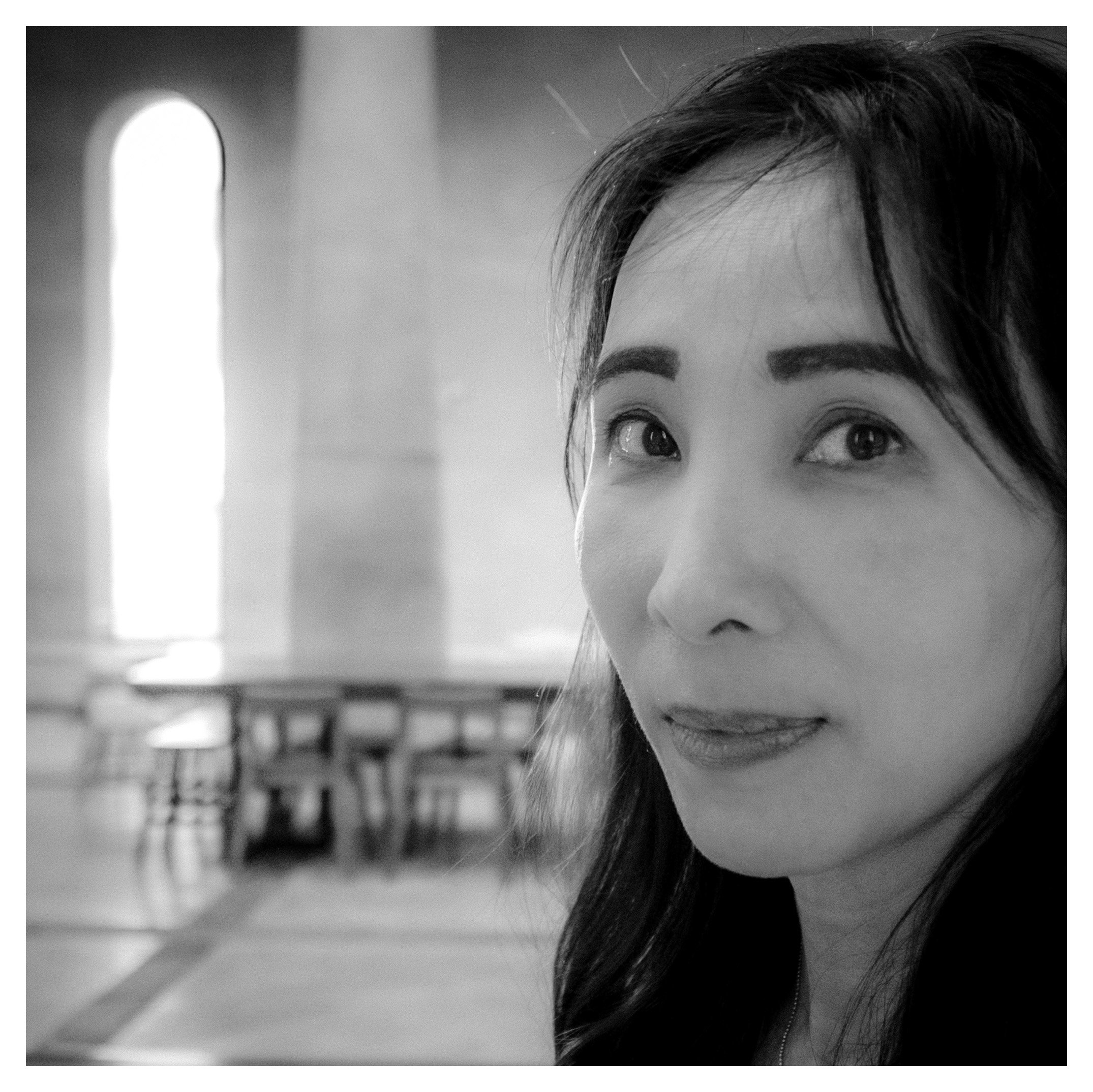
What happens when intimacy clashes with scale? You’ll learn why a tight, unexpected crop can transform a standard portrait into a compelling narrative of local life, and how analyzing your metadata trends unlocks your long-term photographic voice.
EXIF Data
Camera Model: Fujifilm X-Pro2
Shutter Speed: 1/105
Aperture: f4
ISO: 6400
This monochrome frame taken at the Maritime Building in Donggang offers an arresting, off-center encounter. The radical proximity of the subject creates an immediate emotional bridge with the viewer, while the high-contrast, deep black-and-white tones evoke a classic, timeless documentary atmosphere. The choice of a square crop forces an intimate confrontation, pushing her features forward and locking the viewer into an immediate dialogue with her expression.
However, the composition leaves room for a few crucial structural refinements:
Refining Tone and Composition
Contextual Rebalance: The subject occupies the extreme right edge, leaving the left portion of the frame wide open. While the out-of-focus background hints at a grand architectural space, the arched window bleeds heavy white light. This high-contrast burnout acts as a visual exit ramp, pulling the eye completely out of the frame and away from her face. Shifting your position slightly to block the direct window blast, or exposing for the highlights to retain detail in the glass, would anchor the gaze inside the image.
Managing Structural Intrusions: The blurred vertical column or structure rising directly behind her head splits the background awkwardly. In environmental portraiture, background geometry should frame or complement the silhouette, not bisect it. A slight step to the left would have cleanly separated her profile from the heavy architectural shapes, giving her room to breathe.
The Noise/Sharpness Trade-off: Shooting at ISO 6400 on an APS-C sensor introduces a distinct texture. While the grainy aesthetic pairs beautifully with a classic monochrome look, the shutter speed of 1/105 is dangerously close to introducing subtle motion blur or camera shake for an intimate portrait. Pushing the aperture wider to its maximum limit would allow you to drop the ISO, cleaning up the facial details while rendering that background into a smoother, less distracting abstraction.
The Analytical Path: Growing Through Data
To transform single frames into a cohesive, lifelong body of work, you must look at your images not just as art, but as data. By compiling data on your images over months and years, you shift from reactive shooting to deliberate creation.
1. Tag and Track Environmental Variables
Create an active archive of your frames. Catalog every image by core categories: location type, light quality (e.g., harsh midday, soft interior, neon night), and narrative intent (e.g., street portrait, candid bystander). Over time, patterns will emerge. You will explicitly see if your strongest emotional work happens under specific lighting conditions or within specific geographic pockets.
2. Map Your Technical Tendencies
Cross-reference your favorite images against their metadata. If you discover that your most compelling environmental portraits are consistently shot at f4 or f5.6, it tells you that you inherently value contextual surroundings over pure background obliteration. Conversely, looking at your technical failures—such as tracking how often a shutter speed below 1/125 results in soft focus—will give you hard boundaries for your camera settings in the field.
3. Identify and Break Visual Rhythms
Data collection exposes your creative comfort zones. If your ledger shows that 80% of your street work utilizes a right-side subject placement or a standard eye-level perspective, challenge yourself to invert those metrics. Use the data to deliberately force structural variety into your next outing.
Masters of the Frame: Recommended Research
To further develop your eye for balancing human presence against local landscapes, study these master visual storytellers:
Photographers to Research
Chien-Chi Chang: A master of frame geometry and psychological isolation. His legendary project The Chain uses absolute consistency and stark backgrounds to explore human vulnerability and alienation within Taiwanese institutions.
Chang Chao-Tang: The definitive pillar of modern Taiwanese photography. His retrospective Moments in Time perfectly blends western surrealism with local existential realities, utilizing blur, grain, and unexpected crops to unearth the absurdities of everyday life.
Michael Wolf: Famous for his intense structural observations in Tokyo Compression. He demonstrates how tight cropping and structural boundaries can turn a portrait into a claustrophobic commentary on modern urban life.
Books to Read
"Thoughts on Street Photography": An exceptional collection of philosophical essays and practical wisdom that will push you to think deeply about the ethics, timing, and intent behind candid observation.
"Bystander: A History of Street Photography" by Colin Westerbeck and Joel Meyerowitz: The absolute academic reference manual for the genre, charting the entire evolutionary history of capturing public life from its inception to the modern day.
Videos to Watch
"The Decisive Moment" — Henri Cartier-Bresson: An indispensable look into the geometry of time, intuition, and framing. Watch it here: The Decisive Moment - Henri Cartier-Bresson Tribute
"An Interview with Fan Ho": Discover how the master of light and shadow meticulously waited for hours to capture perfect geometric alignments in urban centers. Watch it here: Fan Ho: Portrait of Hong Kong