

Day 256/365 Layered Illusions: Framing the Architecture of the Soul at Kaohsiung Arena
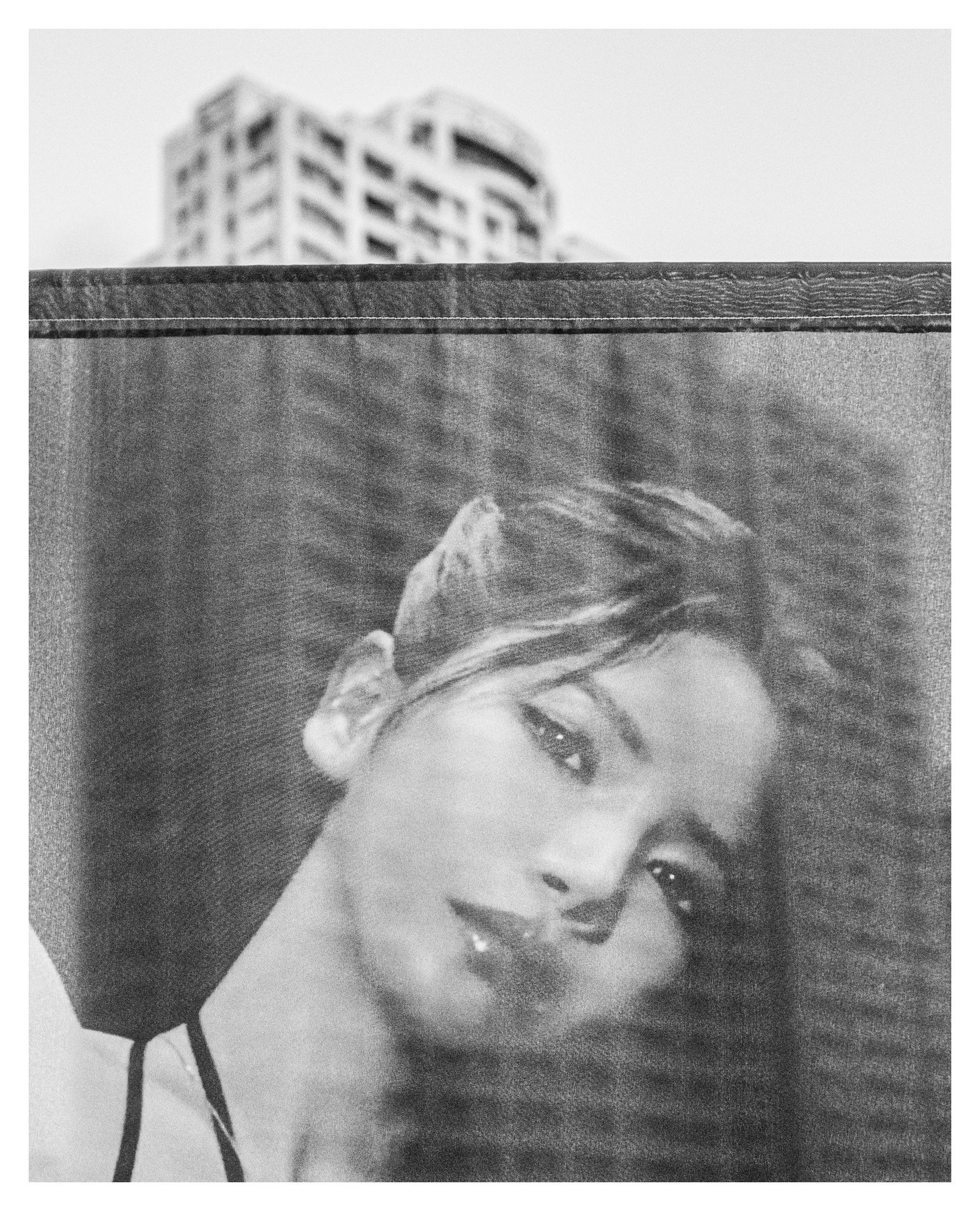
What happens when the rigid lines of Kaohsiung’s modern architecture collide with a fleeting, translucent gaze? Discover how this striking shot challenges traditional street portraiture and why deep data logging holds the key to masterclass composition.
The Metadata
Camera Model: Leica D-Lux 8
Shutter Speed: 1/250
Aperture: f/2.5
ISO: 2000
The Critique: The Art of the Layered Gaze
There is a profound psychological friction at play within this frame. By capturing a portrait filtered through what appears to be a mesh banner or a semi-translucent screen, you have immediately elevated this from a standard street snapshot into a sophisticated study of urban alienation and voyeurism. The gaze of the subject is heavy, melancholic, and incredibly compelling, while the strict geometric architecture bleeding through her face pins her directly into the urban fabric of Kaohsiung.
The division of the frame—the stark, hard horizon line of the screen cutting across the top fifth—creates a fascinating structural shelf. Above it, the out-of-focus high-rise stands like an imposing monolith against a washed-out sky, mirroring the patterns embedded in the portrait below. This is an exceptional use of a "frame within a frame," forcing the eye into an intimate, tight encounter with the subject.
The Technical Path to Improvement
While the mood is undeniably powerful, a few deliberate adjustments could push this image from an excellent observation into a gallery-ready masterpiece:
Tonal Separation in the Highlights: The sky at the very top is running thin and flat. In high-contrast monochrome work, flat white negative space can bleed energy out of the frame. Next time, try pulling down the highlight slider or utilizing an in-camera red filter simulation during capture to deepen the sky, giving the towering background building more physical definition.
The Surgical Crop: The sliver of white peeking into the bottom-left corner acts as a subtle visual leak, pulling attention away from the subject’s eyes. A tight, intentional trim on the left edge would seal the frame completely, trapping the viewer inside this mesh illusion.
Micro-Contrast and Texture Control: Because you shot at ISO 2000, there is a natural, film-like grit present. Embrace this, but be careful in post-processing. Reducing texture slightly on the facial structures while boosting clarity on the mesh grid itself would amplify the illusion of depth, making the architectural overlay feel even more intentional.
The Data Strategy: Accelerating Your Artistic Evolution
To consistently capture work of this caliber, you must move beyond intuitive shooting and begin a systematic audit of your frames. I want you to treat your catalog like a behavioral scientist. Create a rigorous, ongoing archive of your "keeper" images—the top 1% of your daily output—and log the following parameters:
Focal Length & Proximity: Track whether your most emotionally resonant frames happen at a distance or up close.
Environmental Lighting: Categorize the atmosphere (e.g., overcast noon, neon-drenched night, harsh direct shadow).
The Underlying Anchor: Use a single conceptual keyword to define why the image works (e.g., Layering, Isolation, Symmetry, Geometric Friction).
Within fifty entries, the data will speak. You will uncover hidden patterns in your own eye—such as a subconscious mastery of textures under overcast skies—allowing you to seek out those environments with absolute artistic intent.
Curated Curriculum for Further Study
Master Photographers to Research
Fan Ho: Look closely at how he treats shadows and scale. He was a master at using architecture to frame human emotion, turning the chaotic streets of mid-century Hong Kong into pristine geometric stages.
Michael Wolf: Specifically study his Tokyo Compression series. His work is a masterclass in using glass, mesh, and physical barriers to convey a sense of claustrophobia and modern urban isolation.
Essential Reading
"Bystander: A History of Street Photography" by Joel Meyerowitz and Colin Westerbeck: This is the definitive text on the evolution of the genre. It will help you contextualize where your style fits within the historical continuum of street portraiture.
"Thoughts on Street Photography" (Various Essays): Dive deep into the philosophical mechanics of the medium to understand how a split second converts public space into private art.
Visual Resources
Watch this brilliant breakdown of Fan Ho’s geometric approach to street composition: Fan Ho | The Art of Light, Shadow, and Humanism
Examine the raw storytelling power of unposed, up-close portraiture in this profile on legendary street masters: The Street Philosophy of New York's Masters