

Day 197/365 Geometry of the Street: The Digital Shadow
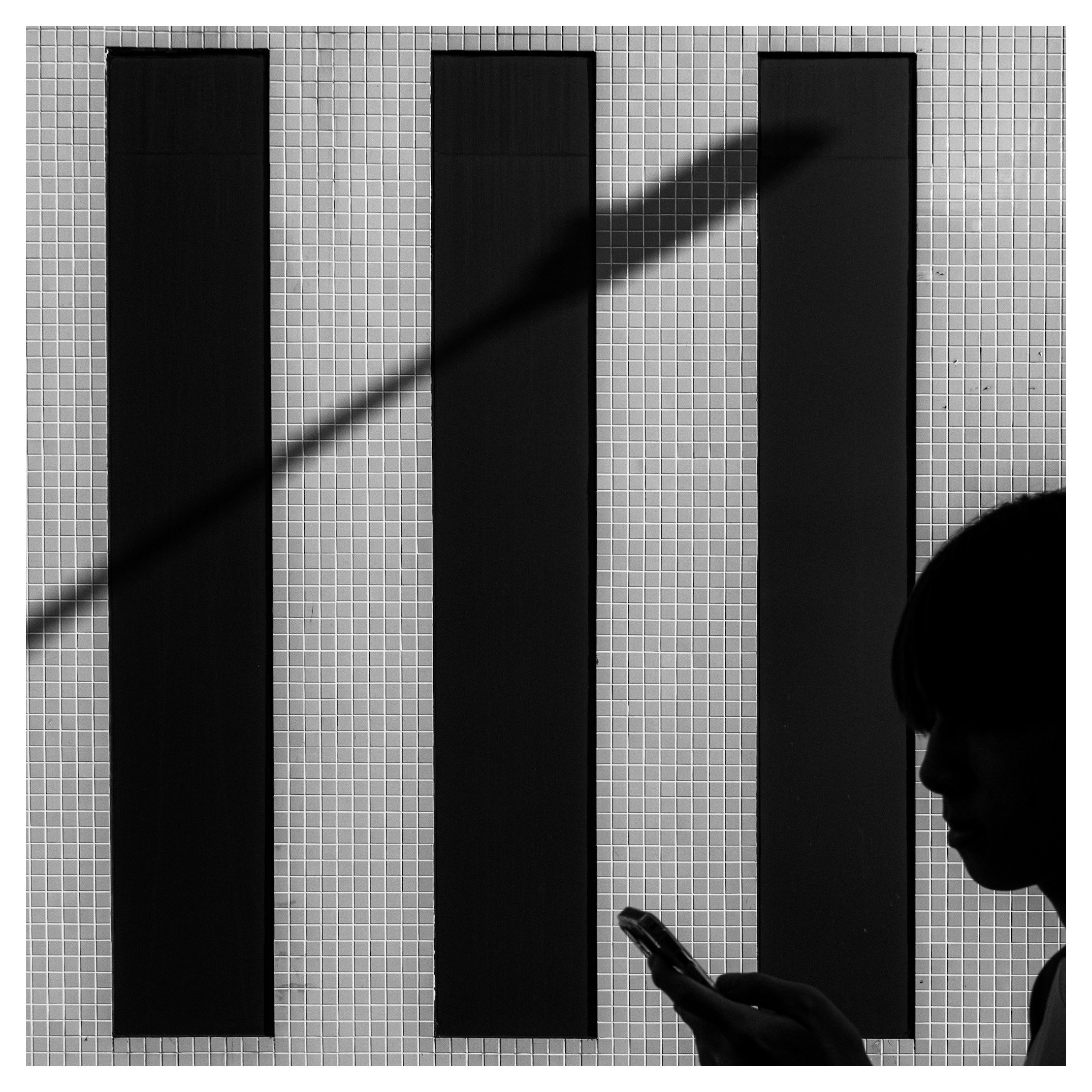
Captured in the heart of Taiwan, this striking monochrome silhouette explores the intersection of modern life and classical geometry. You’ll learn how to transform a mundane wall into a high-contrast masterpiece and why tracking your metadata is the secret to photographic growth.
Technical Specifications
Camera Model: Leica D-Lux 8
Shutter Speed: 1/800
Aperture: f/5.6
ISO: 200
The Critique: Finding Harmony in the Grid
This is a masterful exercise in minimalism and geometric abstraction. The choice to use a 1:1 square crop perfectly complements the repeating vertical columns and the secondary grid of the wall tiles. By positioning the subject in the lower right, you've adhered to the rule of thirds while allowing the diagonal shadow to slice through the frame, creating a dynamic tension that keeps the eye moving.
The silhouette is crisp, and the use of high contrast elevates a simple moment into a graphic study of form. The Leica D-Lux 8's sensor has handled the transition between the deep blacks and the bright highlights with the characteristic clinical precision we expect from the system.
Advice for Improvement:
• The "Decisive Moment": While the subject’s profile is clear, the interaction with the phone is a bit "busy" near the bottom edge. Waiting for the subject to be slightly further into the white space, or perhaps tilting their head up, might create a cleaner separation between their silhouette and the vertical bars.
• Compositional Alignment: In a shot this architectural, even a 0.5-degree tilt is noticeable. Ensuring the vertical lines of the wall are perfectly parallel to the frame edges in post-processing will strengthen the "industrial" feel of the image.
Building Your Photographic Legacy: Data & Discipline
To improve over time, you must move beyond just taking photos and start curating data.
• The Metadata Audit: Every three months, export your top 50 images and look for patterns in your settings. Do you always shoot at f/5.6? You might be playing it too safe with depth of field. Are you frequently at 1/800? Perhaps you can experiment with slower shutters to introduce intentional motion blur.
• Keep a Shooting Journal: Note the weather and your "creative mood" alongside the technical data. Over time, you’ll see if your best work happens under harsh midday sun (like this shot) or during the "blue hour."
Curriculum for the Curious Eye
To further refine your style, I recommend immersing yourself in the work of masters who played with shadow and geometry:
Photographers to Research:
• Fan Ho: The absolute master of Hong Kong street photography, known for his use of dramatic light and geometric silhouettes.
• Ray K. Metzker: For his "composites" and high-contrast urban abstractions.
• Trent Parke: Specifically his "Minutes to Midnight" series, which uses light to create a dreamlike, almost supernatural version of reality.
Books to Read:
• "The Decisive Moment" by Henri Cartier-Bresson: The bible of street composition.
• "Photographers’ Sketchbooks" by Stephen McLaren: To see how great artists plan and evolve their ideas.
Videos to Watch:
• The Art of Street Photography (Magnum Photos): View on YouTube
• Composition and Geometry in Photography: View on YouTube