

Day 198/365 The Ghost in the Machine: Navigating the High-Contrast Streets of Kaohsiung
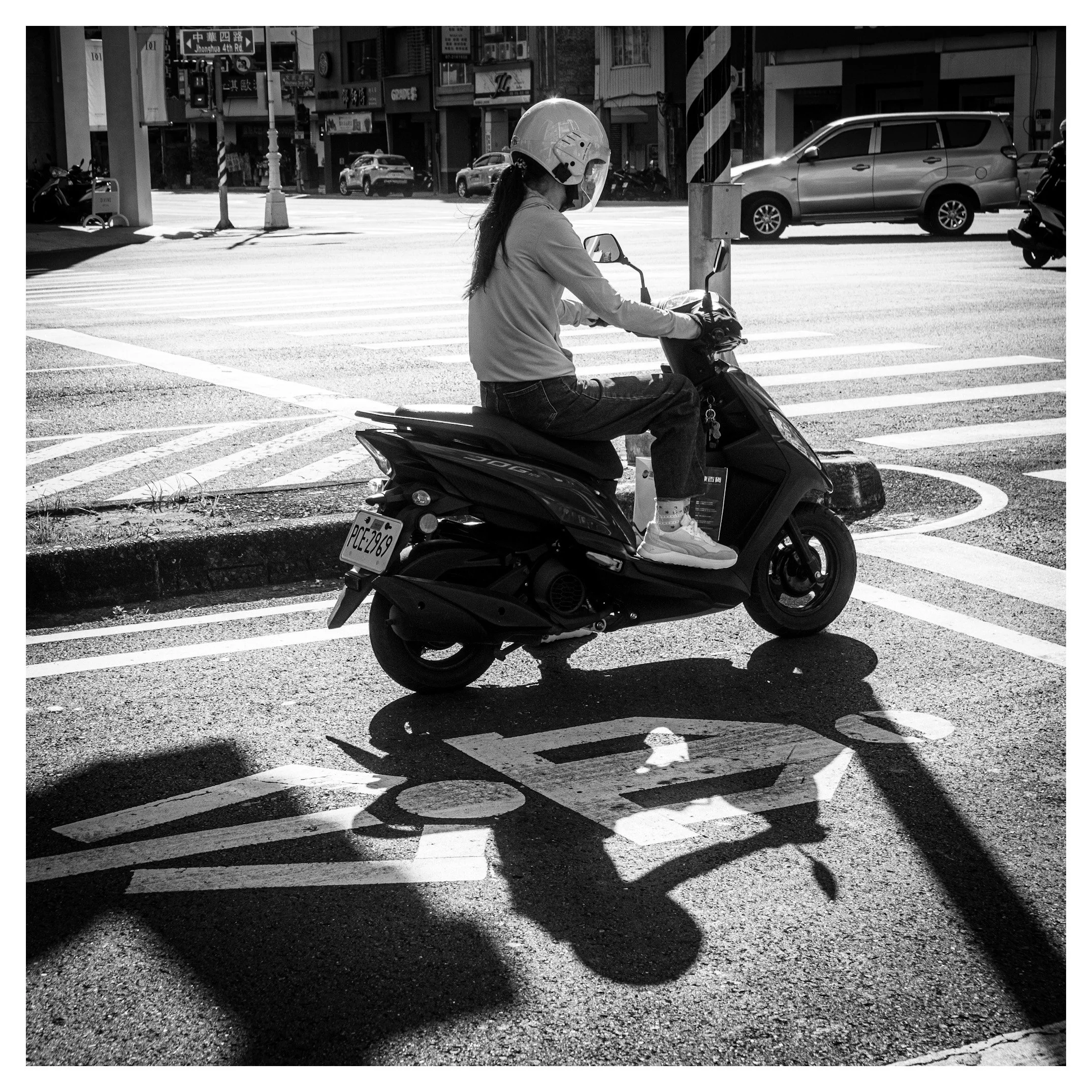
Street photography in Taiwan presents a unique challenge of light and motion. You will learn why this particular frame captures the isolation of the modern commute and how mastering the interplay of harsh shadows can transform a mundane intersection into a cinematic study of urban life.
Technical Specifications
• Camera Model: Leica D-Lux8
• Shutter Speed: 1/800
• Aperture: f5.6
• ISO: 200
The Critique: Finding Geometry in the Chaos
This image is a striking example of "Chiaroscuro" in the wild. By opting for a high-contrast monochrome conversion, you have successfully stripped away the visual noise of a busy Taiwanese intersection, forcing the viewer to focus on form and silhouette.
The placement of the subject is deliberate. The rider is caught in a moment of stillness amidst the potential energy of the street. The most compelling element here is the shadow cast in the foreground; it acts as a psychological double, grounding the fleeting nature of the motorcycle with a heavy, graphic permanence.
The choice of a 1/800 shutter speed was essential for freezing the crisp edges of the road markings, which provide a rhythmic, almost musical structure to the bottom third of the frame. However, the composition feels slightly "pinched" at the top. While the silver car in the background provides a sense of scale, its partial inclusion creates a minor visual distraction that breaks the isolation of your primary subject.
Refined Advice for Improvement
• Mind the Edges: In street photography, what you leave out is as important as what you include. If you had waited a fraction of a second longer, the car in the top right might have cleared the frame, allowing the rider to exist in a more vacuum-like, surreal space.
• The Power of the Lower Angle: Experimenting with a lower physical perspective would have elongated the foreground shadows even further, potentially aligning the "P" marking more dynamically with the wheels of the scooter.
• Tone Management: While the blacks are rich, some of the highlights on the rider's helmet are bordering on "blown out." In post-processing, pulling back the highlights slightly would retain the texture of the helmet, keeping the subject’s "head" in the game.
Your Path to Mastery: The Data-Driven Photographer
To grow, you must move beyond the "lucky shot." I recommend keeping a digital log of your sessions. For every hundred photos, find the five that worked and cross-reference your metadata.
Do you find that your best compositions consistently happen at f5.6? Are you finding more emotional resonance in "golden hour" ISOs or high-noon contrasts? By identifying these patterns in your own data, you will begin to develop a "signature" look—a conscious choice rather than a technical accident.
Curated Research for the Developing Eye
To expand your visual vocabulary, I suggest diving into the following masters who specialized in the tension between light and the street:
Photographers to Study
• Fan Ho: The absolute master of using light as a structural element. His work in Hong Kong during the 1950s is the gold standard for monochrome street composition.
• Chien-Chi Chang: A Magnum photographer whose work in Taiwan, specifically "The Chain," showcases a masterful use of environmental portraiture and the theme of isolation.
• Ray K. Metzker: For a deep dive into how to use "composites" and extreme contrast to turn cityscapes into abstract art.
Books for your Library
• Thoughts on Street Photography: A vital collection of essays and theory to help you understand the "why" behind the "what".
• The Decisive Moment by Henri Cartier-Bresson: Often called the "bible" of photography, it teaches the geometry of time.
• Uncommon Places by Stephen Shore: Though in color, his work will teach you how to see the beauty in mundane urban structures.
Educational Media
• The Geometry of a Scene: A technical breakdown of how to arrange street elements.
• Fan Ho: A Tribute: Understanding the philosophy of a street master.
Does the heavy shadow in the foreground represent the rider's destination, or is it merely a ghost of where they have been?