

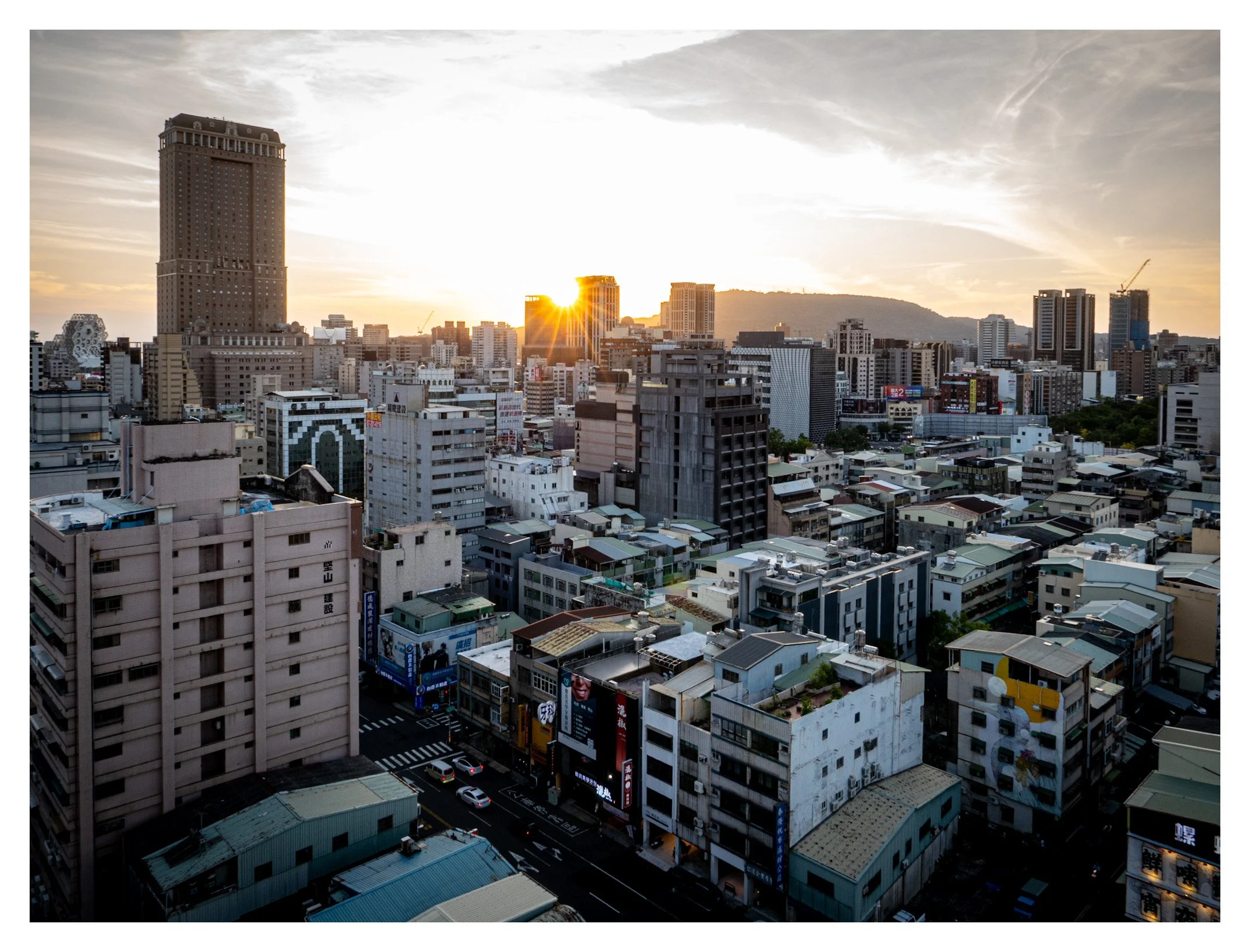
Day 211/365 Sunset Over Shoushan: Framing the Layers of Kaohsiung
EXIF Data
Model: Leica D-Lux 8
Shutter Speed: 1/15
Aperture: f/13
ISO: 200
The grid of Southern Taiwan comes alive as the sun dips behind the ridge line, exposing a dense architectural history. You will learn why balancing technical restraint with urban chaos holds the key to unlocking this city’s visual soul.
This perspective offers an honest look into the architectural heartbeat of Kaohsiung, presenting a raw contrast to the typical, polished tourism postcards. By shooting from a high angle, you have successfully stacked the urban landscape, creating a fascinating progression from the weathered, traditional low-rise rooftops in the foreground to the modern skyscrapers towering against the distant outline of Shoushan.
The way the sun bursts directly between the buildings provides a striking focal point, drawing the eye through the frame and anchoring the sprawling concrete maze.
Refining the Frame: Recommendations for Improvement
While the composition effectively communicates the density of the city, a few adjustments could elevate its impact:
Mind the Aperture and Diffraction: Shooting at f/13 has given you a beautiful starburst effect on the sun, but it introduces the risk of optical diffraction, which can subtly soften fine details across the image. For a small-sensor camera like the Leica D-Lux 8, backing off to f/5.6 or f/8 will keep the image critically sharp. If you still want the starburst, consider taking two exposures—one at f/5.6 for the sharp city details and one at f/11 or f/13 for the sun—and blending them.
Manage the Extreme Dynamic Range: The sunset creates deep, dark shadows in the lower street grid and bright, overexposed areas in the sky. To preserve the textured details of the rooftops and the asphalt below without clipping the highlights in the sky, consider shooting a bracketed exposure or using a subtle graduated neutral-density (GND) filter during capture.
Eliminate Foreground Distractions: The massive, pale building on the far-left edge carries a lot of visual weight without adding meaningful narrative value. A slight shift in your camera angle to the right, or a tighter focal length, would crop out this large monolithic structure, keeping the viewer’s attention focused on the rhythm of the city streets and the sun star.
Growth Strategy: Compiling a Personal Image Database
To build consistency and evolve your style, treats your images like data points. Building a structured catalog or database of your work will help you spot patterns that the naked eye might miss.
Track variables such as focal lengths, time of day, atmospheric conditions, and the geographical layout of your location. Over time, analyzing this data will reveal whether you favor certain lighting conditions or compositions, allowing you to intentionally break out of your comfort zone and try new techniques.
Curated Resources for Further Study
Photographers to Research
Chien-Chi Chang: A legendary Taiwanese Magnum photographer. His structural compositions and profound documentation of alienation in systems offer an masterclass in framing space.
Michael Wolf: Famous for his series "Architecture of Density," Wolf’s work focuses on the geometric patterns and overwhelming scale of modern mega-cities, which will inspire your urban landscapes.
Fan Ho: Master of light, shadow, and the urban environment. Studying how he used dramatic backlighting and street silhouettes in mid-century Hong Kong will completely transform how you approach the sunset light hitting Taiwanese alleyways.
Books to Read
Thoughts on Landscape by Kuo Hsi-Tang: An essential retrospective for anyone documenting Taiwan, offering deep insights into cultural landscapes and historical context.
The Decisive Moment by Henri Cartier-Bresson: The absolute blueprint for understanding geometry, timing, and how street grids and human elements interact within a frame.
Videos to Watch
The Art of Street Photography - Magnum Photos Masterclass: An insightful look into how world-class documentary photographers analyze complex environments and wait for the light to align perfectly. Magnum Photos Masterclass
Composition and Compositional Geometry in Photography: A deep dive into utilizing geometric shapes, leading lines, and structural layers within urban frames to guide the viewer's eye through a busy landscape. The Art of Photography