

Day 213/365 Framing the Frame: Shadow Play and the Surreal Master
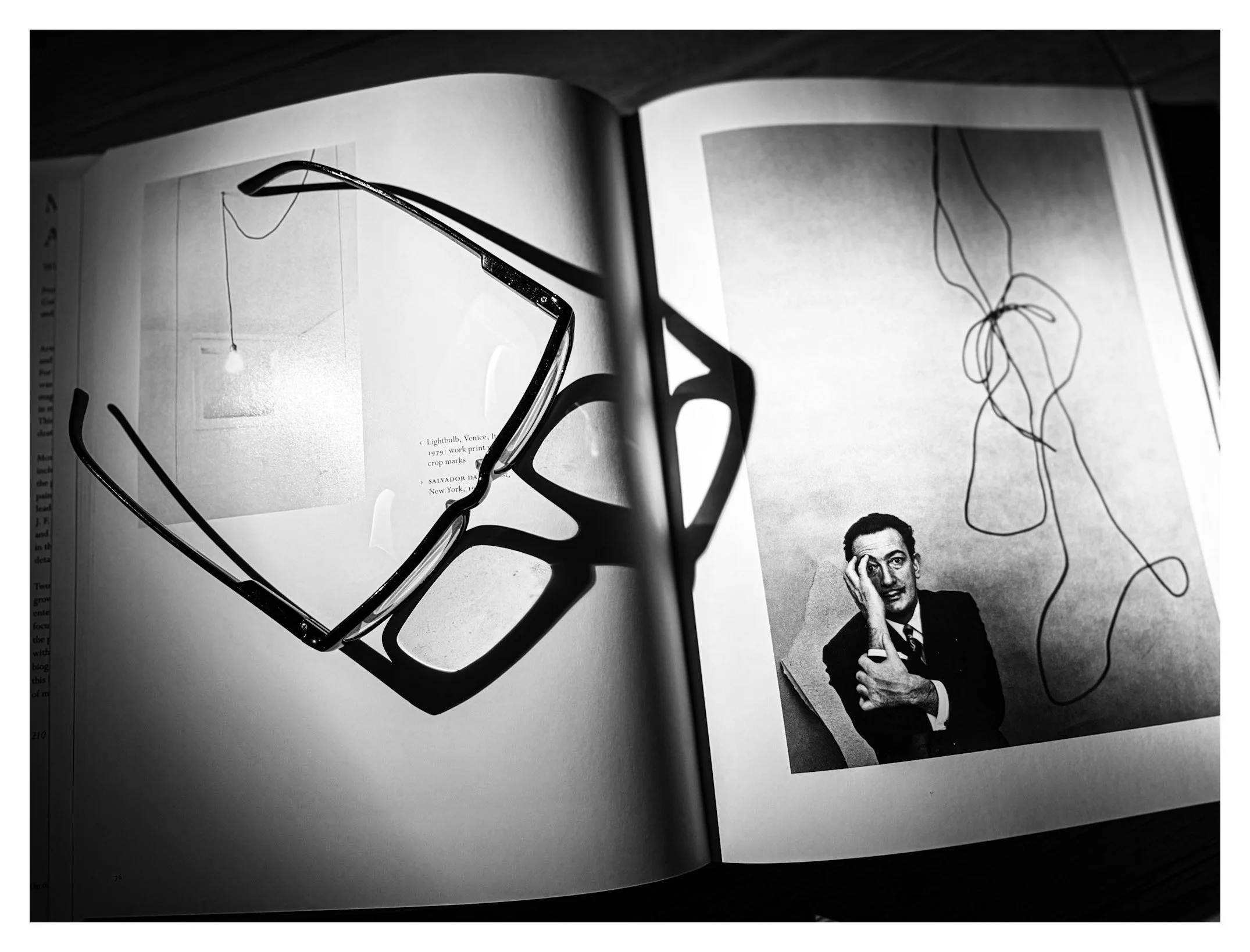
You’ll learn why a simple pair of reading glasses, cast against the pages of a monograph, can transform into a profound dialogue on perspective, shadows, and the enduring legacy of environmental portraiture's greatest master.
EXIF Data
Camera Model: iPhone 17
Shutter Speed: 1/110
Aperture: f/1.6
ISO: 50
The Critic’s Eye: Analyzing the Image
This image presents a compelling layers-within-layers narrative, a literal and figurative "framing" of history. By placing a physical pair of glasses onto an open book showcasing Arnold Newman's iconic 1951 environmental portrait of Salvador Dalí, you have initiated a fascinating visual dialogue.
The immediate strength of this photograph lies in its harsh, high-contrast lighting. The intense directional light source casts a bold, graphic shadow of the spectacles directly onto the left page. This shadow works wonderfully as a counterweight to the tangled wire composition within Newman’s portrait of Dalí on the right page. The choice of monochrome strips away the distraction of color, pulling our focus entirely toward line, form, and texture. It feels deeply respectful of Newman's original darkroom mastery while introducing a modern, casual intimacy.
Room for Critique: How to Improve the Image
While the conceptual foundation is strong, a few technical adjustments could elevate this from a casual snapshot to a deliberate fine-art piece.
Mind the Distortions: The wide f/1.6 aperture on your smartphone creates a very shallow depth of field, causing the text and the left page to fall slightly out of focus. Additionally, the perspective shows minor lens distortion at the edges. Backing away slightly and zooming in (using a telephoto lens if available) would flatten the field and ensure both pages—and the glasses—retain crisp, uniform sharpness.
Refine the Shadow Placement: The shadow of the glasses is the most dynamic element you’ve added. However, the upper rim of the shadow awkwardly clips the edge of the inset photograph on the left page. Shifting the angle of your light source slightly would allow the shadow to stretch cleanly across the blank paper, maximizing its graphic impact without competing with the printed content underneath.
Control the Highlights: The bright hotspot on the left page is a bit aggressive. Diffusing your light source with a piece of tracing paper or a white sheet would soften the gradient, preserving the dramatic shadows while rescuing the blown-out highlights on the paper's surface.
Elevating Your Craft: The Long Game
To evolve from taking striking individual photos to developing a cohesive artistic voice, you must begin analyzing your own behavior behind the lens.
Start maintaining a digital shooting journal. For every standout image you create, log your metadata alongside notes on the environment: What was the primary light source? What motivated you to press the shutter? Over six months, analyze this data for patterns. You might discover that your best work invariably happens at low ISOs under harsh accent lighting, or that you have a subconscious habit of relying on wide-angle lenses when a tighter, more intimate frame is required. Recognizing these patterns allows you to break bad habits and consciously exploit your strengths.
Curated Inspirations for the Developing Mind
Photographers to Study
Abelardo Morell: Famous for his room-sized camera obscura projections and his book Book of Books, Morell treats the written word and bound paper as surreal, mountainous landscapes. His work will completely change how you photograph printed objects.
Fan Ho: A master of light, lines, and geometric drama. Studying how Fan Ho used sunlight to slice across Hong Kong alleys will teach you how to treat shadows not just as empty space, but as dominant structural elements in your composition.
Books to Read
"The Decisive Moment" by Henri Cartier-Bresson: The ultimate blueprint for understanding geometry, timing, and rhythm within a single frame.
"Arnold Newman: Masterclass" by William A. Ewing: Since you are already looking at his work, dive deep into this retrospective to understand how Newman meticulously constructed his frames to reveal the psychological truths of his subjects.
Videos to Watch
To understand the meticulous craftsmanship behind iconic portraiture, watch this profile on Newman's philosophy: Arnold Newman - Master of Environmental Portraiture.
To learn how to control and shape the kind of hard, dramatic light seen in your image, explore this masterclass on shadow manipulation: The Power of Shadows in Photography Composition.