

Day 216/365 Rising Into the Light: Mastering Geometry in the Urban Landscape
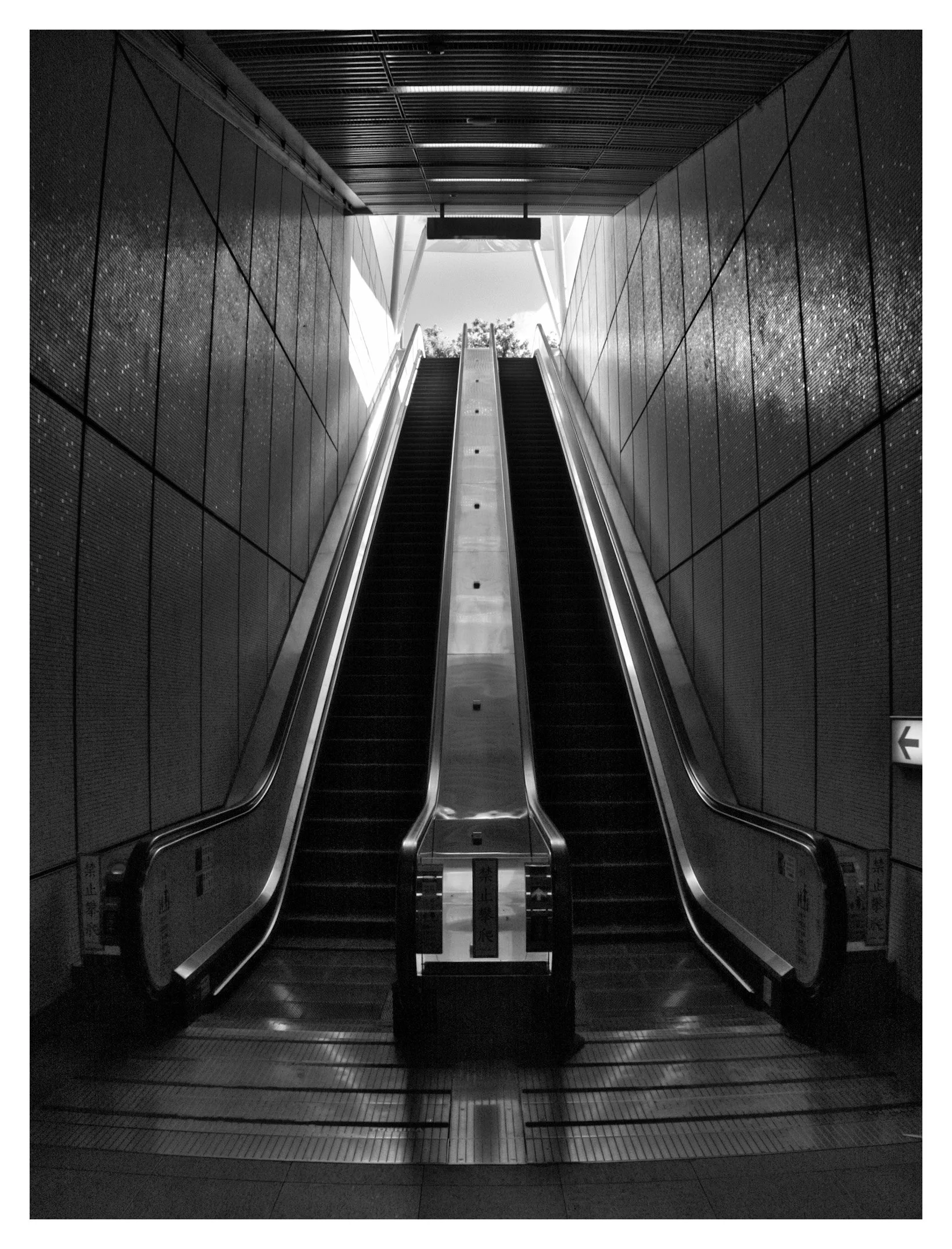
Photograph Metadata
Camera Model: Leica D-lux8
Shutter Speed: 1/640
Aperture: f5.6
ISO: 200
Location: Central Park MRT Station, Kaohsiung
Urban transit hubs offer some of the most dynamic architectural framing available to a street photographer. You’ll learn why perfect symmetry isn't always the ultimate goal and how shifting your perspective can transform a standard structural frame into a deeply compelling visual narrative.
The Critique: Embracing Structural Rhythm
The choice to render this frame at the Central Park MRT station in monochrome immediately elevates the architecture, stripping away any distracting commercial signage and focusing purely on form. The leading lines of the escalators draw the eye aggressively upward toward the natural light spilling into the tunnel entrance. There is a strong sense of scale here, created by the towering textured side walls that act as massive blocks of contrast against the metallic gleam of the machinery.
Your framing shows an admirable commitment to symmetry, positioning the central divider right down the middle axis of the lens. This strict composition gives the image a graphic, almost abstract quality that transforms everyday urban infrastructure into a futuristic gateway.
Room for Improvement: Tension and Timing
While the composition is visually striking, the frame can be pushed further by breaking the stillness or accentuating the geometry.
Introduce Scale and Narrative: The frame currently feels stark and sterile. Waiting for a solitary commuter to ascend on the escalator would introduce a focal point, giving the eye a resting place and adding human narrative to the cold architecture.
Refine the Symmetrical Alignment: The camera is angled slightly upwards, causing a minor convergence of the vertical wall panels. To achieve a perfectly squared, architectural look, try to keep the camera completely level or use a perspective correction tool post-capture to straighten the vertical grid lines.
Control the Highlights: The bright sky at the top exit is slightly blown out. Lowering your exposure just a bit or bracketing the shot would preserve the foliage details visible at the top, drawing a nicer contrast between the underground darks and the outside world.
Building Your Photographic Arsenal
To elevate your practice, tracking technical execution alongside creative intent is vital. Create a spreadsheet to record data on your favorite shots. Beyond archiving the camera metadata, add personal columns for "Lighting Conditions," "Visual Intent," and "Post-Processing Notes." Over a few hundred frames, this database will highlight exactly which focal lengths and environments yield your most successful imagery.
To broaden your visual vocabulary, study these master photographers, monographs, and instructional videos:
Photographers to Study
Michael Wolf: His work, particularly "Tokyo Compression," demonstrates how to capture the claustrophobia and structural intensity of Asian transit systems.
Fan Ho: The ultimate master of using dramatic shadows, geometric framing, and natural light within urban landscapes to create timeless art.
Books to Read
"Bystander: A History of Street Photography" by Colin Westerbeck and Joel Meyerowitz. This text offers immense context on how urban exploration evolved into a fine art form.
"The Decisive Moment" by Henri Cartier-Bresson. Essential reading for mastering the harmony of geometry and timing in public spaces.
Videos to Watch
To understand how light can completely redefine city shapes, view this feature on iconic urban framing: https://www.youtube.com/watch?v=uR_CvIYiR1s