

Day 243/365 Chasing the Leviathan: A Critical Eye on Drone Seascapes
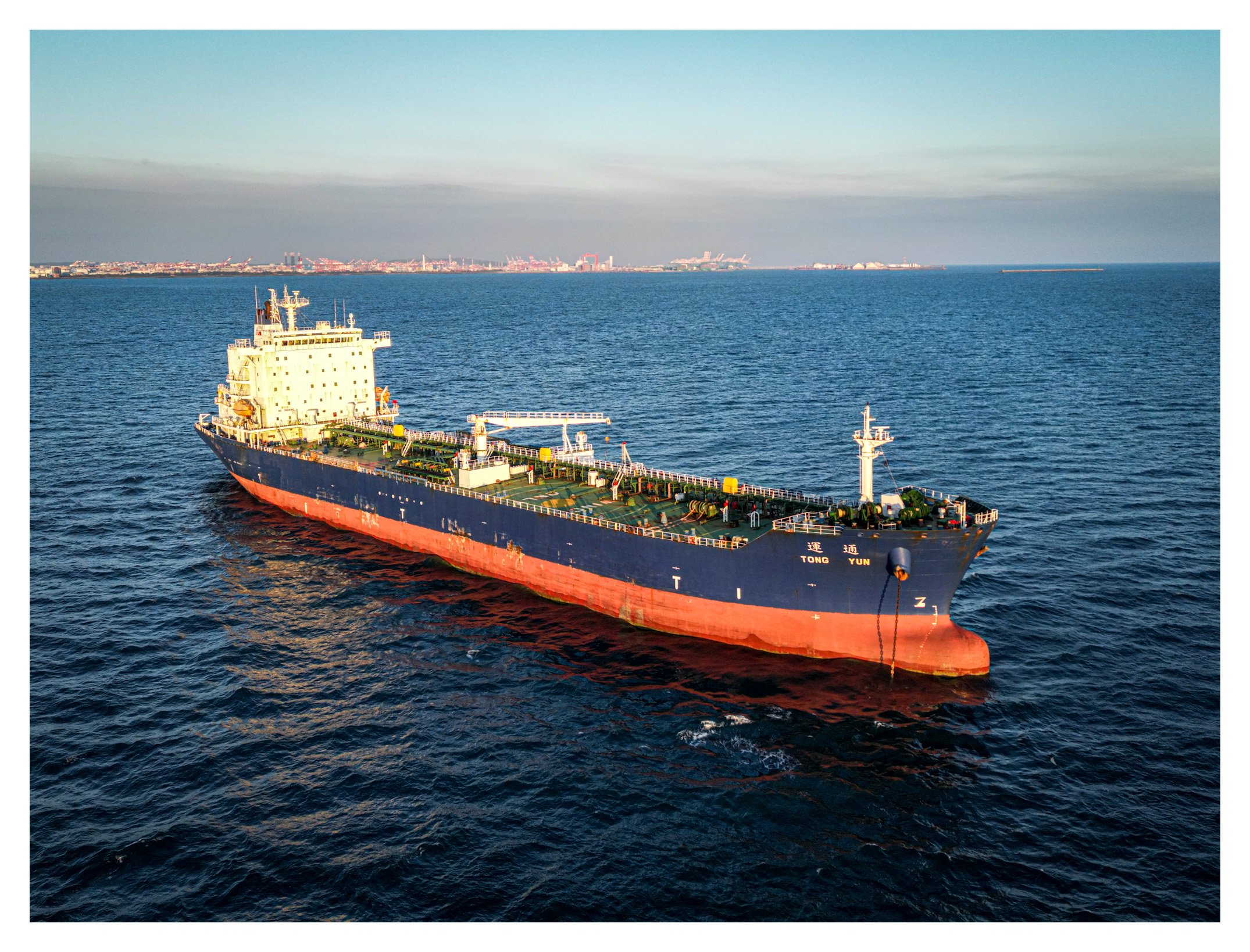
Drone photography often falls into the trap of mere spectacle. In this critique of a striking industrial vessel off the coast of Qijin, you will discover how technical choices impact maritime scale and learn why subtle shifts in timing and composition can elevate a standard aerial view into a compelling fine-art narrative.
Technical Profile
Camera Model: DJI Mini 3 Pro
Shutter Speed: 1/640
Aperture: f1.7
ISO: 110
The Critique: Analyzing the Image
The photograph captures the Tong Yun cargo vessel navigating the deep blue waters off Kaohsiung. From an analytical perspective, there is an admirable clarity to the frame. The high shutter speed of 1/640 has perfectly frozen the texture of the ocean chop, and the f1.7 aperture on the Mini 3 Pro sensor yields sharp detail across the ship's superstructure.
The light strikes the vessel from the side, beautifully highlighting the contrast between the deep blue hull and the stark red anti-fouling paint below the waterline. Furthermore, keeping the distant Kaohsiung coastline on the horizon provides a vital sense of geographic placement.
However, aerial maritime photography frequently battles the challenge of flatness. Because the drone looks down from a high vantage point, the immense scale of the ship is somewhat compressed against the vast ocean backdrop. The horizon line sits quite high in the frame, which pins the subject down rather than letting it dominate the environment.
How to Improve the Image
Lower the Altitude: To inject drama into this scene, bring the drone down closer to the water's surface. A lower three-quarter angle looking slightly up at the bow would emphasize the sheer size and weight of the vessel.
Chase the Golden Hour: While the light is clear, it lacks emotional resonance. Shooting during twilight or peak golden hour would cast long shadows across the deck, illuminate the wakes with warm highlights, and turn the distant city skyline into a glowing silhouette.
Utilize Negative Space: Rather than centering the ship, positioning it lower in the frame or letting it sail into a vast expanse of negative space would create a stronger narrative of journey and isolation.
Elevating Your Craft Through Data Tracking
To transform from a hobbyist into a deliberate visual artist, you must treat your metadata as a textbook. Start keeping a shooting log or a spreadsheet for your portfolio. Do not just record EXIF data like ISO and shutter speed; pair that technical data with qualitative variables:
Environmental Data: Note the time of day, cloud cover percentage, and wind speed (crucial for drone work).
Artistic Intent: Write down what drew you to the scene versus what the final image actually conveyed.
Pattern Analysis: Over six months, review the data. You might discover that your best images consistently happen at a specific focal height or under specific lighting conditions, allowing you to replicate success intentionally.
Curated Research and Study Materials
To deepen your understanding of scale, culture, and composition, I recommend studying the following masters and resources:
Photographers to Study
Shen Chao-Liang: A legendary Taiwanese photographer whose work captures the surreal intersection of local culture and massive physical structures. His use of color and environmental context is masterful.
Fan Ho: The absolute master of light, shadow, and scale. Though he shot on the streets of Hong Kong rather than from the air, his ability to place human elements against massive industrial and urban backdrops is essential viewing for any photographer.
Essential Reading
STAGE by Shen Chao-Liang: An incredible monograph exploring Taiwanese stage wagons, demonstrating how to photograph large cultural objects with immense graphic power.
Moments in Time 1959-2013 by Chang Chao-Tang: This retrospective offers a masterclass in absurdity, surrealism, and the structural framing of landscapes within Taiwan.
Educational Videos to Watch
To understand how classic painters and modern photographers structure their frames to guide the viewer's eye, watch The Art of Composition on YouTube.
To study how light transforms ordinary industrial objects into fine art, explore the documentary insights found in The Mind's Eye: Fan Ho's Photography on YouTube.