

Day 262/365 When the Wall Lies: The Empty Typography of "Love"
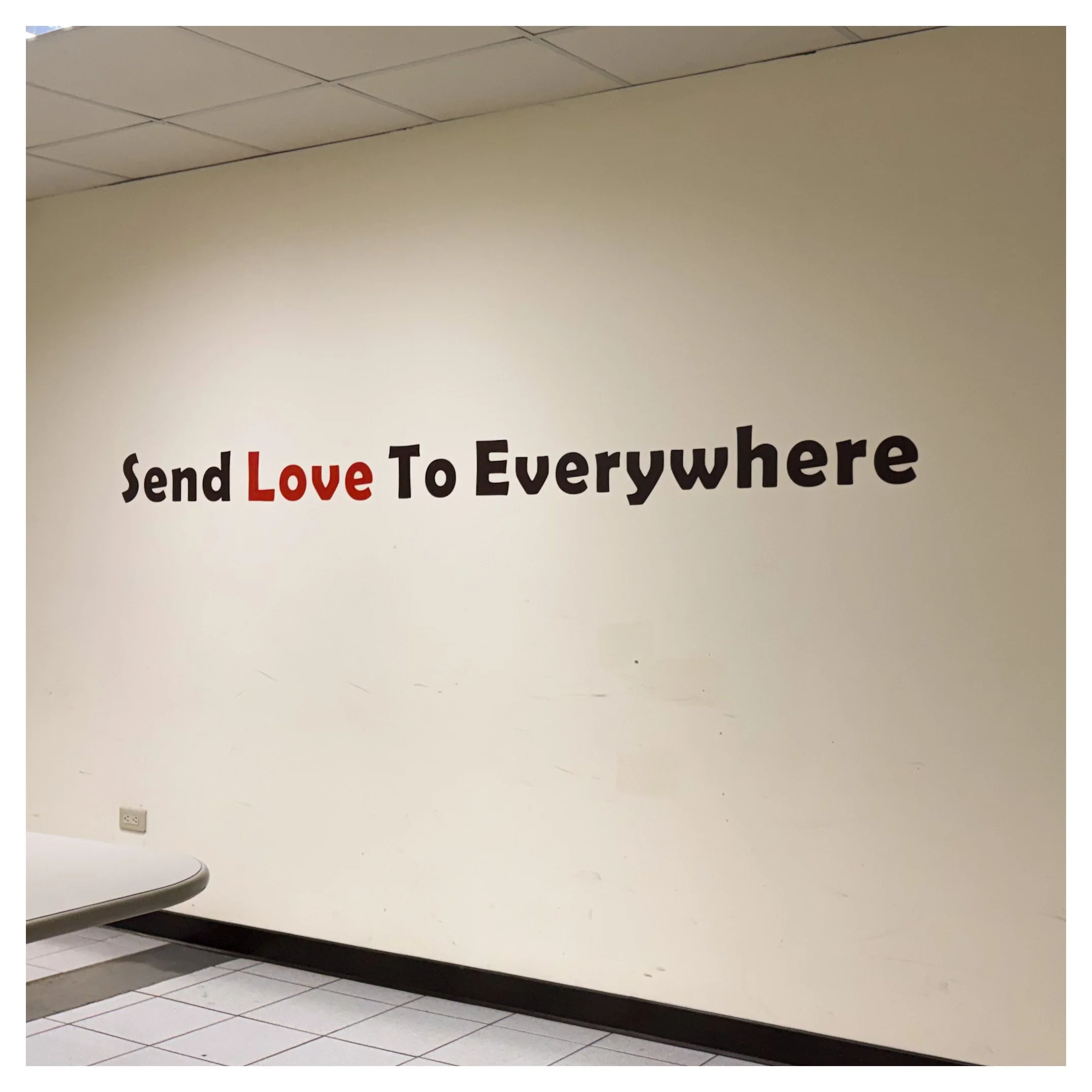
A sterile wall in Taiwan proclaims a message of universal love, but the reality behind the institutional glass tells a profoundly different story. You’ll learn why a simple snapshot of municipal typography can expose the sharp, painful boundaries of systemic exclusion.
Camera Model: iPhone 17
Shutter Speed: 1/120s
Aperture: f/1.78
ISO: 64
The Critique: Theo Marr on Institutional Irony
There is a distinct, unsettling tension when the language of empathy is weaponized by bureaucracy. You have captured a stark, geometric slice of institutional reality. The slogan reads "Send Love To Everywhere," yet the composition itself feels cold, segmented, and entirely devoid of the warmth it promises. The stark white wall, bisected by superficial scuffs, the generic ceiling tiles, and the corner of a sterile desk all frame this text not as a philosophy, but as a hollow corporate directive.
The visual weight of the word "Love" highlighted in red serves as a focal point, but in this framing, it feels like a glaring bureaucratic error—a false promise plastered over an unfeeling structure. The perspective is slightly askew, which works to your advantage here; it mirrors the destabilizing, frustrating reality of the situation you experienced. Photography is often at its most powerful when it stops trying to be pretty and starts trying to be honest.
Moving Beyond the Snapshot
To elevate an image like this from a record of an event into a potent piece of documentary or conceptual photography, we have to look at the relationship between text and space:
Emphasize Scale and Emptiness: To lean into the feeling of isolation and systemic coldness, step further back if space allows. Frame the text as a tiny, insignificant dot surrounded by a vast ocean of empty, clinical wall.
Introduce Contextual Elements: The corner of the table on the left hints at the environment. Including more of the environment—perhaps an empty chair waiting for an applicant, or the glass barrier of a service window—would ground the text in the physical reality of the bureaucracy.
Watch the Horizontals: The baseboard and the ceiling tiles create competing horizontal lines. Emphasize a hard, flat, dead-on graphic perspective (like a deadpan architectural shot) to make the text feel even more rigid and institutional.
Building Your Practice: The Analytical Photographer
Becoming a better photographer is a process of translating raw emotion and lived experience into deliberate visual choices. To grow over time, I recommend moving away from treating images as isolated incidents and instead treating them as data points in your creative evolution.
Tracking Your Vision
Keep a simple digital notebook or spreadsheet for your photography catalog. For every meaningful image you take, note down:
1. The Core Intent: What was the emotional catalyst? (e.g., Anger, exclusion, institutional irony).
2. The Technical Execution: Did the automatic exposure of the phone match your mood, or did it make the scene look too bright and cheerful?
3. The Compositional Gap: What is missing from the frame that would have made the viewer feel what you felt?
By looking back at these notes every few months, you will begin to see patterns in how you react to the world, allowing you to move from reactionary snapshots to proactive, deeply intentional storytelling.
Curated Research for the Displaced Observer
To deepen your understanding of how photography can challenge authority, document social alienation, and use text as a weapon, explore these masterworks:
Photographers to Study
Chien-Chi Chang: A Taiwanese Magnum photographer whose seminal project The Chain deals heavily with alienation, confinement, and institutionalization. His work is a masterclass in documenting the human cost of unfeeling systems.
Michael Wolf: His series Tokyo Compression showcases the claustrophobia and psychological weight of modern urban infrastructure. Look at how he uses framing to evoke distress.
Robert Frank: Specifically, look at The Americans. Frank was an outsider looking at a culture that spat out grand myths of freedom while harboring deep systemic rot beneath.
Books to Read
Thoughts on Photography by Chou Ching-Hui – An insightful exploration into conceptual and documentary photography philosophies within East Asian contexts.
Bystander: A History of Street Photography by Colin Westerbeck and Joel Meyerowitz – An academic yet gripping look at how photographers have historically captured the fleeting, often harsh realities of public spaces.
Videos to Watch
The Decisive Moment - Henri Cartier-Bresson – To understand the geometry of a frame and how aligning shapes can amplify a narrative.
How to Read a Photograph - The Power of Framing – A fantastic deep dive into how changing your perspective transforms an ordinary environment into a psychological landscape.
Photography can be a lifeline when everything else is stripped away. It is your witness. Keep documenting, keep looking closely at the cracks in the facade, and use that lens to speak your truth.