

Day 41/365 The Architecture of a Smile: Balancing Light and Spontaneity
The Critique
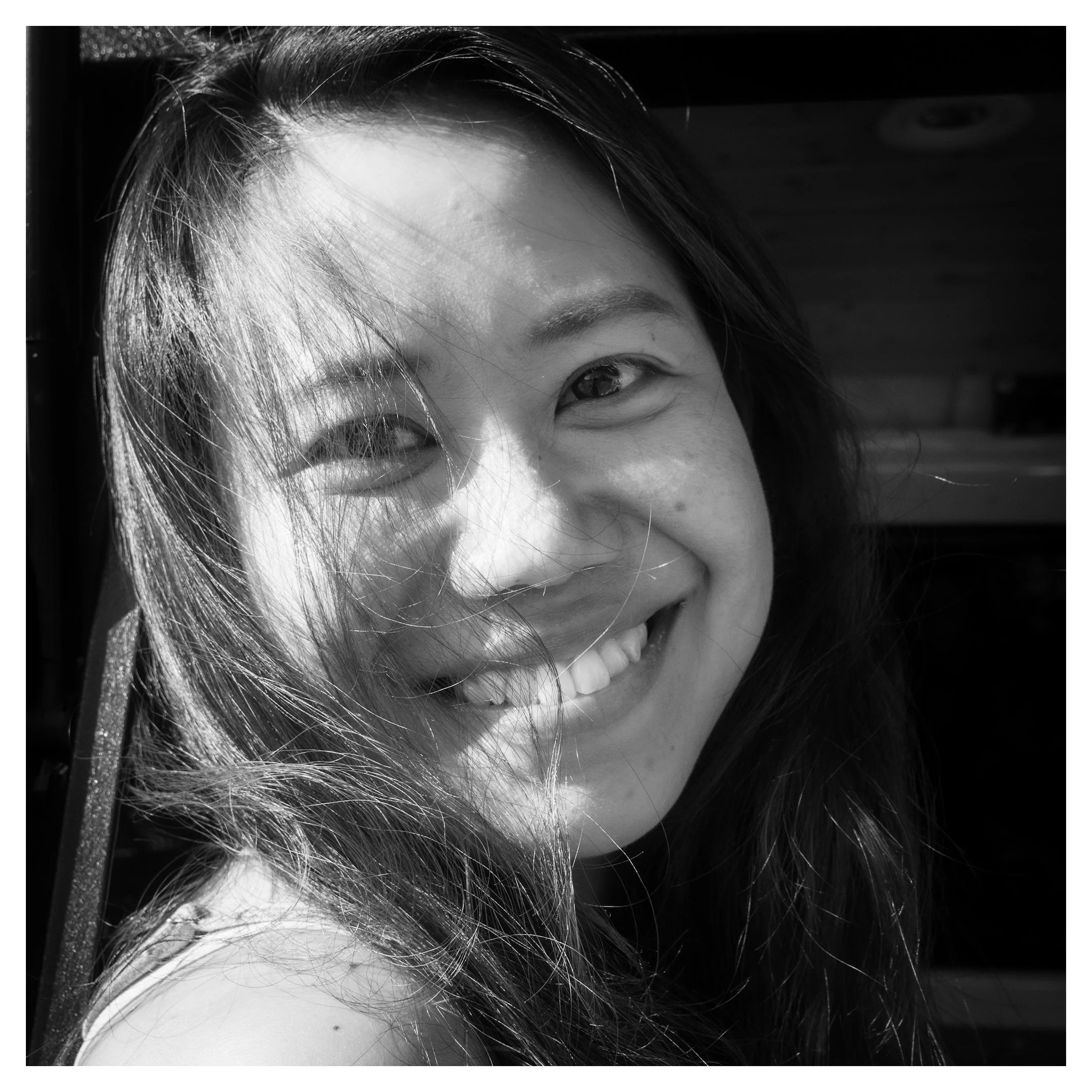
The first thing that strikes me about this image is its refusal to be polite. In a world of over-curated, soft-lit portraiture, this image has teeth. It is immediate, visceral, and unmistakably alive.
As an art critic, I look for the punctum—that prick of interest that bruises the viewer. Here, it is the collision of the hair and the smile. The wind (or movement) has swept the hair across the face, yet the subject’s smile breaks through that barrier with infectious energy. The decision to present this in black and white was the correct one; the lighting appears to be high-noon hard sunlight, which, in color, would likely result in distracting orange skin tones and harsh contrast. In monochrome, however, that harsh contrast becomes structural. It sculpts the cheekbones and adds a cinematic drama to the eyes.
However, the image walks a razor's edge. The "messiness" of the hair obscuring the nose and one eye is a stylistic risk. For a purely commercial portrait, it would be a reject. For an artistic capture of a moment, it works—but barely. The composition is also quite tight; the top of the head is clipped, which adds to the claustrophobic intensity but robs the subject of "breathing room."
Advice for Improvement:
1. The "Open Shade" Safety Net: While I admire the bravery of shooting in hard light, the shadows in the eye sockets are deep. Next time, if you want this level of spontaneity but with more technical grace, rotate your subject 45 degrees away from the direct sun, or find "open shade" (just inside the shadow of a building/car). This keeps the directional light but softens the contrast.
2. Framing Intent: If you are going to cut off the top of the head, do it boldly (mid-forehead) or not at all. The slight clip here feels accidental rather than intentional.
3. The "Hair" Variable: In candid photography, you cannot control the wind, but you can control the burst mode. In moments like this, fire a rapid burst (5-10 frames). You are looking for the micro-moment where the hair frames the eye rather than bisecting it.
The Photographer’s Ledger: Compiling Data to Grow
You asked how to use data to improve. Most photographers obsess over gear data; I want you to obsess over failure data. You have a database of books; you should have a database of your own shots.
Create a simple spreadsheet (Numbers or Excel) and track the following for your "Top 5" and "Bottom 5" images each month:
1. The "Keeper" Ratio: How many shots did you take to get this one good one? If you took 100 shots to get 1 good one, you are "spraying and praying." If you took 3 shots and got 1 good one, you are seeing deliberately. Track this ratio over time.
2. Lighting Condition: Tag every failure. Was it "Hard Sun," "Low Light," or "Fluorescent"? You might find that 80% of your bad photos happen in hard sun. This is data telling you exactly what to practice next.
3. Focal Length Frequency: Look at your metadata. Are 90% of your favorite shots at 35mm? Then stop carrying the zoom lens. Constraint breeds creativity.
4. The "Why" Column: This is the most important. For every bad photo, write one word why it failed. "Blurry," "Boring," "Light," "Composition." After six months, sort this column. If "Composition" appears most often, stop worrying about lighting and buy a book on geometry.
Curator’s Corner
To refine your style, you need to study those who mastered the messy, high-contrast aesthetic, and those who tamed it.
1. The Photographer to Study: Daido Moriyama
Your image shares DNA with the Japanese "Provoke" era—grainy, blurry, out-of-focus. Moriyama is the master of high-contrast black and white street photography. He embraces the "messy" hair, the blocked shadows, and the snapshot aesthetic.
• Why him? He teaches us that emotional impact outweighs technical perfection.
2. The Photographer to Study: Fan Ho
On the opposite end of the spectrum is Fan Ho. He shot in similar high-contrast sunlight (in Hong Kong), but he used it to create rigorous, geometric masterpieces.
• Why him? He teaches us how to organize the chaos of the street into a perfect frame.
3. Required Reading (From your Database)
Based on the library you provided, you have excellent resources at your fingertips. Pull these off the shelf immediately:
• "The Americans" by Robert Frank: This is the bible of the "snapshot aesthetic." Look at how Frank cuts off heads and accepts grain to capture the feeling of a moment.
• "The Decisive Moment" by Henri Cartier-Bresson: Read this to understand when to press the shutter so the hair creates a shape rather than a mess.
• "Diane Arbus: An Aperture Monograph": Study Arbus for her unflinching, direct connection with the subject’s eyes, much like in your photo.
4. Watch List
• Daido Moriyama: The Shocking Truth About His Style
• Theme: Embracing imperfection and high-contrast B&W.
• Fan Ho: The Master of Light and Shadow
• Theme: How to use hard sunlight to create structure (solving your lighting issue).
• Robert Frank's "The Americans" Analysis
• Theme: How to edit a sequence of candid images for emotional resonance.