

Day 46/365 The Art of the Authentic: An Environmental Portrait Critique
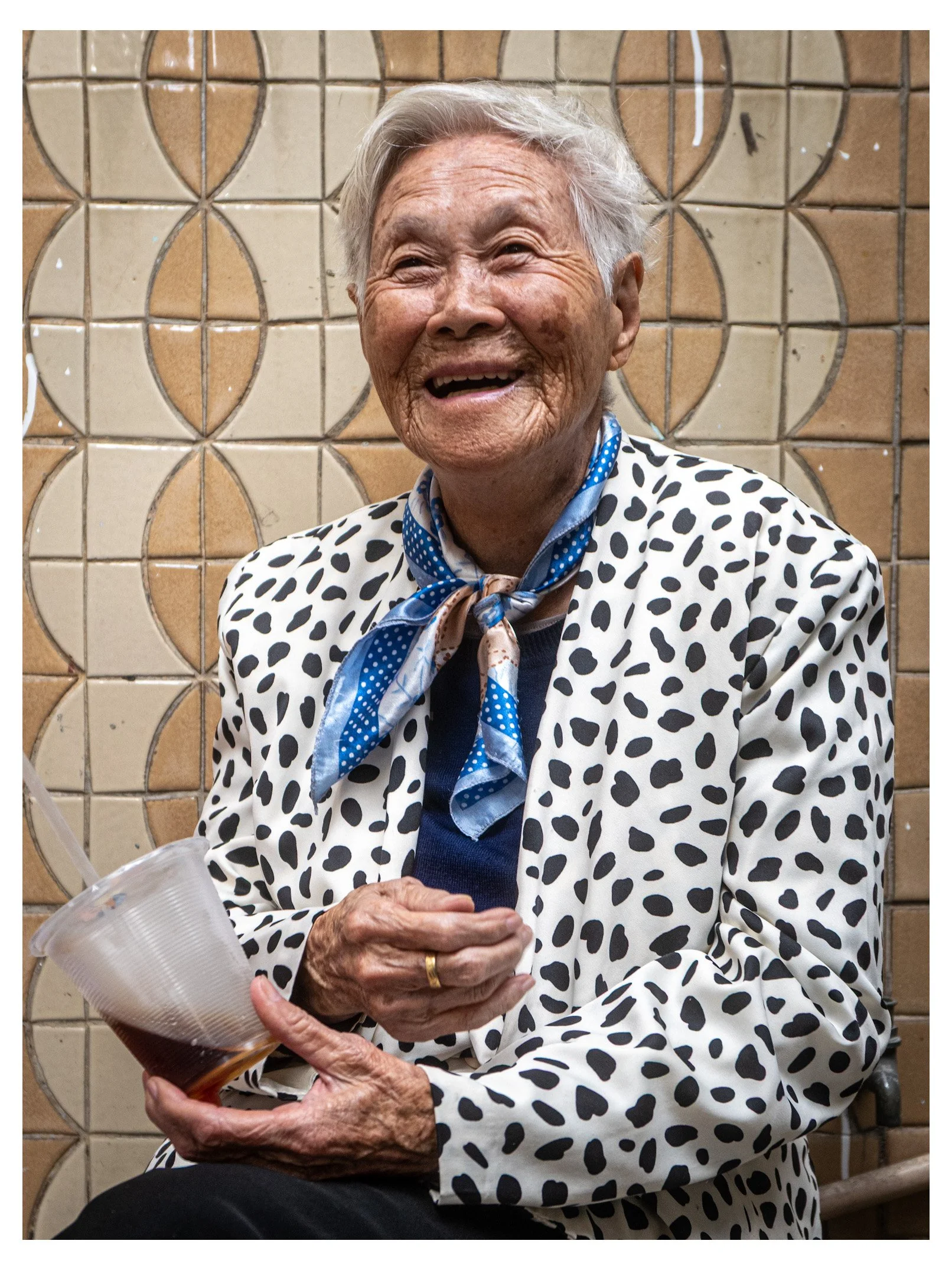
Image Analysis and Critique
This is a beautiful, intimate environmental portrait. The subject's joyous, unreserved laughter is the magnetic focal point of the image, immediately drawing the viewer in.
Strengths
• Emotional Impact: The subject's expression is genuinely radiant and full of life, making the photograph instantly engaging and emotionally resonant.
• Composition & Framing: The subject is centrally placed, which is effective here because of the sheer strength of her presence. The close-up nature emphasizes her expressive face and the texture of her skin and white hair.
• Environmental Context: The tiled background, with its neutral, repeated pattern, serves as a non-distracting backdrop, allowing the subject and her distinctive clothing to truly pop. Her dalmatian-print jacket and patterned blue scarf add a fantastic visual rhythm and a touch of personality that contrasts wonderfully with her age and the humble background. This is a crucial element of environmental portraiture.
• Detail: The gold ring on her finger and the half-empty cup she holds anchor her in a specific moment of consumption or respite, hinting at a small story within the frame.
Areas for Improvement
• Tighter Crop/Focus on the Essential: While the existing crop is strong, an even tighter focus on her face might elevate the emotional intensity further by minimizing some of the dead space at the top and the bottom. The focus should be entirely on the genuine emotion.
• The Element of the Wall: The tiled wall is great for its texture and neutrality, but try to use your environment to tell more of a story. Is there an element in the setting that could speak more to her life or occupation? In environmental portraiture, the setting is a secondary subject. Here, the setting is primarily texture.
Advice for Improvement
To evolve this work, I recommend concentrating your focus. Your eye for authentic feeling is exceptional; now, let's refine your use of place.
1. Harness the Setting: For your next environmental portrait, consciously seek out a background element that provides narrative context. Don't just find a wall; find a wall with a tool, a sign, or a piece of furniture that tells us who this person is or what they do.
2. Light as a Character: You've captured great natural light here. Start experimenting with a single off-camera flash or speedlight to add dramatic highlights or to separate your subject from the background, a technique often used by masters of the genre. This can transform an available light shot into a more deliberate, studio-like environmental portrait. You can use it to create directional light and bring out the texture in her face and clothing more powerfully.
Your Path to Mastery: Research and Study
To help you become a better photographer over time, I've compiled a list of recommended artists, books, and videos that align with your strength in capturing environmental and candid moments.
Photographers to Research
• Arnold Newman: Often considered the "father of environmental portraiture". Study his work, such as his portrait of Igor Stravinsky, to see how the environment defines the subject. The monograph Masterclass: Arnold Newman is highly recommended for his innovative approach.
• Fan Ho: An absolute master of classic street photography. His compositions of Hong Kong in the 1950s and 60s are characterized by the masterful use of light and shadow (chiaroscuro). He often utilized geometric patterns and used architectural elements to frame his subjects. His work will sharpen your eye for composition in dynamic street environments.
• Diane Arbus: Known for her square-format, often psychological portraits of people on the margins. Study her unflinching gaze and ability to capture the unique identity of her subjects.
Essential Books to Read
• Magnum Contact Sheets (Kristen Lubben): This compilation is indispensable for refining your composition and timing. It shows the frames leading up to the "keeper shot," illustrating how photographers like Henri Cartier-Bresson worked a scene with patience and subtle adjustments.
• Think Like a Street Photographer's Manual (Matt Stuart): This book offers practical, hands-on advice on quick framing, reading light, and navigating crowds, acting like a portable field guide.
• William Eggleston's Guide: Known for pioneering the use of dye transfer printing. This book will help you see the power of color in documentary and portrait work.
Videos to Watch
• Level Up Your Portraiture - Master Environmental Portraits!
• Content: Offers five tips, including giving your subject space and focusing on the story, to enhance the impact of your images of people.
• Link: https://www.youtube.com/watch?v=cWfvhxJpOyI
• Environmental Portraits featuring Joe McNally and Daniel Norton
• Content: A session with Joe McNally on using flash and available light together to create engaging environmental portraits.
• Link: https://www.youtube.com/watch?v=hYp33O3ES1I
• The 5-Step Roadmap to Becoming a Better Photographer
• Content: A roadmap for learning photography, covering everything from mastering manual mode to seeing the light and finding a mentor.
• Link: https://www.youtube.com/watch?v=aSzRPYuesQo