

Image Metadata
Camera Model: Fujifilm X-Pro2
Lens: 23mm f1.4 R
Shutter Speed: 1/350
Aperture: f/9
ISO: 200
Critique
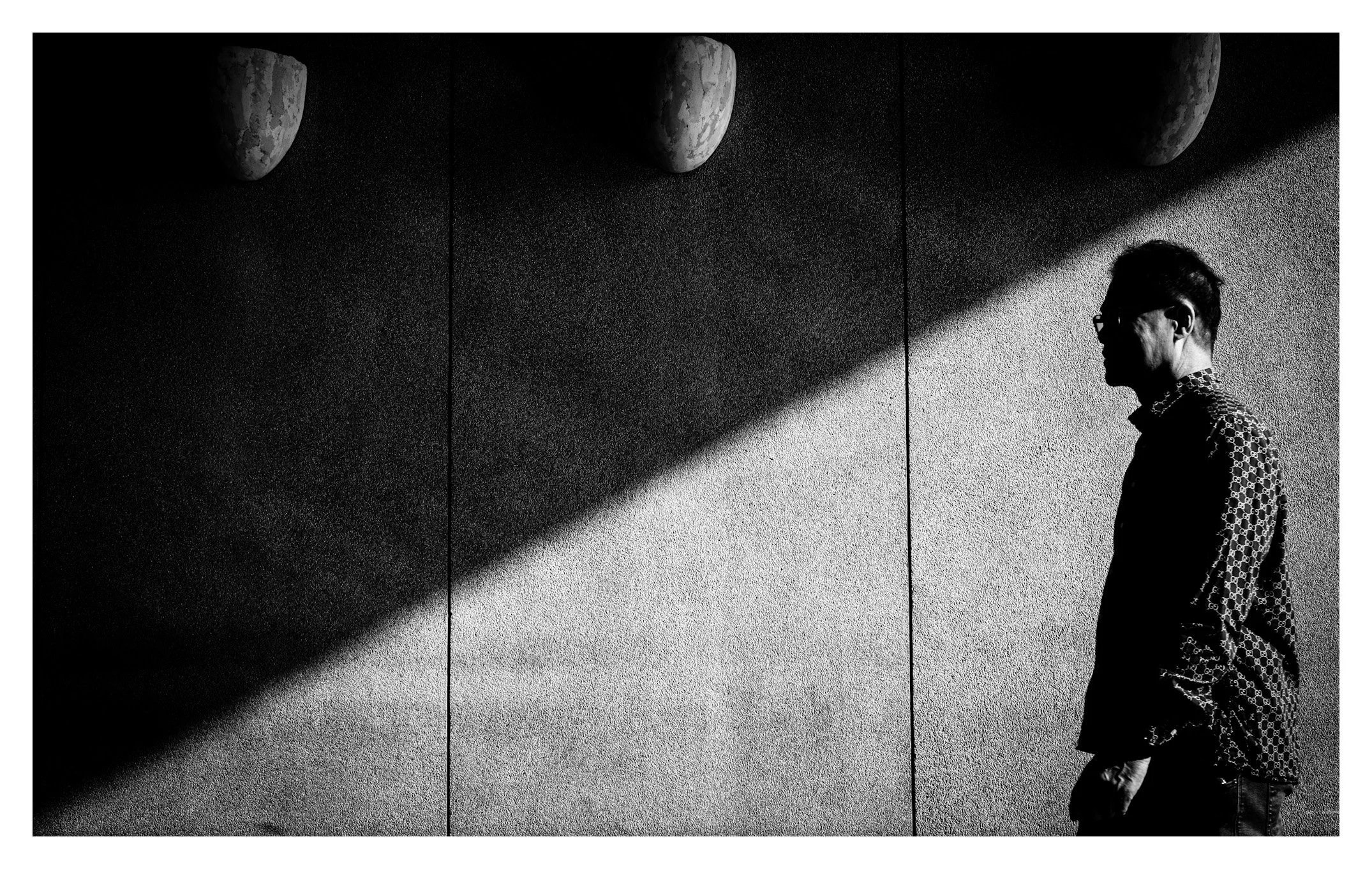
This final crop has successfully elevated the image from a casual observation to a rigorous composition. By removing the extraneous space on the edges, you have forced the viewer into a confrontation with the geometry of the scene. The image is no longer about a man walking; it is about the intersection of light and humanity.
The defining feature of this work is the diagonal shadow line. In this tighter composition, it acts as a guillotine, visually severing the frame and creating a palpable tension. This is a classic use of dynamic symmetry, where the leading line anchors the viewer's eye and drives it toward the subject.
The upper third of the image provides a crucial counter-rhythm. The three sconces—appearing like silent sentinels—create a repetitive beat (one, two, three) that culminates in the human head. This establishes a vertical connection that balances the strong diagonal sweep. Furthermore, the texture of the wall is rendered beautifully at f/9. The rough, pebbled surface contrasts with the soft, organic chaos of the subject's hair and the intricate pattern of his shirt. It is tactile; one can almost feel the grit of the concrete.
The only minor imperfection remains in the lower right quadrant, where the trousers merge slightly with the darkness. However, in this final crop, that merger feels less like a technical error and more like a stylistic choice—suggesting the figure is emerging from, or dissolving into, the void.
Advice for Improvement
To refine this style of "stage stage" street photography, you must pay closer attention to the "stride."
The Geometry of the Step:
In silhouette work, limbs must be distinct to register quickly. You caught the subject mid-step, but the legs are somewhat clustered. Ideally, you want to capture the moment of full extension—the shape of an inverted "V" created by the legs. This separates the limbs from each other and often lifts the rear foot slightly, adding kinetic energy. Patience is key; wait for the subject to break the plane of the shadow completely or to display a distinct shape.
Becoming a Better Photographer Through Data Compilation:
You previously asked how to use data to improve. Since this image relies entirely on the angle of the sun, I recommend you track "Light Quality vs. Time of Day."
1. The Golden Window Audit: Group your best high-contrast images (like this one) in your library. Check the "Capture Time" in the metadata. You will likely find they cluster within specific 45-minute windows in the morning or late afternoon.
2. Seasonal Shift: Create a simple log (or smart album) that correlates these times with the month of the year. The angle of the shadow in this image is steep. Knowing that "in January, the 4:00 PM light hits this wall at 45 degrees" allows you to stop hunting randomly and start planning shoots with the precision of a landscape photographer.
3. Variable Analysis: If you find you have many similar shots that failed, check the Shutter Speed data. For walking subjects, 1/350 is safe, but 1/500 is often the "freeze" threshold for sharp silhouettes. If your rejected photos are soft, adjust your minimum shutter speed settings.
Recommendations
To expand your visual vocabulary beyond the previous recommendations, we will look at artists who mastered the gritty, high-contrast, and psychological aspects of black and white photography.
Photographers to Research:
• Daido Moriyama: A master of the Japanese "Provoke" era. His work is characterized by high contrast, grit, and grain. Studying Moriyama will teach you to embrace the darkness and the "are-bure-boke" (grainy, blurry, out-of-focus) aesthetic to create mood rather than just technical perfection.
• Josef Koudelka: Specifically his "Exiles" and "Gypsies" periods. Koudelka is a master of alienation and placing figures in vast, often dark, geometric spaces. His compositions are rigorous and heavy, much like the wall in your image.
• Robert Frank: His seminal work "The Americans" captured the outsider's perspective. His ability to photograph solitary figures amidst the American landscape offers a lesson in emotional narrative that parallels your solitary walker.
Books to Read:
• "The Americans" by Robert Frank: This is the bible of the outsider perspective. It documents a road trip across the USA in the 1950s. Pay attention to how Frank uses the edges of the frame and often obscures his subjects to create mystery.
• "Daido Moriyama: Hokkaido": This collection features deep blacks and abstract compositions. It is an excellent reference for understanding how to balance large areas of negative space (black) with stark white highlights.
• "Gypsies" by Josef Koudelka: This monograph covers his travels through Europe. It is a masterclass in panoramic composition and capturing the human condition with raw honesty.
Videos to Watch:
• Daido Moriyama - "The Past is Always New, The Future is Always Nostalgic": This offers insight into his chaotic, instinctive shooting style, which contrasts with the rigid geometry of Fan Ho but achieves a similar emotional impact.
• Josef Koudelka: Shooting Holy Land: Observing Koudelka at work shows his relentless pursuit of the perfect composition. He does not just snap; he builds the frame.
• Robert Frank - "Don't Blink": A look at the man who changed the face of documentary photography. It explores his unconventional framing and use of light.