

Day 101/365 Bronze in Motion: Escaping the Shutter Speed "Uncanny Valley"
EXIF Data
• Camera Model: Leica D-Lux 8
• Shutter Speed: 1/15 sec
• Aperture: f/16
• ISO: 100
Critique
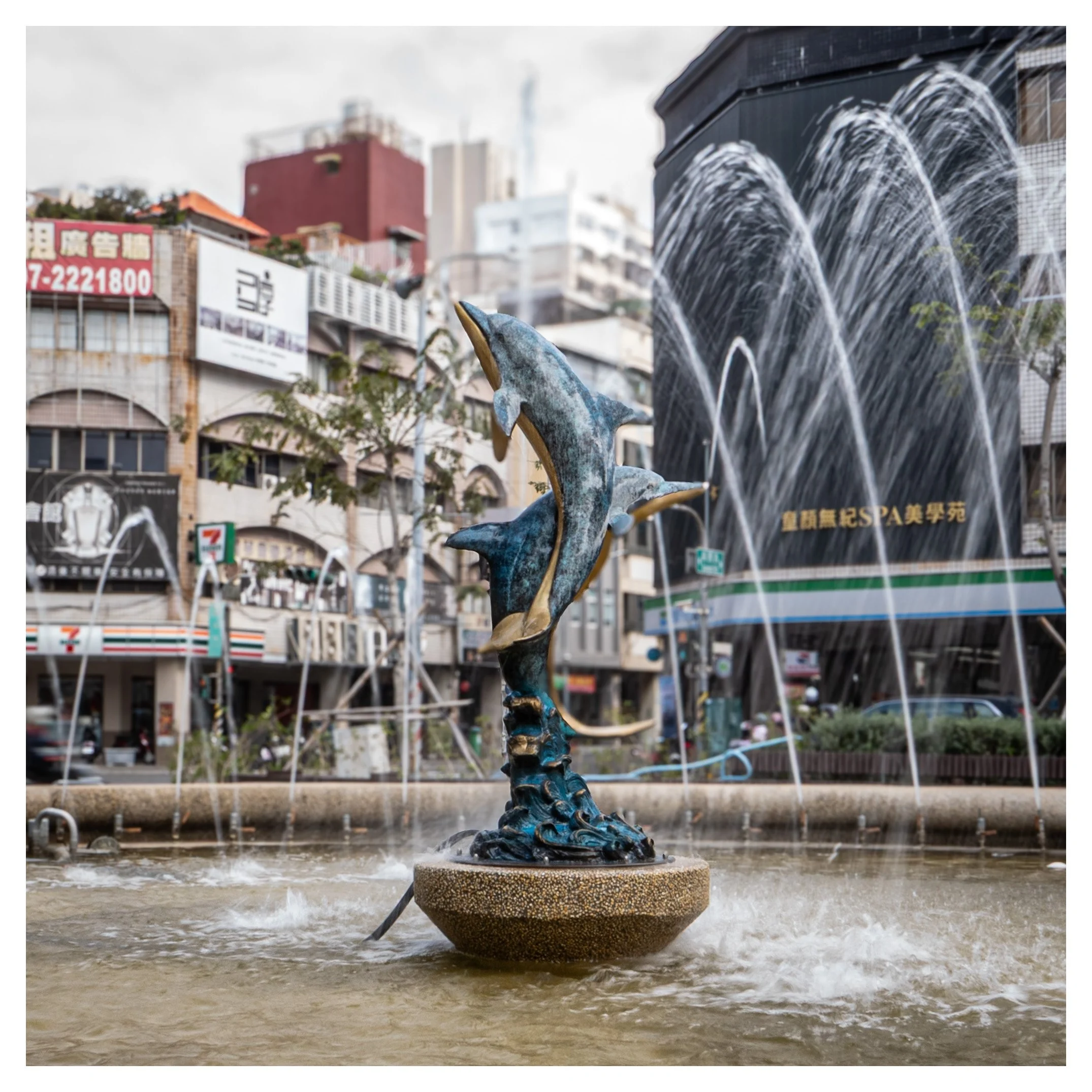
You have found a charming subject in the urban jungle of Kaohsiung. The energy of the dolphins leaping is palpable, and the water arcs create a natural frame. However, the image suffers significantly from the settings chosen, landing it in what I call the "Uncanny Valley" of motion.
At 1/15th of a second, the water is neither frozen sharp nor pleasantly blurred. It simply looks "soft," as if the camera shook or focus was missed. It lacks the intentionality of a long exposure (silky, smooth water) or the precision of a high-speed shot (crystalline droplets).
Furthermore, your choice of f/16 is technically detrimental to this specific camera. The Leica D-Lux 8 uses a Micro Four Thirds sensor. On a sensor of this size, diffraction (the bending of light waves as they pass through a small opening) begins to soften images noticeably past f/8. By shooting at f/16, you are introducing optical softness across the entire frame, negating the high quality of your Leica lens.
Finally, the composition battles with the chaotic urban background. The 7-ELEVEN sign and the stark black building compete for attention with the bronze dolphins. The visual noise of the city is overwhelming the graceful curves of the sculpture.
How to Improve This Image
1. Commit to a Shutter Speed
You must choose a lane.
• To Freeze: Increase your shutter speed to 1/1000s or faster. This will freeze the individual water droplets, making them look like suspended diamonds. This matches the "action" of the leaping dolphins.
• To Flow: Use a tripod and slow your shutter to 1 second or longer. This will turn the water arcs into smooth, ethereal ribbons that contrast beautifully with the hard bronze.
2. Open Up the Aperture
Avoid f/16. On your D-Lux 8, your "sweet spot" for maximum sharpness is likely between f/4 and f/5.6. Opening the aperture will also help you achieve a faster shutter speed (to freeze the water) without raising your ISO. Even for a deep depth of field, f/8 is plenty for this scene; f/16 is overkill and reduces quality.
3. Compositional Cleanup
Get lower. If you crouch down and shoot upward, you might be able to frame the dolphins against the sky or the taller, cleaner parts of the buildings, removing the street-level clutter like the convenience store sign. Alternatively, zoom in tighter to focus solely on the interaction between the bronze snout and the water, cutting out the city entirely.
Long-Term Growth: The "Why" Log
To become a better photographer, you must move beyond recording what you saw and start recording how you thought. I recommend compiling a Metadata Journal.
For every "keeper" shot, record not just the settings, but your Intent.
• Example Entry: "Shot at 1/15s. Intent: Wanted to show motion. Result: Looked messy. Lesson: 1/15s is too slow for hand-held water shots."
Over time, review this data. You will likely find a pattern where your best images cluster around specific settings (e.g., specific apertures or lighting conditions). This data will help you instinctively avoid settings that historically result in failures for you.
Recommendations
To deepen your understanding of how to separate subjects from chaotic Asian urban environments, I recommend studying the following:
• Photographer to Study: Shen Chao-Liang. A Taiwanese master who documents the surreal "stage trucks" of Taiwan. He is brilliant at managing chaotic, colorful environments and turning them into formal, structured art.
• Book to Read: STAGE by Shen Chao-Liang. This monograph captures the mobile stage trucks of Taiwan. Pay attention to how he centers his subjects (much like your dolphins) but controls the lighting and environment so the background supports rather than distracts.
• Video to Watch: The video below offers a rare glimpse into Shen Chao-Liang's process, specifically his "STAGE" series. It is highly relevant to your location and offers a masterclass in documenting Taiwanese culture with precision.
... Darkening/Drifting: Shen Chao-Liang's Photo Chronicle ...