

Day 159/365 The Vertical Gaze: Finding Solitude in the Grid
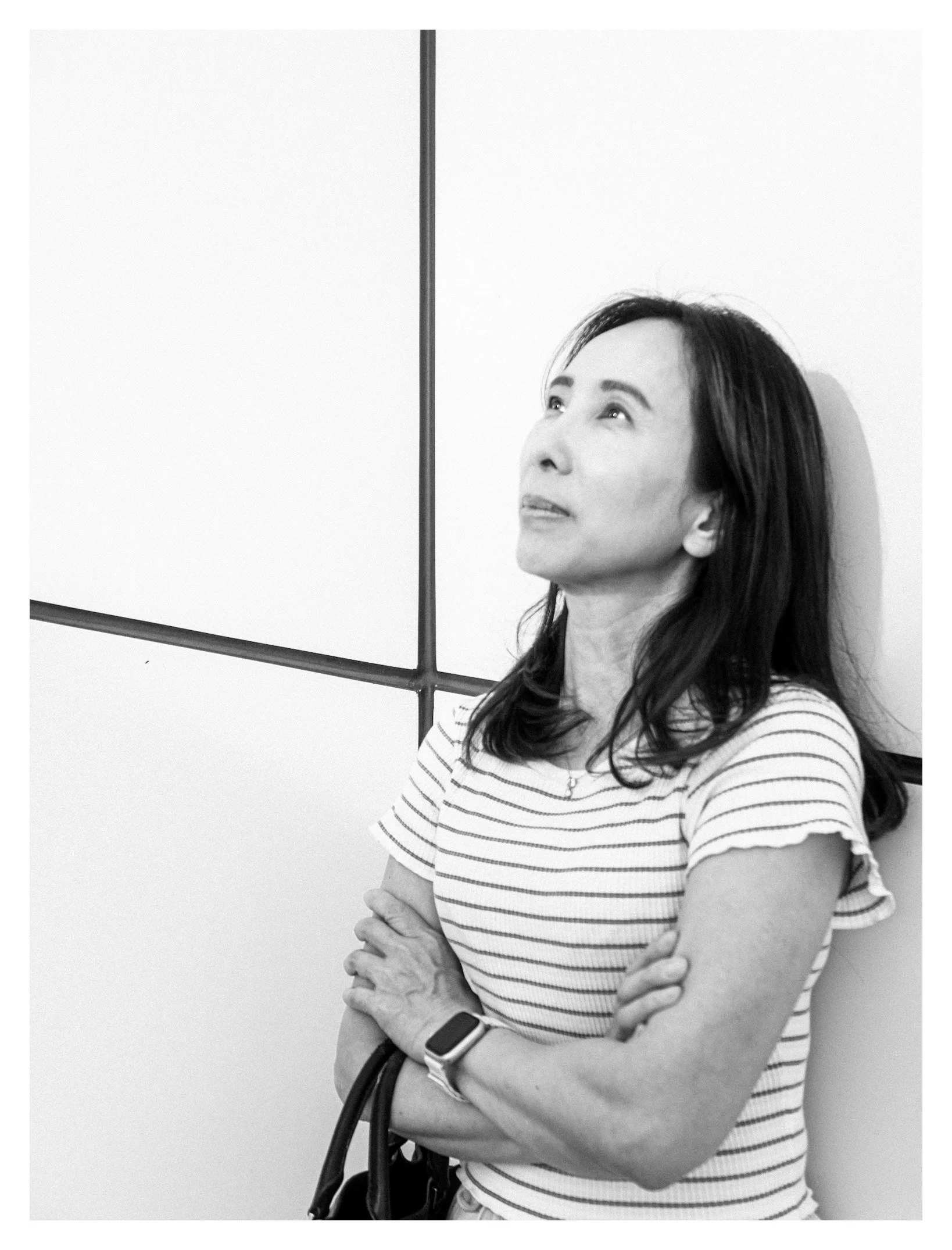
Discover how a simple architectural backdrop can transform a candid moment into a profound study of isolation and geometry. We examine the interplay between industrial lines and human emotion, revealing why the most compelling street photography often requires looking up rather than straight ahead.
EXIF Data
Camera Model: Leica D-Lux8
Shutter Speed: 1/640
Aperture: f2.6
ISO: 200
The image presented is a striking exercise in compositional tension. By positioning the subject against a stark, gridded background, you have created a dialogue between the organic curves of the human form and the rigid, uncompromising lines of modern architecture. The choice of black and white is essential here; it strips away the distraction of color to highlight the textures of the striped shirt and the subtle gradients of shadow on the wall.
Refinement of the Frame
To elevate this piece from a high-quality snapshot to a masterwork, consider the following technical and conceptual adjustments:
• Mind the Tangents: The vertical line of the wall appears to grow directly out of the subject's head. In future compositions, shifting your angle slightly to the left or right would "decouple" the subject from the architecture, allowing her silhouette to breathe and creating a more distinct sense of depth.
• The Power of Negative Space: The large expanse of white in the upper left is bold, but it lacks a bit of intentionality. Experimenting with a slightly tighter crop or a lower camera angle would emphasize the subject's upward gaze, making the "heaviness" of the empty space feel more like a weight she is contemplating.
• Depth of Field: At f2.6, you have a lovely softness, but in street photography, sometimes stopping down to f5.6 or f8 allows the environment to become a "character" with equal clarity, which can add a layer of environmental storytelling.
Cultivating Your Vision
Becoming a premier photographer is less about the gear and more about the accumulation of visual data. I recommend keeping a digital contact sheet—a "Visual Diary"—where you categorize every shot by its primary success: was it the light, the geometry, or the "decisive moment"? Over months, you will see patterns in your own psyche that you didn't know existed.
Recommended Research
Photographers to Study:
• Fan Ho: For his unparalleled mastery of light, shadow, and geometric lines in urban Hong Kong.
• Ray K. Metzker: To understand how to use extreme contrast and architectural repetition to create "composites" of city life.
• Trent Parke: Specifically his work in Minutes to Midnight, to see how high-contrast black and white can turn a mundane street scene into something dreamlike and cinematic.
Essential Reading:
• The Decisive Moment by Henri Cartier-Bresson: The "bible" of timing and geometry.
• Thoughts on Street Photography: For a deeper philosophical dive into why we point the lens at strangers.
• Magnum Contact Sheets by Kristen Lubben: To see the "failures" that led to the world's most iconic images.
Instructional Media:
• The Geometry of a Scene: A look at how professionals "wait" for the frame to fill. The Art of Composition
• Mastering Black and White: Understanding tones and textures in post-processing. The Philosophy of Monochrome