

Day 162/365 The Golden Gaze of Fengshan: Architecture and Atmosphere
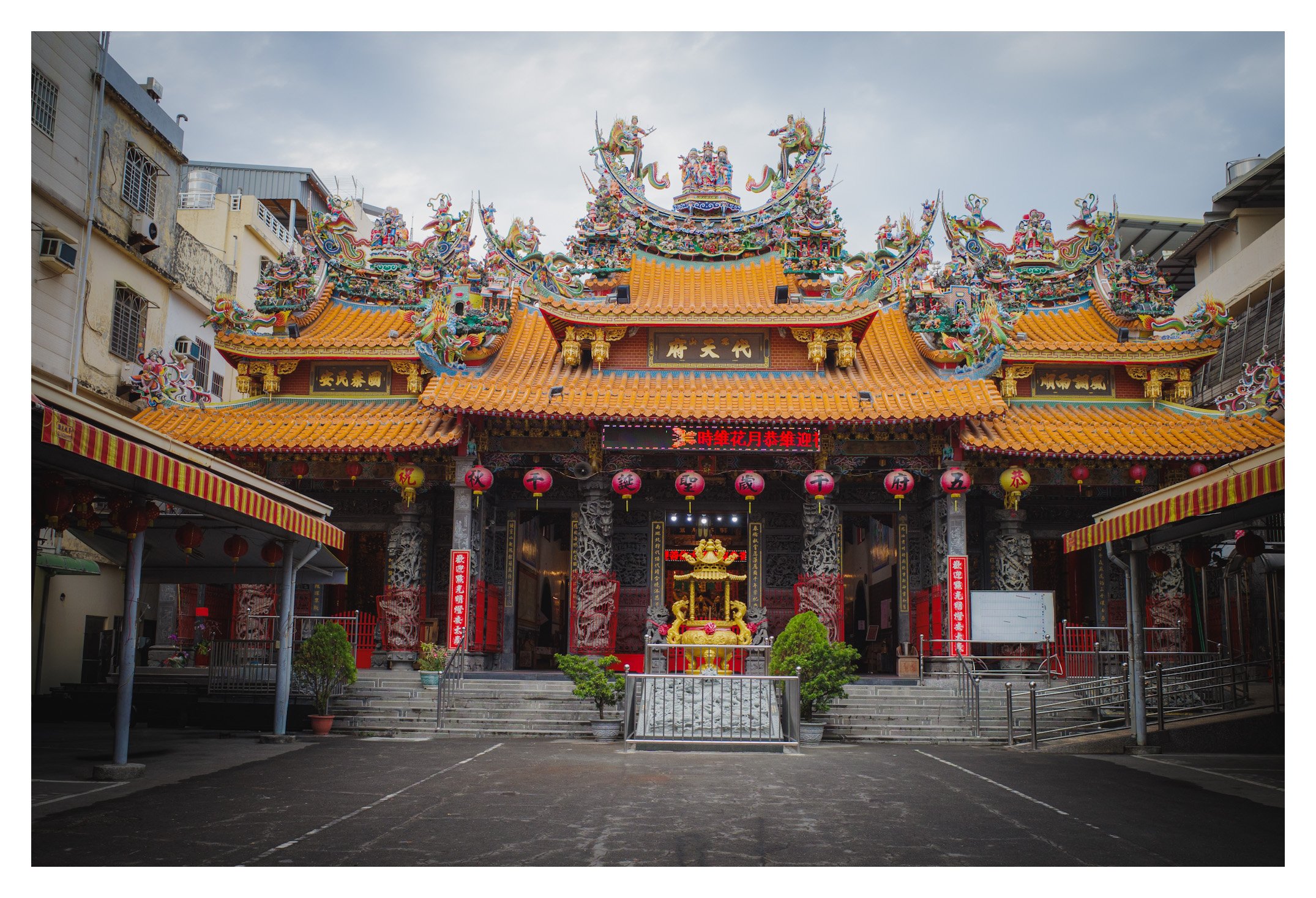
Capturing the ornate majesty of Kaohsiung’s spiritual landmarks requires more than just a wide-angle lens. In this critique of the Fengshan Taitian Temple, we explore how subtle shifts in perspective and timing can transform a standard architectural record into a compelling narrative of light and devotion.
EXIF Data
Camera Model: Ricoh GRIII
Shutter Speed: 1/320
Aperture: f3.2
ISO: 320
The Critique
The Ricoh GRIII is a formidable tool for this subject; its sharp prime lens and APS-C sensor are perfect for capturing the intricate jiannian (cut-and-paste) ceramic roof decorations characteristic of Southern Taiwanese temple architecture. In this frame of the Fengshan Taitian Temple, you have achieved a commendable level of formal symmetry. The centered composition emphasizes the temple's role as a balanced, spiritual anchor within the urban sprawl of Kaohsiung.
However, the image feels somewhat "polite." The flat lighting of the overcast sky, while excellent for preserving detail in the shadows, robs the gold-tiled roofs and red lanterns of their potential vibrancy. The foreground pavement takes up a significant portion of the frame without offering much textural interest or leading lines to draw the viewer into the sanctum.
Path to Improvement
To elevate this specific scene, consider the following technical and creative adjustments:
• The Blue Hour Transition: Return to this location twenty minutes after sunset. The "mixed lighting" between the temple's warm interior glow, the illuminated red lanterns, and the deep cobalt of the twilight sky will create a much more dramatic color contrast.
• Compression vs. Expansion: While the 28mm equivalent lens is great for "getting it all in," try stepping back and utilizing the crop mode (35mm or 50mm) or getting much lower to the ground. Using the foreground planters as a "frame within a frame" would add a layer of depth that the current open pavement lacks.
• Decisive Atmosphere: Wait for a human element—a devotee entering the frame or a monk in orange robes—to provide a sense of scale and a focal point that breaks the static nature of the architecture.
Growth Through Data
Becoming a master of the craft requires an analytical look at your own history. I recommend maintaining a digital "Contact Sheet" or a catalog where you tag images not just by location, but by Lighting Condition and Emotional Intent.
Over six months, look at your metadata: are you always shooting at f3.2? If so, you may be relying on a "crutch" of shallow depth of field. Force yourself into a "Limited Parameter" week where you only shoot at f8, or only shoot during high-contrast midday sun. This data-driven self-correction prevents stylistic stagnation.
Curated Inspiration
To further your education, I suggest looking into these specific masters and resources that align with your interest in the cultural landscape of Taiwan and architectural storytelling.
Photographers to Study
• Shen Chao-Liang: Specifically his STAGE series. He is the master of capturing Taiwanese mobile stages and religious structures at night, showing how color and artificial light can create a surreal atmosphere.
• Fan Ho: For his mastery of light and shadow. Although he shot mostly in Hong Kong, his ability to use "the light of the spirit" to transform mundane street scenes is unparalleled.
Books for Your Library
• "The Decisive Moment" by Henri Cartier-Bresson: The "bible" of timing and geometry. It will teach you how to wait for the perfect intersection of architecture and humanity.
• "Uncommon Places" by Stephen Shore: Essential reading for learning how to find beauty in the "ordinary" built environment and how to handle color with clinical precision.
Videos to Watch
• The Art of Street Photography - Magnum Photos: A deep dive into how professional photographers approach unfamiliar environments.
• https://www.youtube.com/watch?v=f-Bst_vW8_o
• Fan Ho: Visual Poet of the Night: A documentary look at how he used darkness to simplify complex urban frames.