

Day 177/365 Blurred Lines: Capturing the Ghost of the City
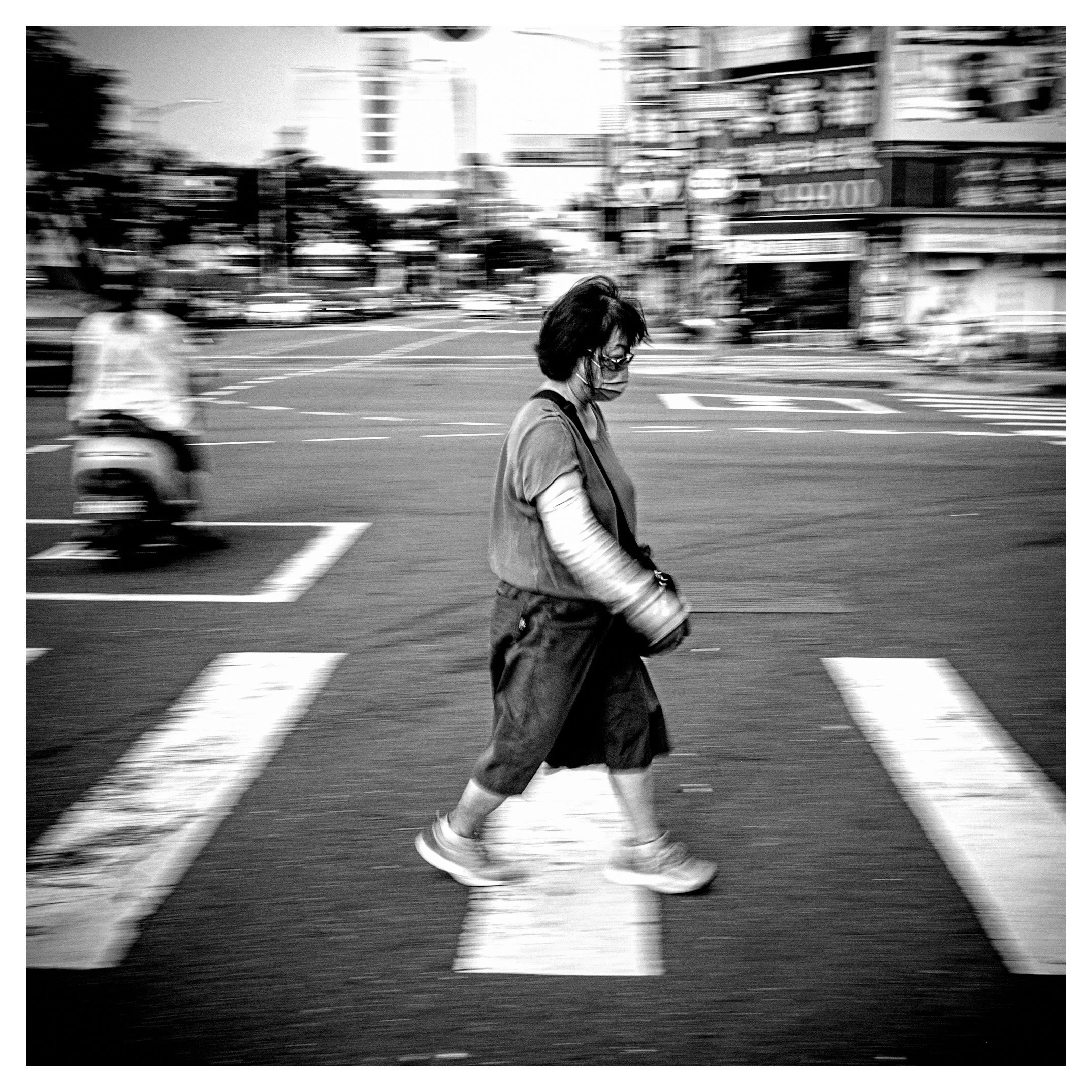
Can a "bad" photo be a masterpiece? Discover how intentional motion blur and a 1/10 shutter speed can transform a routine commute into a haunting urban poem. You will learn why resisting technical perfection might be the key to unlocking your true artistic voice in Taiwan’s streets.
Technical Profile
• Camera Model: Ricoh GRIII
• Shutter Speed: 1/10
• Aperture: f16
• ISO: 200
The Critique: Embracing the "Provoke" Aesthetic
Your image is a visceral slice of urban life that prioritizes mood and movement over clinical sharpness. By choosing a slow shutter speed of 1/10, you have transformed the subject into a spectral figure, a "ghost" navigating the high-contrast geometry of the crosswalk. This approach echoes the Provoke era of Japanese photography—specifically the are-bure-pake (grainy, blurry, out-of-focus) aesthetic that rejected traditional "good" photography in favor of raw emotion.
The composition is anchored by the strong diagonal and vertical lines of the zebra crossing, which provide a necessary structural framework for the blurred subject. However, there is a slight tension created by the high aperture (f16). While it ensures depth of field, it also forces your lens into the diffraction zone and reveals sensor dust. Most importantly, the background remains quite busy; the blurred motorbike on the left competes with your primary subject for the viewer's attention.
How to Improve This Image
• Isolate the Subject: To make the primary figure pop, try to time your shot when the background is less cluttered. A lone figure against the stark white stripes of the crossing creates a more powerful "dot" in the composition, a technique famously used by Fan Ho.
• Experiment with Panning: At 1/10, try moving the camera at the same speed as the subject. This would keep the person’s torso relatively sharp while the background streaks into a horizontal blur, creating a more "dynamic" sense of speed.
• Manage Your Aperture: Moving to f8 or f11 would likely provide better optical performance than f16 while still giving you enough depth of field. If you have too much light, use the Ricoh GRIII’s built-in ND filter to maintain that slow shutter speed.
Growth Strategy: Data-Driven Artistry
To become a better photographer, you must move from "taking" photos to "making" them through intentional study.
1. The "Data Journal" Method
Don't just look at your photos; analyze them. Create a digital log or use your database to track which shutter speeds yield your favorite "blur" results.
• The 1/X Rule: Record the "Success Rate" of your motion blur. Was 1/10 too blurry? Was 1/30 not enough? Over time, you’ll develop an instinctive "internal meter" for movement.
• Location Mapping: Track which intersections in Taiwan offer the best light at specific times. Street photography is often about waiting for the light to "build" the stage.
2. Masters to Research
• Daido Moriyama: The king of the blurred, high-contrast black-and-white snapshot.
• Fan Ho: Study his work for his mastery of light, shadows, and the "single human figure" in Hong Kong.
• Alex Webb: Though he works in color, his "organized chaos" and complex layering are essential for learning how to manage busy street scenes.
3. Recommended Reading
• The Decisive Moment by Henri Cartier-Bresson: The "bible" of timing and geometry.
• Bystander: A History of Street Photography by Joel Meyerowitz & Colin Westerbeck: An academic yet accessible survey of the genre’s evolution.
• Think Like a Street Photographer by Matt Stuart: Great for learning how to find humor and candid moments in the mundane.
4. Essential Viewing
• The Moriyama Method: Why You Are Still Taking Boring Photos
• The Fan Ho Method: The Art of Minimalist Street Photography
• Alex Webb Composition: What Alex Webb Taught Me About Complexity