

Day 207/365 The Daily Dose: An Unflinching Glimpse Into the Routine of Resilience
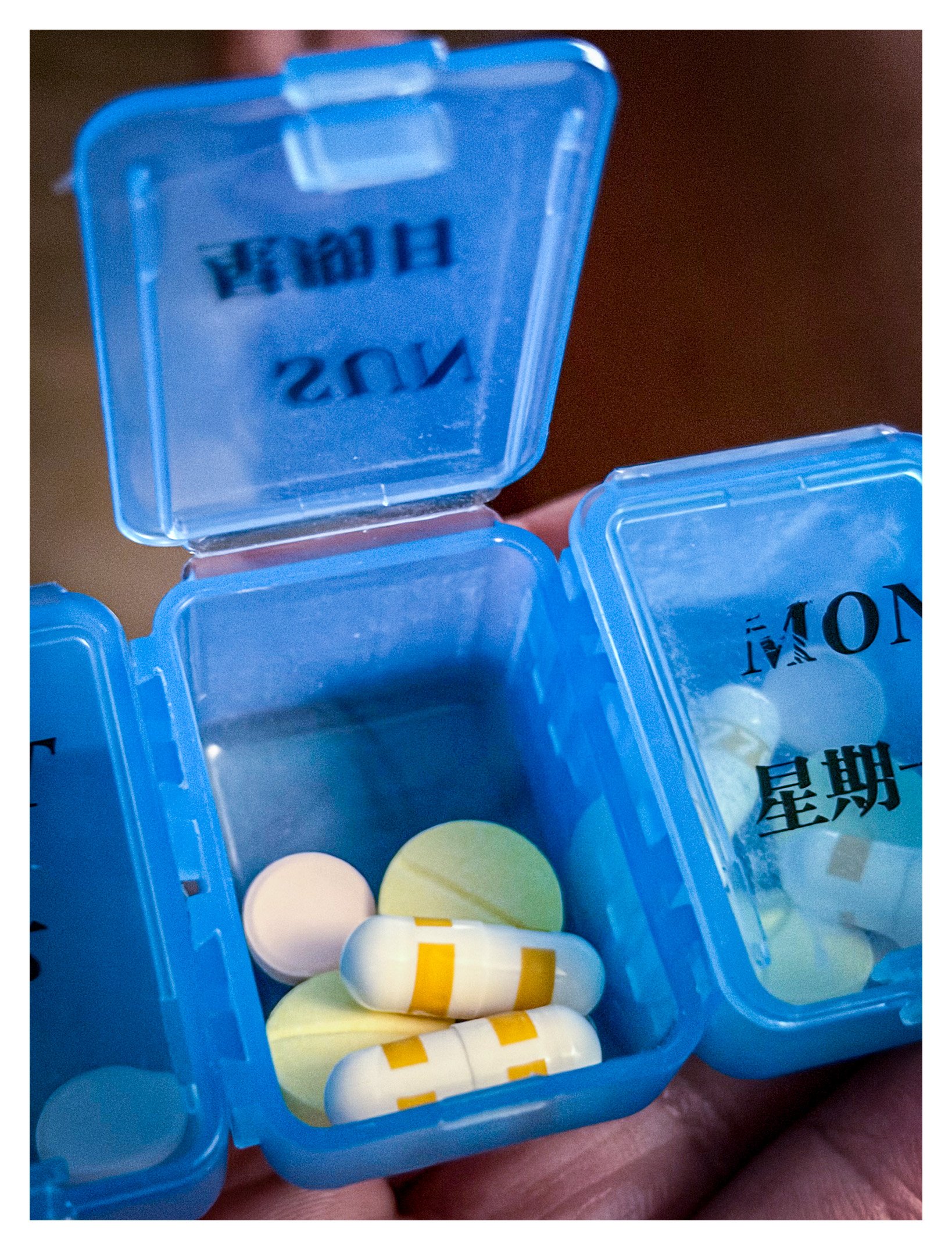
A translucent blue capsule box, starkly lit and overflowing with a complex medical regimen, tells a story far deeper than a simple daily routine. You’ll learn how turning a smartphone toward the mundane details of health can yield a deeply moving, tactile study of contemporary life.
Image Metadata
Camera Model: iPhone 17
Shutter Speed: 1/20
Aperture: f/1.6
ISO: 400
The Critique: Finding Light in the Routine
There is an arresting, intimate domesticity to this image. By using a tight, macro-adjacent perspective, the frame transforms a completely ordinary object—a plastic weekly pill organizer—into a landscape of personal vulnerability. The translucent blue of the plastic acts as a beautiful filter, catching the light and enveloping the monochromatic and dual-toned capsules in a cool, sterile glow.
The composition benefits immensely from the bilingual text ("SUN", "MON", "星期一"), grounding the image in a specific, lived-in cultural context. The hand subtly supporting the container from below provides a crucial sense of scale and human connection, shifting the image from a clinical documentation to an empathetic narrative about wellness, aging, or recovery.
Strategic Improvements for Your Next Shoot
While the shot is raw and evocative, a few deliberate technical and compositional adjustments can elevate its graphic impact:
• Mind the Focus and Micro-Shake: At a shutter speed of 1/20, handholding a smartphone can introduce subtle camera shake, which is why the edges of the yellow-banded capsules are slightly soft. Resting your wrist on a table or using a small smartphone tripod will instantly sharpen those fine details.
• Manage Reflection and Distortion: The upright lids are catching harsh overhead glare, which partially blows out the text on the Sunday compartment. Placing a small piece of white paper just out of frame to act as a bounce card could fill the shadows inside the compartments without relying on abrasive direct light.
• Declutter the Background: The soft brown background tones work well to contrast the blue, but a slight shift in angle could hide the stray dark shape at the very top of the frame, creating a entirely self-contained world within the grid of the box.
Elevating Your Practice: The Power of Metadata Logging
To become a better photographer over time, you must transform from an intuitive shooter into a analytical curator of your own data. Every time you take a photograph that hits the mark—or misses it completely—your camera logs exactly how that choice was made.
• Establish a Digital Ledger: Create a simple spreadsheet or dedicated folder structure organized by lighting conditions (e.g., Low Light Indoors, Midday Sun, Street Shadow).
• Cross-Reference Success with Settings: Group your images by their technical commonalities. Look closely at your favorite shots: Do you prefer the compressed look of your phone's 2x crop, or the wide-angle dramatic distortion of the main lens? Are your sharpest handheld low-light images consistently capping at 1/30?
• Map Trends Over Time: By tracking your metadata alongside a quick note on the mood of the image, you will discover your technical signature. You will begin to look at a room, instinctively know that it requires ISO 400 at f/1.6, and confidently adjust your position before you even open your camera app.
Masters of the Craft: Expanding Your Visual Vocabulary
To deepen your approach to documentary and intimate photography, study these master visual storytellers who turn everyday struggles, routines, and domestic spaces into high art.
Photographers to Study
• Chien-Chi Chang: A master of documenting isolation and human connection. His seminal book The Chain uses intense portraiture to look at systemic human vulnerability within structured environments.
• Nan Goldin: Nobody documents the raw, unvarnished realities of modern life, dependency, and domestic intimacy like Goldin. Her snapshot aesthetic proves that technical perfection matters far less than emotional truth.
• Michael Wolf: Look at his series Tokyo Compression to see how tight geometric constraints and everyday claustrophobia can be used to mirror larger psychological states.
Books to Read
• "The Ballad of Sexual Dependency" by Nan Goldin: A masterclass in keeping a visceral, deeply personal visual diary of the world immediately around you.
• "Thoughts on Photojournalism" (or related historical essays) by Chiu An-Chiang / Chang Chao-Tang: Dive into the history of visual arts to understand how local environments influence perspective.
Videos to Watch
• To understand how a master controls the frame to find profound depth in the ordinary, watch the analysis of cinematic framing in Every Frame a Painting - The Art of Silence.
• For a deep dive into using whatever camera is in your hand to tell powerful stories, watch Ted Forbes / The Art of Photography - Photography Masterclass.