

Day 224/365 Beyond the Horizon: Finding Solitude at Shimonada Station
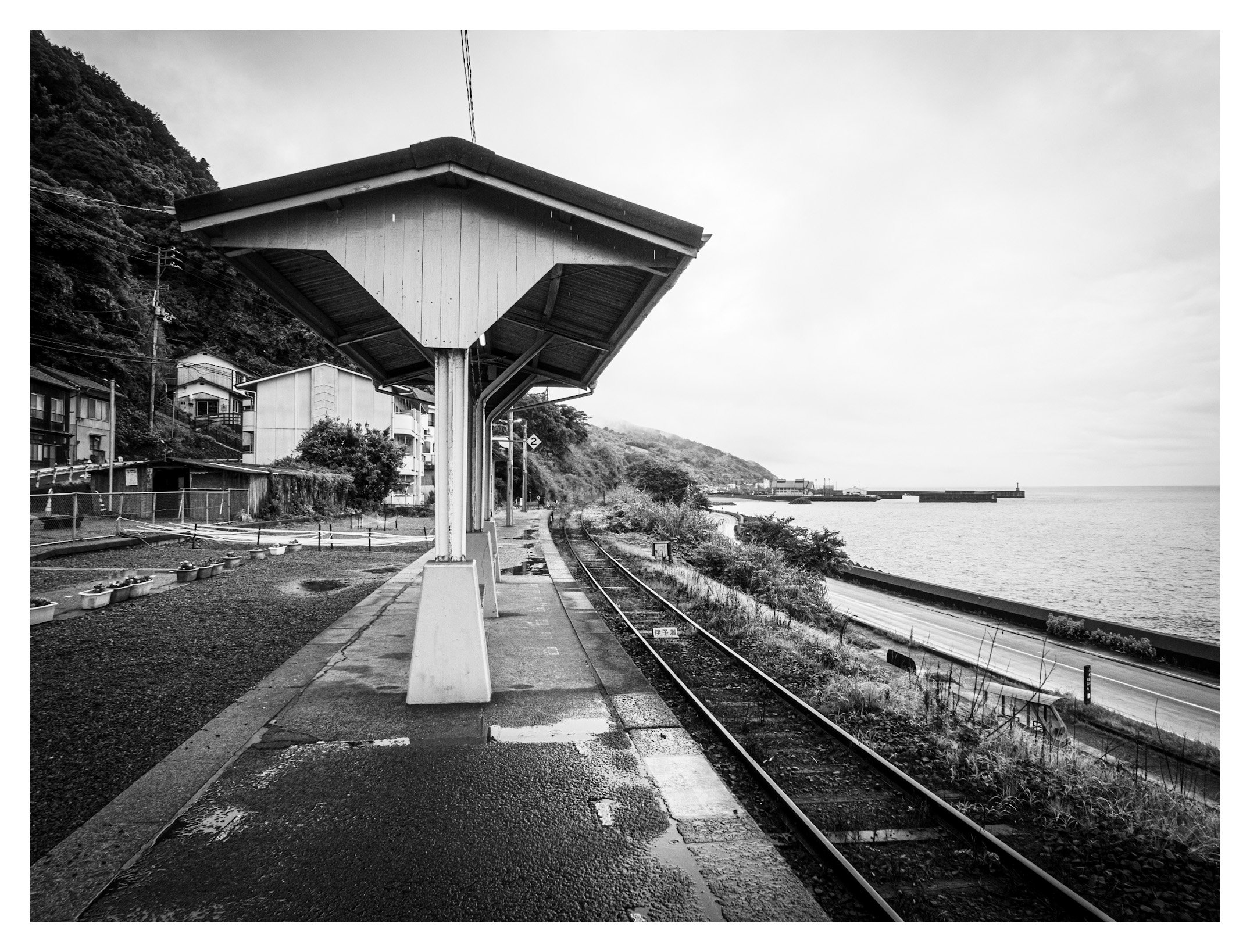
The platform of Shimonada Station stands silent against the coast of Shikoku. In this breakdown, you will learn why geometric framing and purposeful shadow details can transform an iconic, widely photographed travel vista into a profoundly personal narrative of isolation.
EXIF Data
Camera Model: Leica D-Lux 8
Shutter Speed: 1/320
Aperture: f5.6
ISO: 200
The Critique: Theo Marr on Shimonada Station
Shimonada Station is an iconic location, a place heavily romanticized in travel lore. Photographers flock here to capture the classic, romantic view of a quiet railway platform juxtaposed with the vastness of the sea. What draws me to this image is your choice to abandon the conventional, soft pastel color palette usually associated with this spot. Instead, you have stripped it down to a stark, high-contrast monochrome. The wet pavement on the platform creates wonderful specular highlights that catch the light, lending a tactile, somber reality to the scene.
Your composition leans heavily on strong diagonal lines, with the structure of the station roof cutting a dominant silhouette into the upper portion of the frame. The sweeping curve of the train tracks and the parallel road system draw the eye from the foreground out toward the horizon.
Where the Image Can Be Improved
While the geometry is strong, the balance of the image feels slightly disrupted by the heavy physical structure on the left side of the frame. Because the roof and its concrete base occupy so much visual weight, they crowd the left edge, cutting off the hillside houses and giving the composition a slightly claustrophobic tension.
Refining the Frame: Stepping slightly to your right or backing up just a few steps would decouple the stark geometric lines of the station canopy from the natural curve of the coast. Allowing a bit of negative space to breathe between the left edge of the frame and the support column would dramatically stabilize the composition.
Managing the Skies: The vast expanse of white sky in the upper right quadrant is almost entirely blown out. When shooting under an overcast canopy with a small-sensor compact system, it is crucial to protect your highlights. Spot metering for the brightest parts of the cloud layer or utilizing a subtle graduated filter in post-processing would reveal the soft, moody textures hidden within that sky, pulling the viewer's eye back down into the line where the sea meets the horizon.
Mastering the Craft: Intentional Data and Discovery
To evolve from a photographer who takes beautiful images to one who crafts enduring visual statements, you must begin analyzing your catalog systematically. Do not just look at your photos; look at the data behind them.
Compiling Your Visual Fingerprint
Start tracking your technical and composition habits across your shoots. By organizing your data over months of work, patterns will emerge.
Examine Your Core Focal Lengths and Apertures: Track whether you default to specific zoom ranges or wide-open apertures out of habit or genuine intent. For instance, notice how f5.6 serves you here in securing a deep depth of field, and evaluate if shifting to a shallower depth in future work alters the narrative isolation of your subjects.
Log the Environmental Conditions: Keep a simple journal tracking weather, time of day, and geographic location alongside your metadata. When you review your finest monochrome frames, note whether you consistently find success on overcast, flat-lit days, or if your style thrives under the harsh, direct shadows of midday sun. This reveals your natural aesthetic inclinations.
Curated Resources for Further Study
To broaden your photographic vocabulary, push beyond standard recommendations and immerse yourself in distinct visual philosophies.
Master Photographers to Research
Fan Ho: To understand how to orchestrate light, shadow, and geometry. His ability to turn everyday urban landscapes into dramatic, high-contrast structural statements is an essential study for anyone looking to master monochrome composition.
Masahisa Fukase: A giant of Japanese photography whose masterpiece Ravens demonstrates how deep blacks, grain, and high-contrast imagery can evoke intense psychological states and personal isolation.
Required Reading
"Thoughts on Design" by Paul Rand: While technically a text on visual design, this book offers timeless wisdom on how simple shapes, negative space, and strict geometry guide the human eye—principles directly applicable to framing architectural lines against natural elements.
"Bystander: A History of Street Photography" by Colin Westerbeck: An extraordinary, comprehensive reference that traces the evolution of candid photography, providing deep context on how mundane public spaces can be transformed into compelling cultural documents.
Essential Video Analysis
To see how world-class artists manipulate framing and light in real time, watch these insightful pieces:
Magnum Photos Masterclass Feature: Magnum Photos Insights – This analysis looks closely at how elite documentary photographers handle complex environments and construct narrative tension within a single frame.
The Architecture of Light and Shadow: The Structural Frame – A deep dive into how master printmakers and visual artists utilize harsh diagonals and empty space to generate mood and depth.
The platform of Shimonada Station stands silent against the coast of Shikoku. In this breakdown, you will learn why geometric framing and purposeful shadow details can transform an iconic, widely photographed travel vista into a profoundly personal narrative of isolation.
Camera Model: Leica D-Lux 8
Shutter Speed: 1/320
Aperture: f5.6
ISO: 200
The Critique: Theo Marr on Shimonada Station
Shimonada Station is an iconic location, a place heavily romanticized in travel lore. Photographers flock here to capture the classic, romantic view of a quiet railway platform juxtaposed with the vastness of the sea. What draws me to this image is your choice to abandon the conventional, soft pastel color palette usually associated with this spot. Instead, you have stripped it down to a stark, high-contrast monochrome. The wet pavement on the platform creates wonderful specular highlights that catch the light, lending a tactile, somber reality to the scene.
Your composition leans heavily on strong diagonal lines, with the structure of the station roof cutting a dominant silhouette into the upper portion of the frame. The sweeping curve of the train tracks and the parallel road system draw the eye from the foreground out toward the horizon.
Where the Image Can Be Improved
While the geometry is strong, the balance of the image feels slightly disrupted by the heavy physical structure on the left side of the frame. Because the roof and its concrete base occupy so much visual weight, they crowd the left edge, cutting off the hillside houses and giving the composition a slightly claustrophobic tension.
Refining the Frame: Stepping slightly to your right or backing up just a few steps would decouple the stark geometric lines of the station canopy from the natural curve of the coast. Allowing a bit of negative space to breathe between the left edge of the frame and the support column would dramatically stabilize the composition.
Managing the Skies: The vast expanse of white sky in the upper right quadrant is almost entirely blown out. When shooting under an overcast canopy with a small-sensor compact system, it is crucial to protect your highlights. Spot metering for the brightest parts of the cloud layer or utilizing a subtle graduated filter in post-processing would reveal the soft, moody textures hidden within that sky, pulling the viewer's eye back down into the line where the sea meets the horizon.
Mastering the Craft: Intentional Data and Discovery
To evolve from a photographer who takes beautiful images to one who crafts enduring visual statements, you must begin analyzing your catalog systematically. Do not just look at your photos; look at the data behind them.
Compiling Your Visual Fingerprint
Start tracking your technical and composition habits across your shoots. By organizing your data over months of work, patterns will emerge.
Examine Your Core Focal Lengths and Apertures: Track whether you default to specific zoom ranges or wide-open apertures out of habit or genuine intent. For instance, notice how f5.6 serves you here in securing a deep depth of field, and evaluate if shifting to a shallower depth in future work alters the narrative isolation of your subjects.
Log the Environmental Conditions: Keep a simple journal tracking weather, time of day, and geographic location alongside your metadata. When you review your finest monochrome frames, note whether you consistently find success on overcast, flat-lit days, or if your style thrives under the harsh, direct shadows of midday sun. This reveals your natural aesthetic inclinations.
Curated Resources for Further Study
To broaden your photographic vocabulary, push beyond standard recommendations and immerse yourself in distinct visual philosophies.
Master Photographers to Research
Fan Ho: To understand how to orchestrate light, shadow, and geometry. His ability to turn everyday urban landscapes into dramatic, high-contrast structural statements is an essential study for anyone looking to master monochrome composition.
Masahisa Fukase: A giant of Japanese photography whose masterpiece Ravens demonstrates how deep blacks, grain, and high-contrast imagery can evoke intense psychological states and personal isolation.
Required Reading
"Thoughts on Design" by Paul Rand: While technically a text on visual design, this book offers timeless wisdom on how simple shapes, negative space, and strict geometry guide the human eye—principles directly applicable to framing architectural lines against natural elements.
"Bystander: A History of Street Photography" by Colin Westerbeck: An extraordinary, comprehensive reference that traces the evolution of candid photography, providing deep context on how mundane public spaces can be transformed into compelling cultural documents.
Essential Video Analysis
To see how world-class artists manipulate framing and light in real time, watch these insightful pieces:
Magnum Photos Masterclass Feature: Magnum Photos Insights – This analysis looks closely at how elite documentary photographers handle complex environments and construct narrative tension within a single frame.
The Architecture of Light and Shadow: The Structural Frame – A deep dive into how master printmakers and visual artists utilize harsh diagonals and empty space to generate mood and depth.