

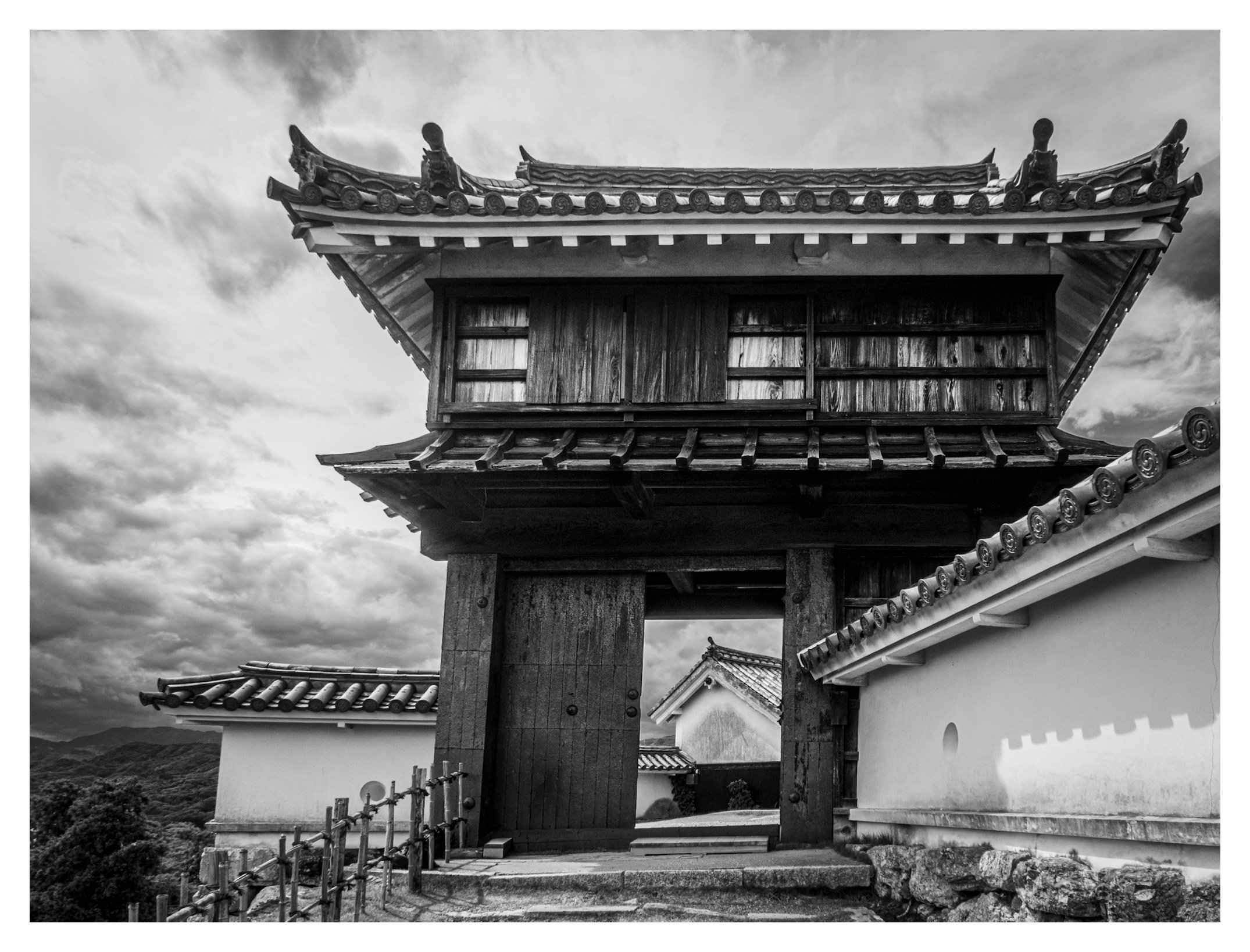
Day 225/365 Monolithic Echoes: Dissecting the Shadows at Kochi Castle
You’ll learn why a precise exposure at f/8 isn’t quite enough to master the dramatic light of Shikoku Island. Discover how hidden compositional geometric traps can limit your framing, and unlock a data-driven blueprint to completely transform your creative journey over time.
EXIF Data
Camera Model: Leica D-Lux 8
Shutter Speed: 1/400
Aperture: f/8
ISO: 200
There is a striking, graphic intentionality to this monochrome study. The frame possesses a beautiful, high-contrast bite that is instantly compelling. By utilizing an aperture of f/8, the depth of field is masterfully managed, retaining razor-sharp definition from the immediate foreground timber work right through to the secondary structure framed neatly within the gateway. The textures are the true heroes here—the weathered, tactile grain of the ancient wood, the rhythmic cadence of the roof tiles, and the sweeping drama of the cloud-heavy sky. The decision to render this in black and white forces the eye to ignore color entirely and focus strictly on form, tonality, and architectural rhythm.
However, there are geometric elements within the composition that introduce an unintended visual tension. The primary gate structure leans slightly to the left, which creates a minor disconnect with the otherwise heavy, grounded presence of the architecture. Furthermore, while utilizing the dark gateway as a literal "frame within a frame" is an excellent classic technique, the secondary building peeking through feels slightly truncated.
Refinement Strategies for the Gate
To elevate an image of this caliber from an excellent documentary record to a definitive fine-art statement, consider these adjustments in the field:
Correct the Camera Axis: A fraction of a degree of camera rotation to the right during capture would square the vertical pillars of the gate, giving the entire frame a more monumental, stable foundation.
Shift Your Physical Perspective: Taking one single step to your left and lowering your shooting position slightly would alter the internal alignment. This shift would allow the secondary building inside the portal to be revealed more fully, giving it breathing room and establishing a clearer dialogue between the background and the foreground structures.
Balance the Luminance Profiles: In post-processing, consider a subtle local luminosity adjustment. Bringing down the highlights on the white perimeter wall on the right would prevent it from pulling the viewer's eye away from the rich, intricate shadows of the main gate.
Developing Mastery Through Photographic Metadata Analytics
To transition from taking exceptional single images to building an indelible, lifetime body of work, you must look at your photography as a continuous dataset. Every file contains a digital footprint that holds the secrets to your artistic habits, your technical dependencies, and your hidden strengths.
To build a customized photographic tracking system, begin compiling data directly from your Lightroom catalog using the following parameters:
The Focal Geometry Metric: Tracks your most frequently utilized focal lengths. It reveals whether you rely heavily on wide angles for environmental compression or if you gravitate toward a tighter, more intimate frame.
The Luminance Distribution Index: Categorizes your images by their dominant exposure values. It tracks whether your work naturally moves toward dark, low-key, shadow-dominant spaces, or if it flourishes in bright, high-key environments.
The Temporal Velocity Log: Correlates your shutter speeds with your subject matter. This reveals whether your creative reflex is to freeze motion instantly with high speeds or to lean into the fluid, atmospheric qualities of motion blur.
By aggregating these metrics over hundreds of images, you will notice distinct patterns. If you discover an overwhelming bias toward high-contrast, wide-angle imagery captured in overcast weather, you can deliberately force yourself into situations that break that mold—or, conversely, lean completely into it to refine a highly specific, unmistakable personal signature.
Curated Research for the Dedicated Monochromist
To contextualize this approach to frame-within-a-frame architecture and high-contrast street work, dedicate time to exploring these influential visionaries, essential monographs, and profound moving images.
Photographers to Study
Fan Ho: The absolute master of utilizing geometric shadows, dramatic scale, and architectural portals to isolate human elements within a grand landscape. His use of deep blacks and piercing light remains an unparalleled masterclass in monochrome composition.
Takuma Nakahira: A foundational figure of the provocative Japanese Provoke movement. His raw, high-contrast, and deeply experimental approach offers a radical alternative to clean architectural lines, challenging the boundaries of the medium itself.
Essential Reading
Thoughts on Photography by Fan Ho: A collection of deep philosophical insights and practical essays on composition, patience, and the emotional resonance of the monochrome image.
For a Language to Come by Takuma Nakahira: A legendary monograph that showcases a chaotic, gritty, and fiercely honest exploration of urban topography and shifting cultural landscapes.
Screenings for the Eye
"Fan Ho - The Master of Shadows": An insightful documentary short examining his meticulous patience, his darkroom techniques, and how he turned everyday street geometry into pure visual poetry. Watch on YouTube: [https://www.youtube.com/watch?v=k_jK4G7oepk](https://www.youtube.com/watch?v=k_jK4G7oepk)
"The Provoke Movement and Radical Japanese Photography": A deep-dive video essay analyzing how Nakahira, Moriyama, and their peers broke away from traditional composition to create a brand new, expressive visual language. Watch on YouTube: [https://www.youtube.com/watch?v=R_09O8R2N3M](https://www.youtube.com/watch?v=R_09O8R2N3M)