

Day 250/365 The Concrete Leviathan: Confronting Kaohsiung’s 85 Tower
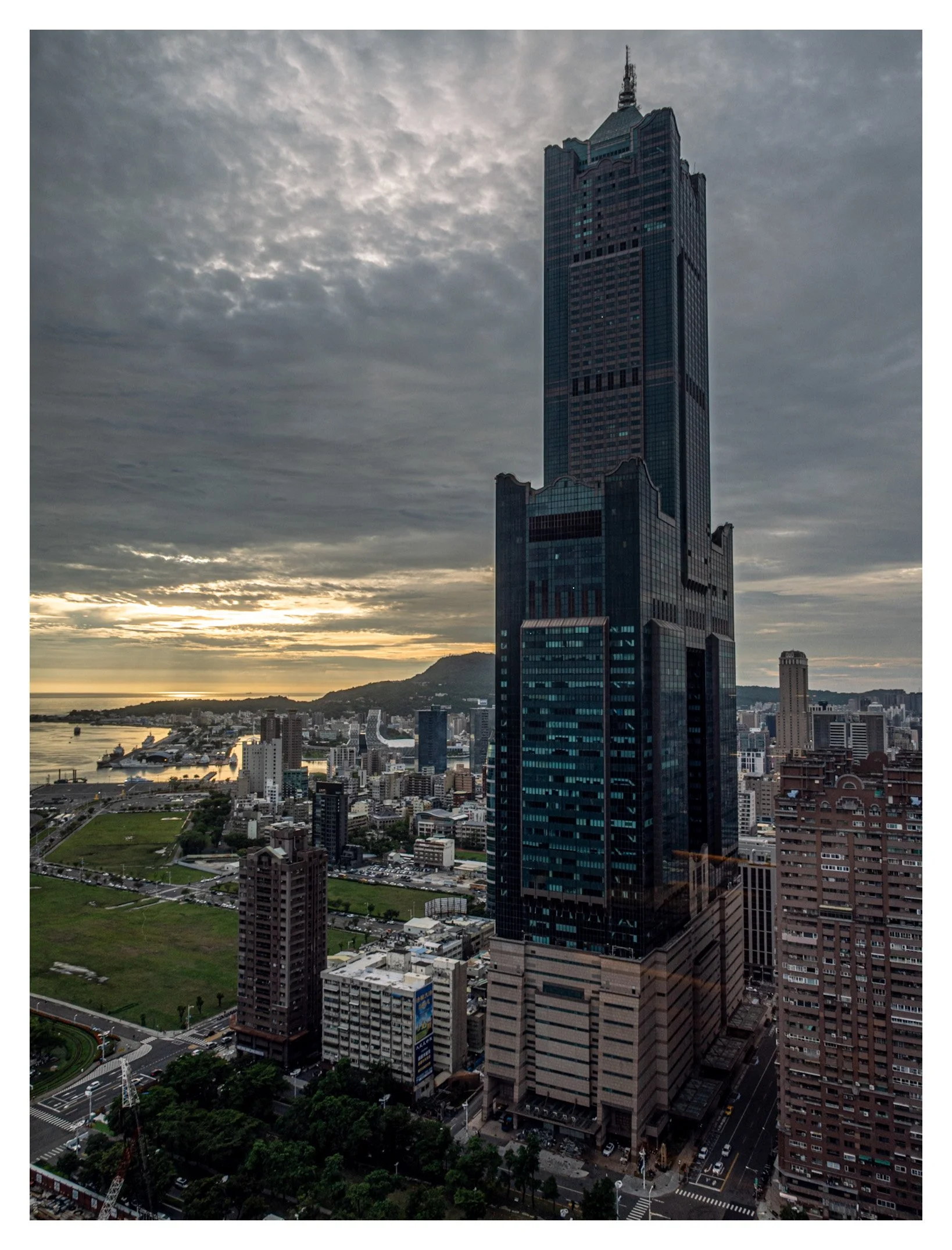
Rising through shifting clouds, Kaohsiung’s tallest monolith presents a profound challenge to the urban photographer. You’ll learn how a rigid central perspective can accidentally work against architectural scale, and discover the subtle technical adjustments needed to transform a casual skyline view into a dramatic, intentional study of modern isolation.
EXIF Data
Leica D-Lux 8
1/125
f5
ISO 200
The Critique
There is an undeniable gravity to the way the 85 Tower anchors this composition. The monolith rises up to slice through a heavily textured, dramatic sky, utilizing a high-vantage perspective that gives a profound sense of scale. It effectively renders the surrounding urban sprawl and the distant mountain small in comparison to the central giant. The soft light spilling across the horizon provides a beautiful, luminous counterweight to the cold, industrial grid of the cityscape.
However, the image faces a distinct environmental challenge. The faint reflection on the right side of the frame betrays a shooting position from behind glass, an element that inadvertently pulls the viewer out of the atmosphere. Furthermore, placing the tower so rigidly near the vertical center cuts the frame aggressively, creating a harsh division between the open green spaces on the left and the dense residential blocks on the right rather than allowing them to converse.
Room for Improvement
To elevate architectural scenes of this scale, consider the following technical and compositional shifts:
Evade Internal Reflections: When shooting from high observation decks or hotel windows, press a rubber lens hood completely flush against the glass or use a dark cloth wrap to block interior ambient light and eliminate ghosting.
Embrace the Off-Center Bias: Instead of a strict central placement, try stepping slightly to the left to let the tower occupy the right third of the frame. This grants the sweeping coast, the harbor, and the setting sun more breathing room to lead the eye through a narrative of natural versus man-made scale.
Play with Shutter and Ambient Light: Waiting deeper into the twilight of the blue hour would allow the internal ambient lights of the tower and the trailing headlights on the streets below to introduce a vibrant contrast to the brooding clouds.
Developing Vision Through Data Analytics
Becoming a master of the craft requires moving past casual shooting into systematic self-analysis. For every major city study or architectural exploration, begin compiling a personal image metadata log in a spreadsheet.
Track your focal lengths, apertures, times of day, weather conditions, and personal notes on the emotional mood achieved. Over months of shooting, analyzing this data will reveal your unconscious patterns. You might discover you rely too heavily on mid-tier apertures out of habit, or that your most compelling frames happen during narrow, specific weather windows. Let data strip away the guesswork, allowing you to return to these massive structures with a highly calculated technical intent.
Masters, Monographs, and Media to Study
To expand your visual vocabulary, immerse yourself in the work of photographers who challenge how we perceive structure, geometry, and urban space.
Photographers to Research
Fan Ho: Study his classic imagery to master how light, sharp geometric compositions, and deep, dramatic shadows can turn an ordinary urban environment into a timeless canvas of highlight and form.
Michael Wolf: Examine his work, particularly Tokyo Compression, to understand how extreme graphic density and aggressive structural crop lines can evoke a powerful sense of modern claustrophobia and isolation within a sprawling metropolis.
Books to Read
Uncommon Places by Stephen Shore: The definitive text on large-format structural photography, offering brilliant lessons on how to look at the vernacular landscape with absolute clarity and precise, edge-to-edge frame balance.
Bystander: A History of Street Photography by Colin Westerbeck and Joel Meyerowitz: An academic and encyclopedic reference that traces the evolution of candid imagery, helping you understand how architecture shapes human behavior within the frame.
Videos to Watch
To deeply understand how shadow and structural lines define a frame, watch The Geometry of Seeing by Sean Tucker, which explores the relationship between architectural space and artistic mindset.
To refine your compositional layouts in real-world environments, study Composition Tips for Urban Photography by Pierre T. Lambert for an exceptional breakdown of leading lines and one-point perspective in the wild.