

Day 252/365 The Geometry of Authority: Echoes of Shadow and Line
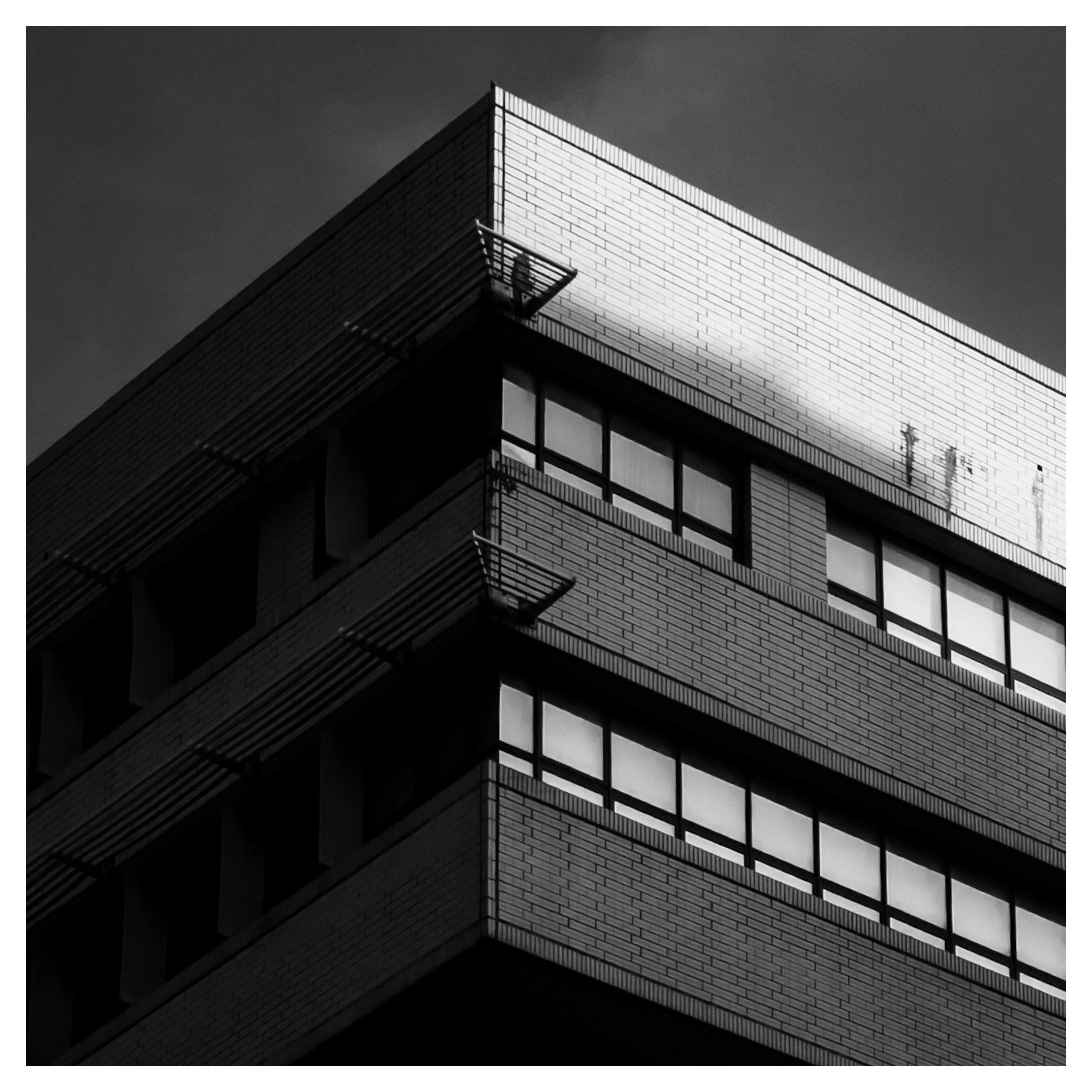
How does a modern municipal workspace transform into a striking geometric study? By exploring the dramatic intersection of light and structure in Kaohsiung, you'll learn why strict tonal separation can redefine architectural forms, and how data tracking elevates raw vision into deliberate mastery.
EXIF Data
Leica D-Lux 8
1/800 sec
f/5.6
ISO 200
The Critique
This frame presents a compelling masterclass in structural isolation. By treating the government offices in Kaohsiung as a geometric collision rather than a functional space, the composition achieves a sharp, brutalist minimalism. The choice of a square crop perfectly complements the heavy diagonal trajectory of the architecture, focusing the viewer’s eye entirely on the apex where tone and texture split.
The highlight play along the upper-right facade is brilliant; the metallic or polished tile surface catches the light intensely, offering a stark counterweight to the deep, impenetrable shadows anchoring the lower-left. It is an image of severe contrasts—order meeting abstraction.
Paths for Improvement
While the execution is remarkably clean, a few refinements could push this piece from a strong graphic study into something truly definitive:
Distraction Elimination: Along the bright, illuminated upper section of the building, there are faint streaks and small physical imperfections or water stains visible on the facade. Cleaning these elements out in post-processing would preserve the flawless, hyper-clean aesthetic demanded by minimalist abstract architecture.
Tonal Control in the Shadows: The deep shadow on the left side borders on absolute black. While dramatic, lifting the blacks by just a fraction could reveal subtle tonal gradations in the brickwork without sacrificing the overall high-contrast punch, adding a layer of sophisticated texture to the darkness.
Systemizing Mastery: The Data-Driven Photographer
To consistently capture work at this level, intuition must be paired with structured analysis. You can accelerate your growth by building a personal image database. Whenever you execute projects—whether a single architectural study or a grueling daily creation challenge—log your technical data alongside your artistic intent.
Track the following parameters over months of shooting:
The Focal Length & Aperture Nexus: Documenting which focal lengths and apertures yield your sharpest, most emotionally resonant frames helps you understand your natural visual compression preferences.
The Keeper Rate Analysis: Categorize your photos by genre (e.g., street, abstract, environmental portraiture) to see where your highest success rate lies, allowing you to double down on your true stylistic strengths.
By translating abstract creative impulses into organized data, you will transform accidental successes into predictable, repeatable artistry.
Curated Research for the Visual Mind
To deepen your understanding of contrast, architecture, and structural storytelling, devote time to studying these definitive masters, texts, and visual guides:
Photographers to Study
Fan Ho: The ultimate legendary master of light, shadow, and cinematic geometry in urban environments.
Michael Wolf: Essential reading for his intense study of architectural density and claustrophobic urban patterns, notably his work Tokyo Compression.
Recommended Reading
"Moments in Time 1959-2013" by Chang Chao-Tang – An invaluable retrospective of Taiwanese photography that balances absurdity, surrealism, and masterfully composed monochrome landscapes.
"Thoughts on Street Photography" – A foundational text that merges the underlying philosophy of observation with visual execution.
Essential Viewing
To learn how to find hidden patterns and shapes within municipal structures, watch the tutorial Can Ordinary Buildings Become Abstract Art?.
For a deep dive into historical composition, study the documentary Fan Ho | the art of light, shadow, and humanism to see how geometry elevates a local landscape into timeless art.