

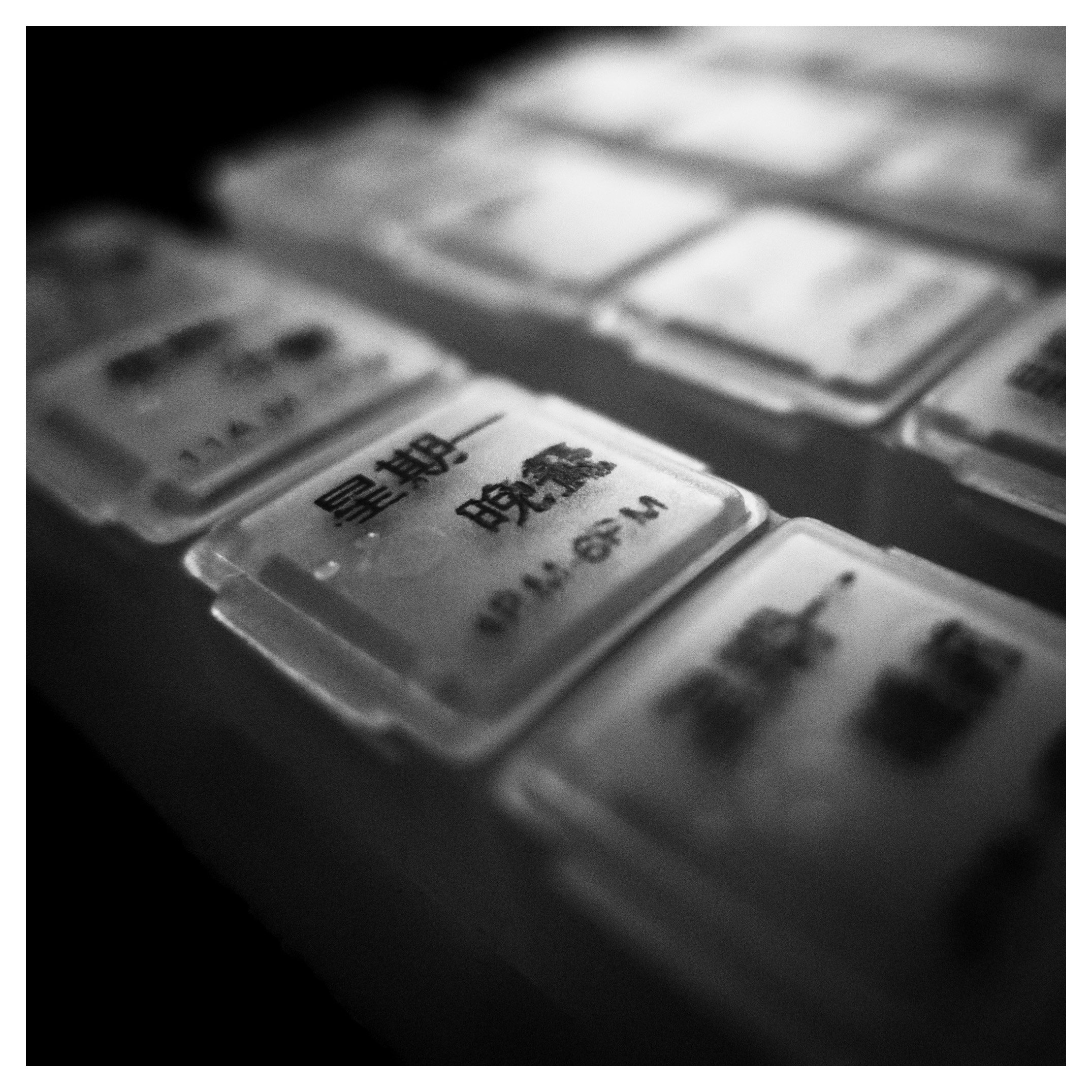
A pill organizer, photographed close and unglamorous, at the end of a hard day. Not every photograph is about technique. Some are about what a body has been carrying since a decision that can’t be undone.
Camera Model: Leica D-Lux 8
Shutter Speed: 1/250 sec
Aperture: f/1.7
ISO: 5000
Most of what gets written on this blog is about light, gesture, color, composition — the vocabulary of craft. This one is different, and I want to say that plainly before saying anything else.
This photograph is a macro shot of a weekly pill organizer, one compartment lit and sharp, the rest falling away into soft blur. It’s an unglamorous subject, deliberately so. There’s no market scene here, no street theater, no decisive moment of a stranger caught mid-gesture. Just a plastic compartment with Chinese characters marking the day and time, photographed at a punishing ISO in low light because that’s when it was taken — at the end of a day that didn’t allow for anything more composed than this.
The shallow depth of field isn’t a technical flourish here. It’s honest to the experience: on a bad pain day, the world does narrow down to one thing in sharp focus and everything else goes soft and unreachable. The grain, visible at ISO 5000, isn’t a flaw to correct — it’s texture that belongs to the photograph, the visual equivalent of a day that wasn’t smooth or comfortable to move through.
I’ll say this directly, because it’s the whole point of the piece: this photograph exists because of two herniated discs from a chiropractic visit in April, and pain that hasn’t let up since. It’s not a metaphor built after the fact — it’s a document of an actual object that gets picked up every day, at a scheduled time, as part of managing an injury that shouldn’t have happened. Photography doesn’t need a market stall or a mural to be worth making. Sometimes the most honest frame in a body of work is the one aimed at a pill case at 6:20 in the evening, because that’s what was actually in front of the camera that day.
That’s the underlying meaning of this image, and it’s not something a stranger looking at the frame would necessarily know without being told. That’s true of a lot of photographs — the surface reading and the photographer’s actual reason for making the picture aren’t always the same thing, and sometimes the gap between them is the most interesting part.