

Day 283/365 Forty Years at the Fryer: A Portrait of Craft and Time
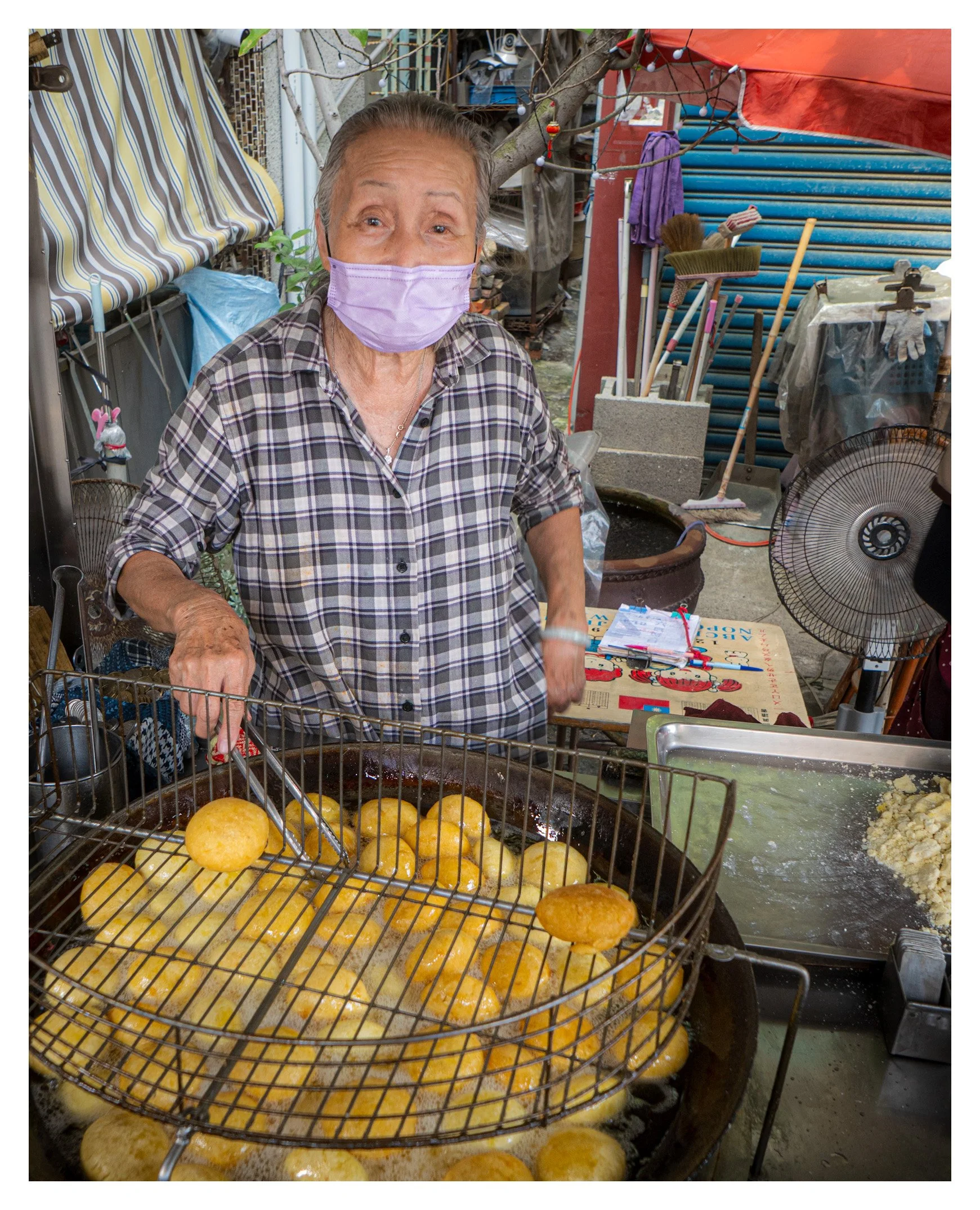
A vendor stands over a bubbling pan of golden fried dough, four decades of practiced motion visible in her steady hands and direct, unhurried gaze. A frontal portrait of labor, craft, and the dignity that comes from doing one thing exceptionally well for a very long time.
Camera Model: Leica D-Lux 8
Shutter Speed: 1/60 sec
Aperture: f/3.5
ISO: 200
The Critique
This photograph belongs to the tradition of frontal, dignified working-portrait photography that August Sander pioneered a century ago with his monumental People of the 20th Century — photographed straight-on in natural light, with clothing and gestures that allude to the sitter’s class and profession. Sander’s project, split into categories like the farmer and the skilled tradesman, sought to capture something essential about a person’s role in the world through direct, unembellished portraiture, and this frame does something remarkably similar: a woman stands over her fryer, tongs in hand, looking directly into the lens with a steady, unguarded expression that communicates decades of accumulated skill without needing a single word of explanation.
The caption tells us she’s been doing this for forty years, and once you know that, the photograph reads entirely differently — every detail becomes evidence. The practiced angle of her wrist holding the tongs, the economy of her stance over the pan, the calm directness of her gaze rather than any trace of self-consciousness at being photographed — all of it speaks to someone who has occupied this exact spot, performing this exact motion, for longer than most careers last. That’s the quiet power of frontal documentary portraiture: it doesn’t dramatize, it simply presents, and lets accumulated time do the emotional work.
The environment surrounding her adds enormous documentary richness without ever competing for attention. The layered chaos of tools, fans, brooms, and awnings behind her builds a genuine sense of a working life lived in one place — this isn’t a studio backdrop, it’s the actual, cluttered infrastructure of forty years of small business. The golden fried dough balls filling the foreground basket, glistening under the light, provide both compositional weight and the specific, tangible product of all that accumulated skill.
Technically, the frame handles a genuinely difficult lighting situation well — bright overhead sun competing with deep shadow under the awning — holding detail in both her face and the highlights on the fried dough without losing either. If there’s a place to push further, it’s in the background’s competing visual noise; the blue corrugated shutter, the standing fan, and the scattered tools all pull at the eye slightly, and a marginally shallower depth of field might have let her figure separate more cleanly from that busy backdrop.
How This Image Could Be Improved
• Consider a slightly wider aperture next time to soften the busy background just enough to let her figure and the foreground food carry more of the visual weight.
• Watch the framing at the very top. Her hair and the tree branches behind blend somewhat; a touch more headroom or a slight angle change could separate them more cleanly.
• Look for a second frame with her hands more fully in motion. The tongs are static here; a shot mid-turn, with a dough ball actively being lifted, could add even more kinetic evidence of the craft in action.
Becoming a Better Photographer Over Time
• Practice frontal, direct portraiture as a specific discipline. Sander’s method — straight-on, unposed but fully present — is deceptively simple and rewards patience; work on approaching subjects for this kind of direct, respectful engagement.
• Ask about time and history before you shoot, when possible. Knowing this woman had forty years of experience clearly shaped how this photograph was made and framed; small conversations like this often unlock the detail that turns a competent portrait into a meaningful one.
• Build a personal “trades and crafts” project. Sander’s, Salgado’s, and Rogovin’s bodies of work all gained power through accumulation — dedicate a long-term project specifically to documenting skilled workers in your own city.
Photographers to Study
• August Sander — the essential reference for this frame’s frontal, dignified approach to documenting a person through their trade.
• Milton Rogovin — for his decades-long commitment to photographing working-class communities with respect and consistency.
• Sebastião Salgado — for his monumental treatment of labor and skilled work across the globe.
• Helen Levitt — for her warm, attentive eye toward everyday street life and its quiet dignity.
• Eugene Richards — for his intimate, unflinching documentary portraits of working and struggling communities.
Books Worth Reading
• August Sander: People of the 20th Century
• Milton Rogovin: The Forgotten Ones
• Workers: An Archaeology of the Industrial Age by Sebastião Salgado
• In the Street by Helen Levitt
• Dorchester Days by Eugene Richards
Videos Worth Watching
• [“August Sander: People of the