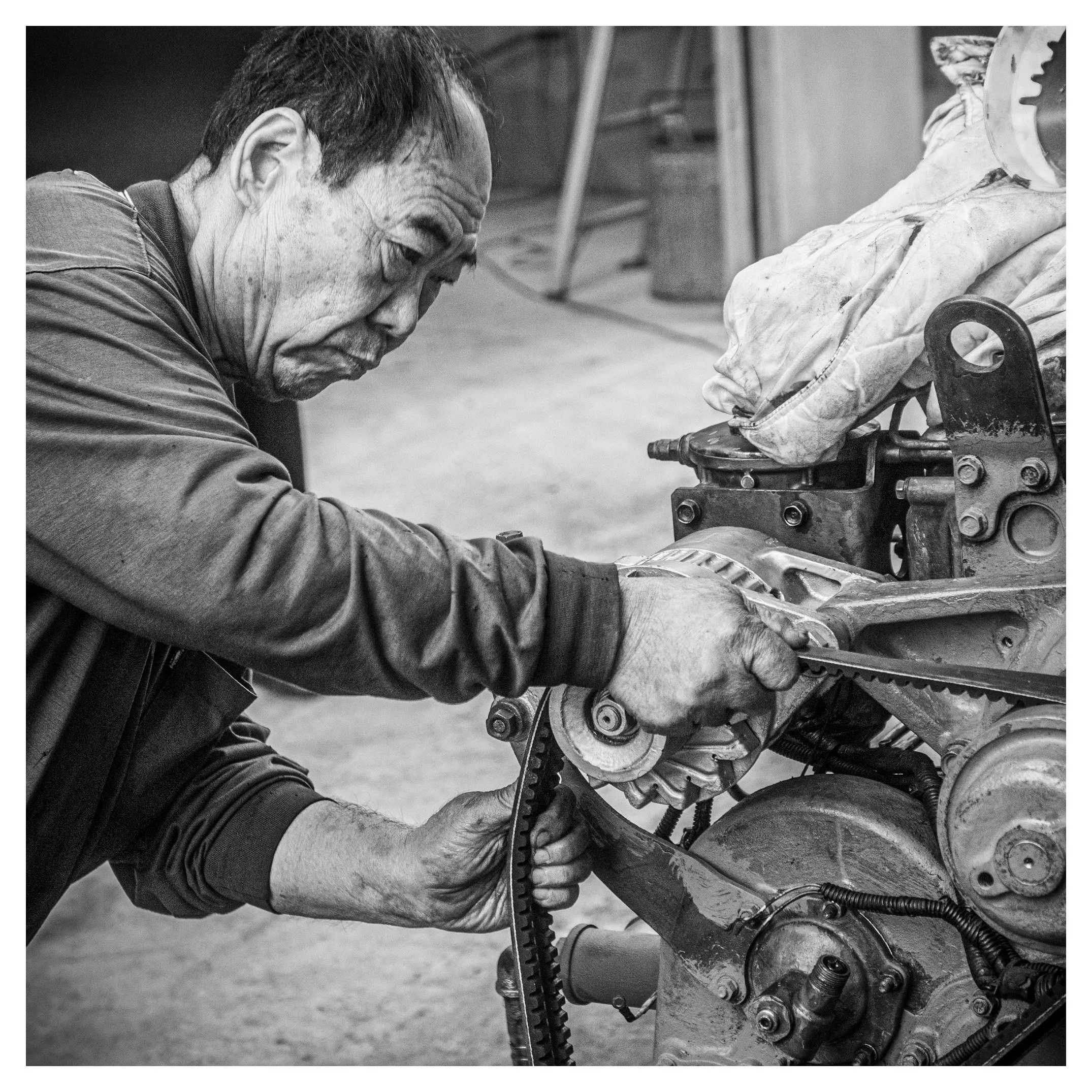
This striking monochrome study captures a moment of intense focus as a mechanic navigates the intricate workings of an engine. The high-contrast black and white palette emphasizes the raw textures of industrial life—the grease-stained hands, the tension of the rubber belt, and the weathered determination etched into the subject's expression. It is a powerful testament to the dignity of manual labor.
Camera Model: Leica D-Lux 8
Shutter Speed: 1/125s
Aperture: f/2.8
ISO: 800
Analysis and Advice for Improvement
The image is a successful example of environmental portraiture, utilizing a shallow depth of field to isolate the mechanic’s hands and the engine components. However, there are several ways to elevate the impact of the shot:
• Balance the Headroom: The subject's head is very close to the top edge of the frame. Allowing a bit more space above him would provide visual "breathing room" and create a more balanced composition.
• Manage Background Distractions: The blurred figure and ladder in the background pull the eye away from the primary subject. In future captures, try shifting your position slightly to achieve a cleaner, more focused background that reinforces the industrial theme without competing for attention.
• Highlight Detail Preservation: The white cloth on the right side of the engine is significantly bright. Reducing the exposure or pulling back the highlights in post-processing would reveal more texture in the fabric and keep the viewer’s focus centered on the interaction between the hands and the machine.
Growing as a Photographer through Data
To move from capturing moments to creating intentional art, you must analyze your work systematically.
• Create an "Intentionality Log": Review your library and tag images where you successfully used a wide aperture (f/2.8) like this one. Note whether the resulting bokeh added to the story or obscured important environmental context.
• The Contact Sheet Method: Emulate masters like Henri Cartier-Bresson by studying your "near misses." Look at the frames taken immediately before and after this one to understand how your timing affects the narrative tension of the scene.
Recommended Research and Inspiration
Photographers to Research
• Fan Ho: For his legendary mastery of light, shadow, and geometric composition in urban environments.
• Daido Moriyama: A master of the "grainy, blurry, out-of-focus" style that uses high contrast to evoke raw emotion.
• Arnold Newman: Known for "Environmental Portraiture," he excelled at placing subjects within their professional contexts to tell a deeper story.
Books to Read
• The Decisive Moment by Henri Cartier-Bresson: The fundamental text on timing and the geometry of a scene.
• The Americans by Robert Frank: A masterclass in using photography as a tool for social observation and raw storytelling.
• Thinking Like a Photographer by Matt Stuart: A great resource for developing the observational skills needed for candid moments.
Videos to Watch
• How to Compose Like a Master: A breakdown of classical composition techniques applied to modern photography.
• The Art of Environmental Portraiture: A deep dive into balancing the subj ect with their surroundings to create a narrative.