

Day 82/365 Luminous Echoes: Deconstructing the Glow of the Everyday
EXIF Data
Camera Model: Fujifilm X-Pro2
Shutter Speed: 1/200
Aperture: f/1.4
ISO: 1000
The Critique
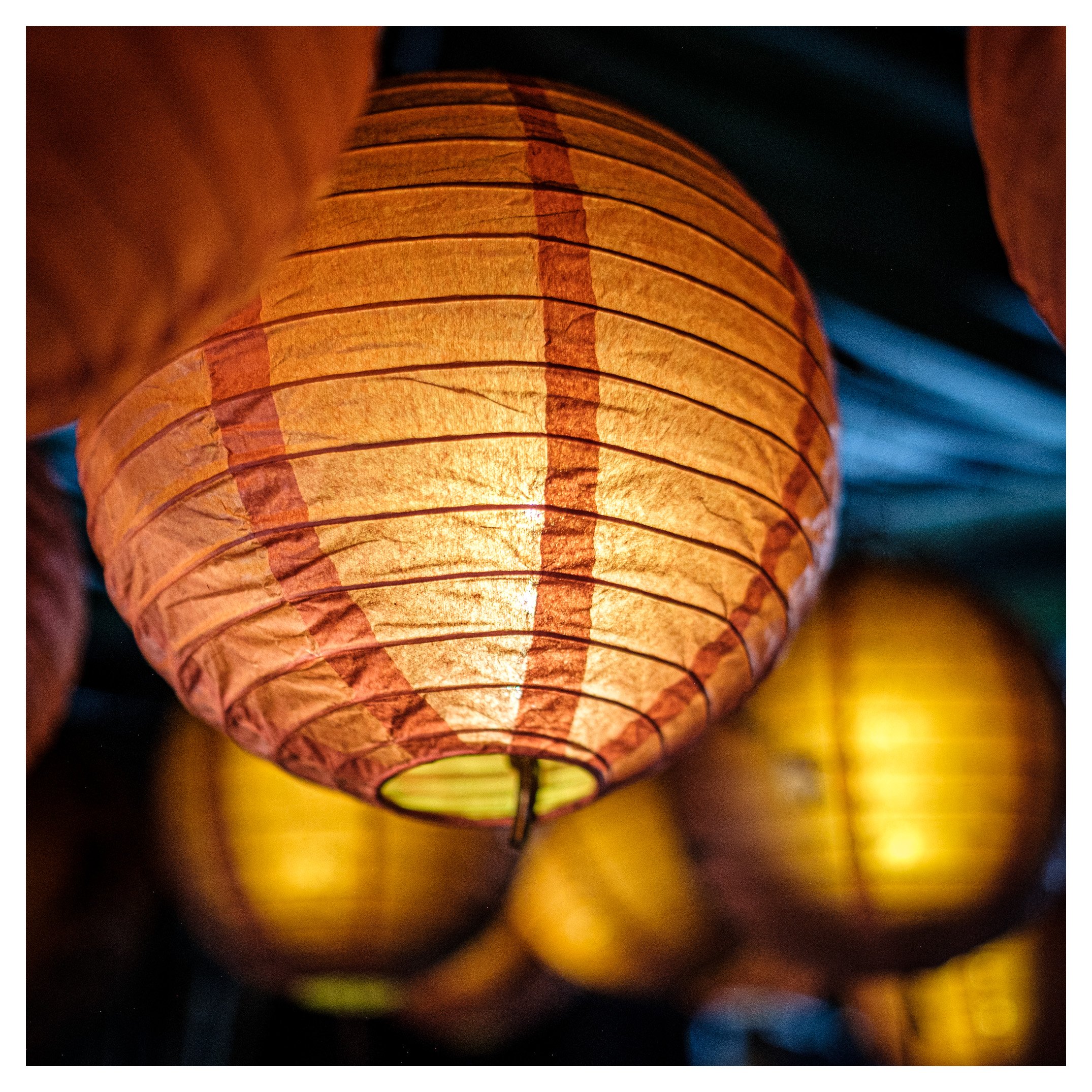
The image presents a study in warmth and intimacy. The primary subject—a paper lantern—glows with a visceral, amber luminescence that immediately warms the viewer. The choice of the Fujifilm X-Pro2 is telling; its sensor renders color with a nostalgic filmic quality that suits this subject perfectly.
However, we must discuss the aperture. Shooting at f/1.4 is a bold, aggressive choice. It slices the world into razor-thin planes of focus. Here, it has rendered the background into a wash of bokeh, successfully isolating the lantern. But I ask you: is this isolation necessary? The depth of field is so shallow that the texture of the paper—the very soul of a lantern—is soft in places where it should perhaps be crisp. The ridges of the bamboo frame blur too quickly, leaving us with an impression of the object rather than the object itself.
The composition is tight, bordering on claustrophobic. We are forced into the lantern's personal space. While this creates intimacy, it robs us of context. Is this a temple? A night market? A lonely alleyway? Photography is as much about what you exclude as what you include, and here, the exclusion feels slightly heavy-handed.
Improvement Advice
1. Respect the Texture:
Next time, resist the urge to shoot wide open. Stop down to f/2.0 or even f/2.8. This will expand your depth of field just enough to render the delicate grain of the paper and the structural integrity of the bamboo sharp from edge to edge, while still maintaining a pleasing background separation.
2. Context is King:
Step back. Use your feet. Your 23mm lens (roughly 35mm equivalent) is a storytelling lens, not a macro lens. Allow negative space to enter the frame. Let the cool blue tones of the background interact more with the warm orange; that color contrast is the image's strongest asset, yet it is currently relegated to the fringes.
3. Watch the ISO:
At ISO 1000, you are introducing digital noise. While the X-Pro2 handles this well, in the shadow areas of the paper ribs, the grain can muddy the fine details. If the lantern is stationary, lower your shutter speed to 1/60 and drop your ISO to capture a cleaner signal.
The Long Game: Data as Your Mentor
You asked how to become a better photographer over time. The answer lies not in buying new lenses, but in analyzing the data you already possess. You must treat your Lightroom or Capture One catalogue as a dataset.
Compile Your "Keeper" Data:
Every six months, create a "Smart Collection" of your top 50 images. Analyze the metadata. Do you have a "crutch" aperture? If 90% of your best work is shot at f/1.4, you are relying on bokeh to make boring subjects look interesting. If you never shoot above ISO 800, you might be afraid of the dark.
The "Anti-Habit" Assignment:
Once you identify your bias (e.g., always shooting wide open), force yourself to do the opposite for a month. If you are an f/1.4 shooter, tape your aperture ring to f/8. This forces you to rely on composition and light for separation, rather than optics. This is how you grow—by removing your safety nets.
Recommended Study
To refine your understanding of color, atmosphere, and cultural context, I have selected three masters for you to study. These recommendations are curated based on the potential I see in your work.
1. Fan Ho
You are attempting to capture atmosphere and light in an Asian context. No one did this better than Fan Ho. His work transcends street photography; it is theatrical.
• Book: Portrait of Hong Kong. This book is a masterclass in using light to carve out shapes in the darkness.
• Watch: The Narrative Photography of Fan Ho
• Why: Study how he uses geometry and backlighting (like your lantern) to create drama without relying solely on shallow depth of field.
2. Saul Leiter
Your image relies heavily on color contrast (orange vs. blue). Saul Leiter was the pioneer of using color as the subject itself, often shooting through objects to create layers.
• Book: Early Color. This is essential reading. Leiter teaches us that a blurred image can still be structurally sound if the color balancing is perfect.
• Watch: In No Great Hurry: 13 Lessons in Life with Saul Leiter (Trailer)
• Why: Observe his patience. He didn't hunt for photos; he waited for the image to assemble itself.
3. Shen Chao-Liang
Since you are shooting in Taiwan (implied by your blog title), you must study the local contemporary masters. Your lantern is subtle, but Shen’s work on stage trucks is explosive.
• Book: STAGE. His work documents the "stage wagons" of Taiwan with incredible color and night photography techniques.
• Watch: Darkening/Drifting: Shen Chao-Liang's Photo Chronicle
• Why: Contrast your intimate, small-scale capture with his large-format, surrealist approach to similar cultural lighting.Luminous Echoes: Deconstructing the Glow of the Everyday
Excerpt:
Discover how a simple lantern becomes a masterclass in color temperature and depth. In this critique, we explore the seductive trap of wide apertures, and why tracking your own metadata might be the secret weapon missing from your artistic arsenal. Read on to elevate your visual literacy.
Camera Model: Fujifilm X-Pro2
Shutter Speed: 1/200
Aperture: f/1.4
ISO: 1000
The Critique
The image presents a study in warmth and intimacy. The primary subject—a paper lantern—glows with a visceral, amber luminescence that immediately warms the viewer. The choice of the Fujifilm X-Pro2 is telling; its sensor renders color with a nostalgic filmic quality that suits this subject perfectly.
However, we must discuss the aperture. Shooting at f/1.4 is a bold, aggressive choice. It slices the world into razor-thin planes of focus. Here, it has rendered the background into a wash of bokeh, successfully isolating the lantern. But I ask you: is this isolation necessary? The depth of field is so shallow that the texture of the paper—the very soul of a lantern—is soft in places where it should perhaps be crisp. The ridges of the bamboo frame blur too quickly, leaving us with an impression of the object rather than the object itself.
The composition is tight, bordering on claustrophobic. We are forced into the lantern's personal space. While this creates intimacy, it robs us of context. Is this a temple? A night market? A lonely alleyway? Photography is as much about what you exclude as what you include, and here, the exclusion feels slightly heavy-handed.
Improvement Advice
1. Respect the Texture:
Next time, resist the urge to shoot wide open. Stop down to f/2.0 or even f/2.8. This will expand your depth of field just enough to render the delicate grain of the paper and the structural integrity of the bamboo sharp from edge to edge, while still maintaining a pleasing background separation.
2. Context is King:
Step back. Use your feet. Your 23mm lens (roughly 35mm equivalent) is a storytelling lens, not a macro lens. Allow negative space to enter the frame. Let the cool blue tones of the background interact more with the warm orange; that color contrast is the image's strongest asset, yet it is currently relegated to the fringes.
3. Watch the ISO:
At ISO 1000, you are introducing digital noise. While the X-Pro2 handles this well, in the shadow areas of the paper ribs, the grain can muddy the fine details. If the lantern is stationary, lower your shutter speed to 1/60 and drop your ISO to capture a cleaner signal.
The Long Game: Data as Your Mentor
You asked how to become a better photographer over time. The answer lies not in buying new lenses, but in analyzing the data you already possess. You must treat your Lightroom or Capture One catalogue as a dataset.
Compile Your "Keeper" Data:
Every six months, create a "Smart Collection" of your top 50 images. Analyze the metadata. Do you have a "crutch" aperture? If 90% of your best work is shot at f/1.4, you are relying on bokeh to make boring subjects look interesting. If you never shoot above ISO 800, you might be afraid of the dark.
The "Anti-Habit" Assignment:
Once you identify your bias (e.g., always shooting wide open), force yourself to do the opposite for a month. If you are an f/1.4 shooter, tape your aperture ring to f/8. This forces you to rely on composition and light for separation, rather than optics. This is how you grow—by removing your safety nets.
Recommended Study
To refine your understanding of color, atmosphere, and cultural context, I have selected three masters for you to study. These recommendations are curated based on the potential I see in your work.
1. Fan Ho
You are attempting to capture atmosphere and light in an Asian context. No one did this better than Fan Ho. His work transcends street photography; it is theatrical.
• Book: Portrait of Hong Kong. This book is a masterclass in using light to carve out shapes in the darkness.
• Watch: The Narrative Photography of Fan Ho
• Why: Study how he uses geometry and backlighting (like your lantern) to create drama without relying solely on shallow depth of field.
2. Saul Leiter
Your image relies heavily on color contrast (orange vs. blue). Saul Leiter was the pioneer of using color as the subject itself, often shooting through objects to create layers.
• Book: Early Color. This is essential reading. Leiter teaches us that a blurred image can still be structurally sound if the color balancing is perfect.
• Watch: In No Great Hurry: 13 Lessons in Life with Saul Leiter (Trailer)
• Why: Observe his patience. He didn't hunt for photos; he waited for the image to assemble itself.
3. Shen Chao-Liang
Since you are shooting in Taiwan (implied by your blog title), you must study the local contemporary masters. Your lantern is subtle, but Shen’s work on stage trucks is explosive.
• Book: STAGE. His work documents the "stage wagons" of Taiwan with incredible color and night photography techniques.
• Watch: Darkening/Drifting: Shen Chao-Liang's Photo Chronicle
• Why: Contrast your intimate, small-scale capture with his large-format, surrealist approach to similar cultural lighting.